
Managerial posture is the way a manager positions themselves towards an employee or a team in a given situation. You can read it in what they say, the tone they use, the room they leave the other person and the way they make decisions.
There is no single right posture that works everywhere. In practice, four managerial postures are distinguished (expert, coach, leader, facilitator), and the skill lies in choosing the right one at the right moment. This guide gives you the definition, the four postures with example phrases, a self-assessment and ways to train.
The definition fits in two sentences. Managerial posture is the position a manager chooses to take in a conversation: giving the answer, getting people to think, setting the direction or getting the group to produce. It is a choice that depends on the situation, not a personality trait.
This definition has a practical consequence. If posture is a choice, it can be prepared before a meeting and adjusted along the way. A reserved manager can take a leader's posture in front of their team. A very directive manager can learn to ask before answering.
The same message has different effects depending on the posture. “Your report is late” can open an instruction, a question or a reminder of the rules. The employee reacts as much to the position the manager takes as to the content of the message.
These three words are often used interchangeably. They do not mean the same thing.
Hersey and Blanchard's situational leadership model describes four styles (directing, coaching, supporting, delegating), chosen according to the employee's autonomy. The four postures presented here answer a related question: what place to take in the conversation. The two frameworks complement each other, as a guide to situational leadership would show.
This four-posture framework is a common training tool with no single author. Its value is that it is easy to remember and easy to observe in real situations. Two postures are mainly aimed at an individual (expert, coach), two mainly at the group (leader, facilitator).
The manager provides the answer. They draw on their experience, recommend a method, settle a technical question. The posture is directive without being authoritarian.
The manager helps the employee find their own solution. They ask open questions, listen, rephrase and leave time for reflection.
The manager gives meaning and direction. They explain why an objective matters, what is going to change and what they expect from each person. They do not wait for the team to guess the direction.
The manager organises the group's work without providing the solution themselves. They frame the question, share out speaking time, manage the discussion and bring it to a decision.
None of the four postures is good or bad in itself. The problem arises when a manager always uses the same one, whatever the situation. Being able to move from one to another is called postural flexibility.
Changing posture during a conversation is possible, provided you say so. “I'll give you my view, then it's your call” avoids confusion. The corrective conversation with an employee is a good example. The manager states the facts and the rule firmly, then asks questions to build the next steps with the employee.
Every manager has a fallback posture, the one they adopt under pressure. Answer these questions with your last two weeks in mind.
The posture you recognise everywhere is your default posture. The one you avoid is your training priority. To check, ask two of your team members which example phrase sounds most like you.
Knowing the four postures is not enough to hold them. Under pressure, everyone falls back on their default posture. Managerial posture training therefore has to get people practising, not just explain.
Classroom sessions, one-to-one coaching, peer co-development groups, remote practice: each format has its strengths and limits. A comparison of managerial posture training methods helps you weigh them up. Posture also comes through speech, which is why management communication training is worth running alongside.
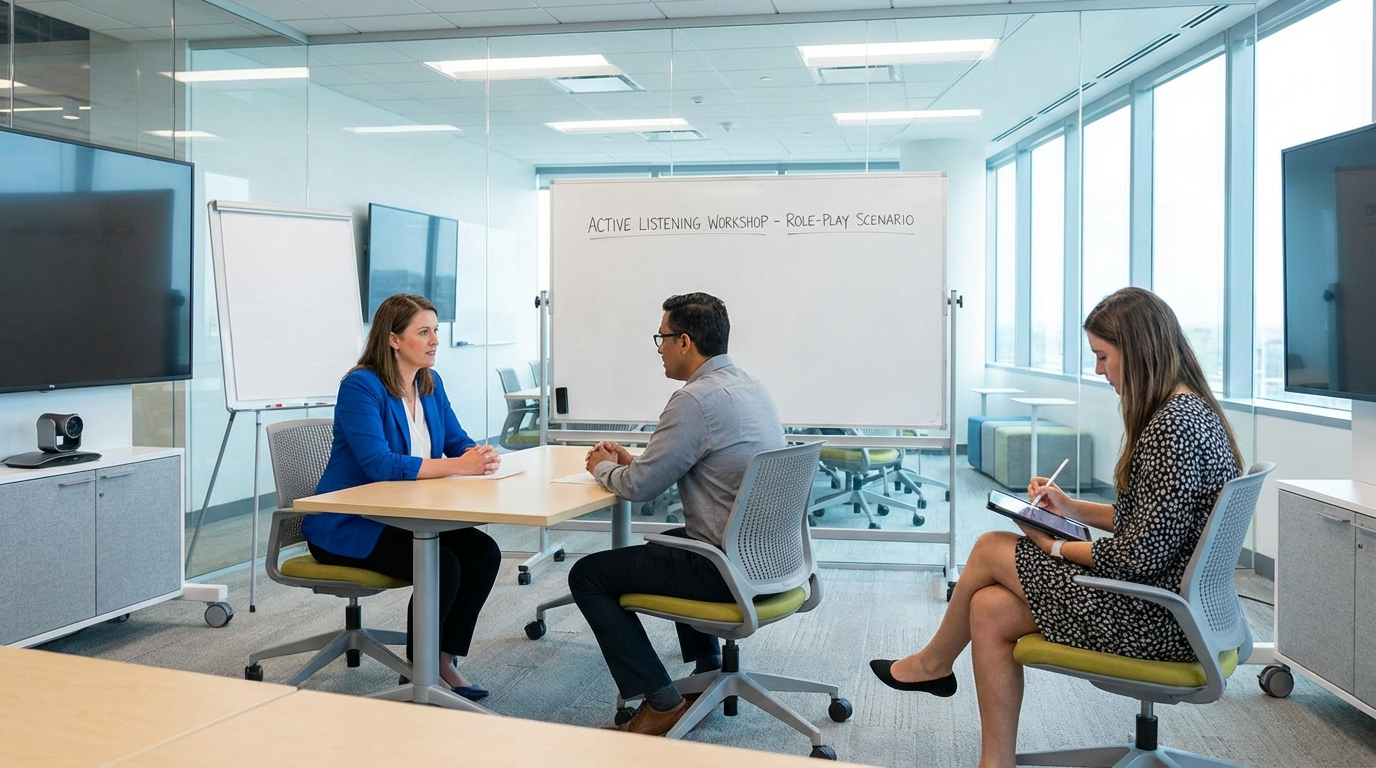
Role play is a direct method. The manager plays out a conversation, gets feedback, then tries again with a different posture. In the training room, the trainer leads and peers observe. The limit is time: each participant gets little practice, and rarely a second go.
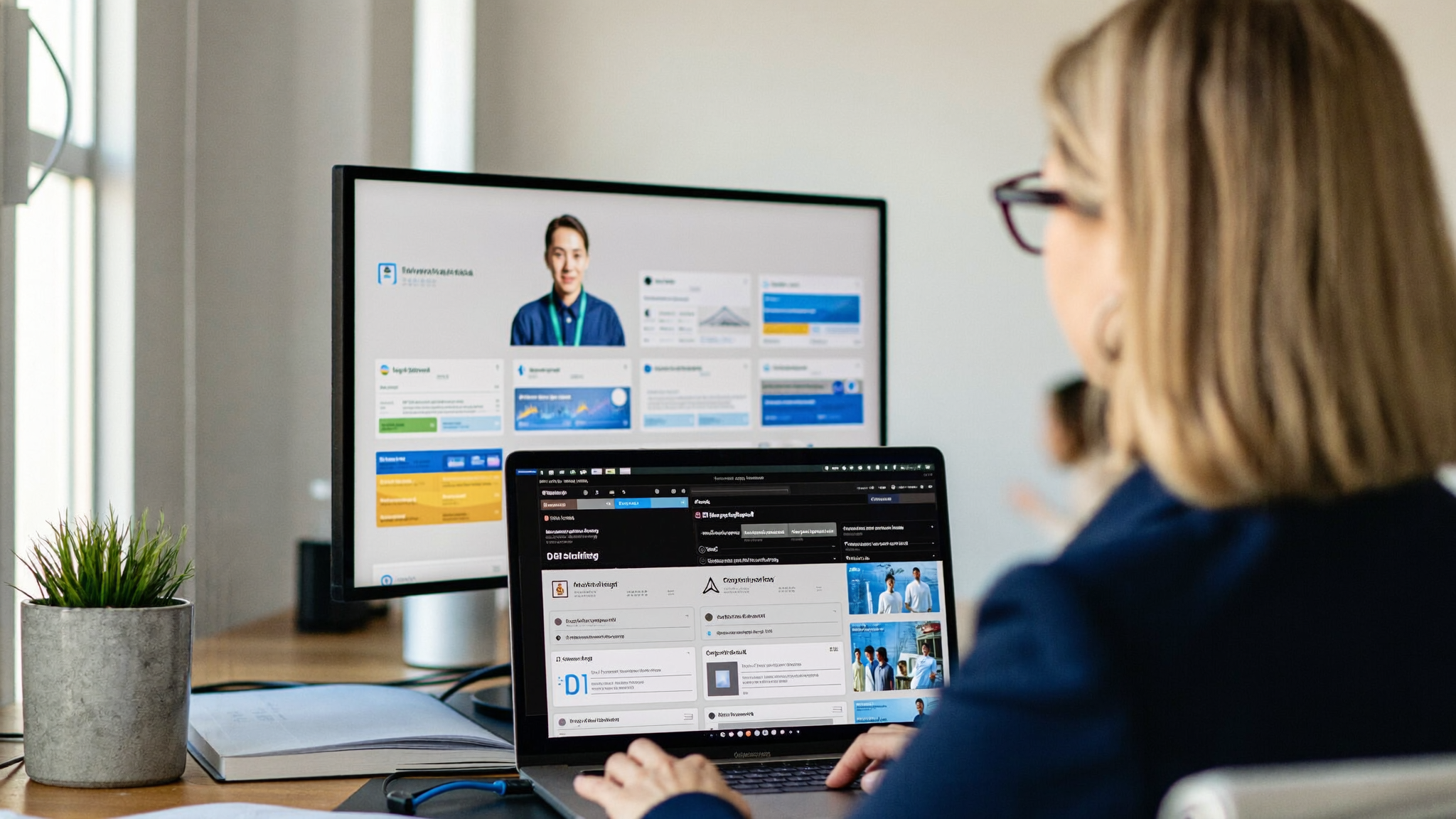
Practising with an AI avatar complements this work. With Face Up, the trainer creates a scenario and a persona, for example a demotivated or defensive employee. The manager talks to them by voice and video, then receives a debrief: objectives met or not, strengths, areas for improvement, action plan. They can replay the same scene with a different posture and compare the two attempts.
In this video example, a branch manager discusses her management style with an employee played by an AI avatar.
The video is in French.
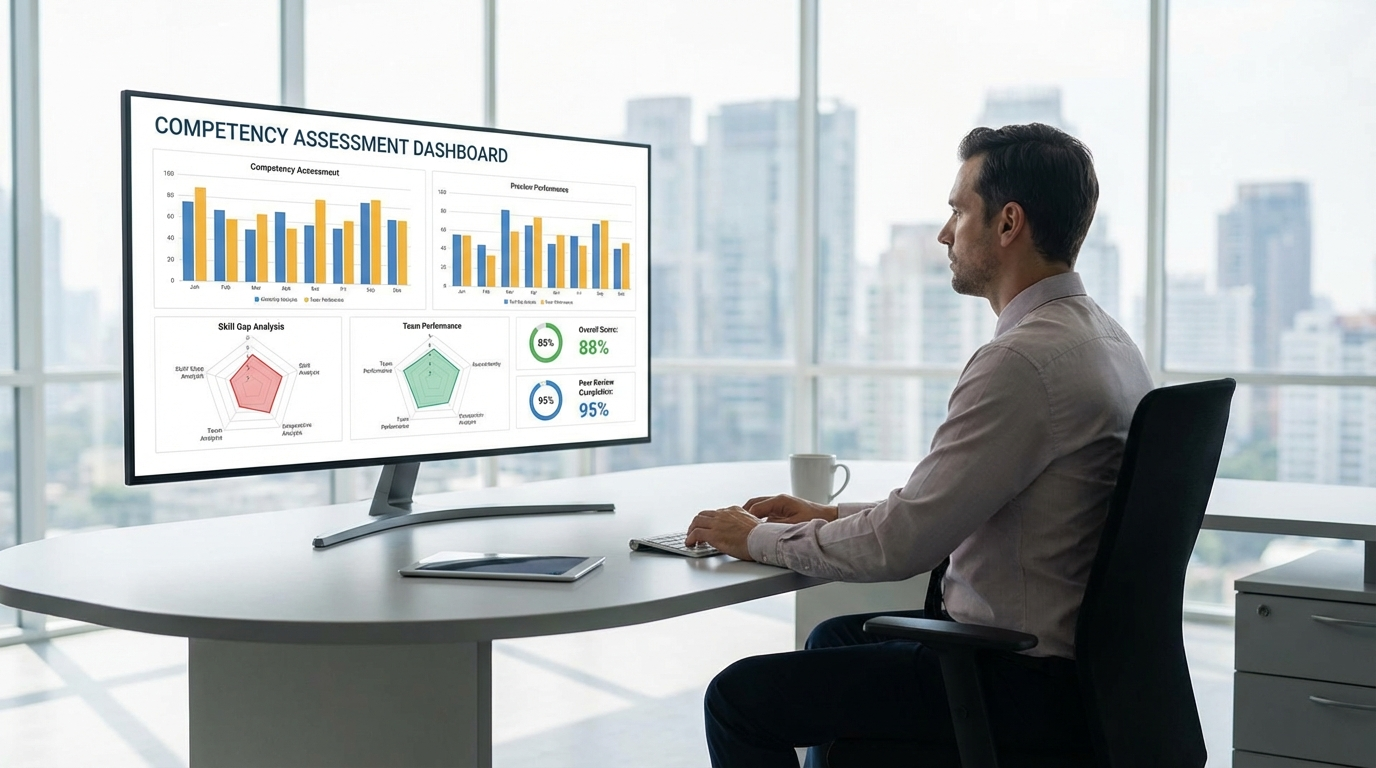
Posture is assessed on behaviours: open questions asked, speaking time, clarity of the decision, rephrasing. Compare these indicators between the first and the last attempt. The guide to measuring how managerial posture evolves after training gives you the full method.
A manager's posture covers all the positions they can take towards the team: expert, coach, leader, facilitator. The leader posture is one of them: giving meaning and direction. A front-line manager can adopt it as soon as they explain the why behind a decision.
An executive posture uses the same four positions, with more weight on the leader posture. Executives often address managers, who expect a clear direction and autonomy. Their main risk is staying the expert in their former job instead of helping their teams grow.
Yes, provided you signal the switch from one to another. A conversation can start in coach mode, to understand, and end in expert mode, to decide. What throws the employee is the unspoken change.
Yes, because taking up the role changes their position towards former colleagues. New managers tend to remain the expert in their previous job. Practising the coach and facilitator postures early limits that reflex.
Pick a situation from the week ahead: a one-to-one, a meeting, an announcement. Decide on your posture in advance, prepare your opening sentence, then note afterwards what happened. This small exercise is enough to start observing your reflexes.
To get your managers practising on scenarios close to their reality, you can request a Face Up demo.