
A training provider is never better than its trainers. The sharpest content, the most innovative tools, the best-designed scenarios — all of it stays theoretical if the trainers do not themselves master the skills they are teaching. That is the paradox at the heart of soft skills training: how do you teach active listening if you cannot listen? How do you train people in conflict management if you avoid confrontation yourself? The train-the-trainer approach answers that challenge by professionalising the development of the trainers themselves. This article sets out the key competencies, the methods and the tools for building a train-the-trainer programme that works.
In an increasingly crowded training market, differentiation comes down to the quality of delivery. Two providers can offer the same subject, but the quality of the learning experience depends directly on the trainer in the room. Post-course satisfaction surveys consistently show that most of the perceived quality is attributed to the person delivering the session rather than to the content itself. Investing in a train-the-trainer programme means investing in the single biggest driver of client satisfaction.
When a provider delivers the same programme through several trainers, quality varies with the individual. That inconsistency is a commercial risk: a client who has a poor session will not recommend the provider, however good the other sessions were. Train-the-trainer establishes a shared baseline of practice that guarantees a minimum standard while still leaving room for each trainer's personality.
This is the foundation, and it is often overlooked. A trainer working on emotional intelligence has to demonstrate high emotional intelligence themselves. A trainer working on interpersonal communication has to embody the principles they teach. Coherence between what is said and what is practised matters all the more because adult learners are acutely sensitive to a trainer's authenticity. A train-the-trainer programme therefore has to include personal development modules so that each trainer strengthens their own behavioural skills.
Practice is what makes soft skills training work. Role-plays and simulations are the most effective teaching tools available, and also the hardest to facilitate. A trainer needs to be able to build realistic scenarios, brief participants properly, observe without interfering, and then debrief constructively. Each of those stages calls for specific skills that train-the-trainer needs to cover explicitly.
The debrief is where learning crystallises. A good one turns a lived experience into a transferable skill. A poor one — too vague, too critical, or too long — cancels out the benefit of the exercise entirely. Trainers need to learn how to structure a debrief: factual observation, reflective questioning, realisation, action plan. Observation grids and structured feedback models such as SBI (Situation, Behaviour, Impact) are essential tools here.
Before training the trainers, you need to know where they are starting from. An individual diagnosis assesses technical competence (command of the content), teaching competence (facilitation, questioning, group management) and relational competence (presence, listening, handling resistance). That diagnosis can combine self-assessment, observation in real sessions and peer review. It is what allows each trainer's pathway to be tailored rather than generic.
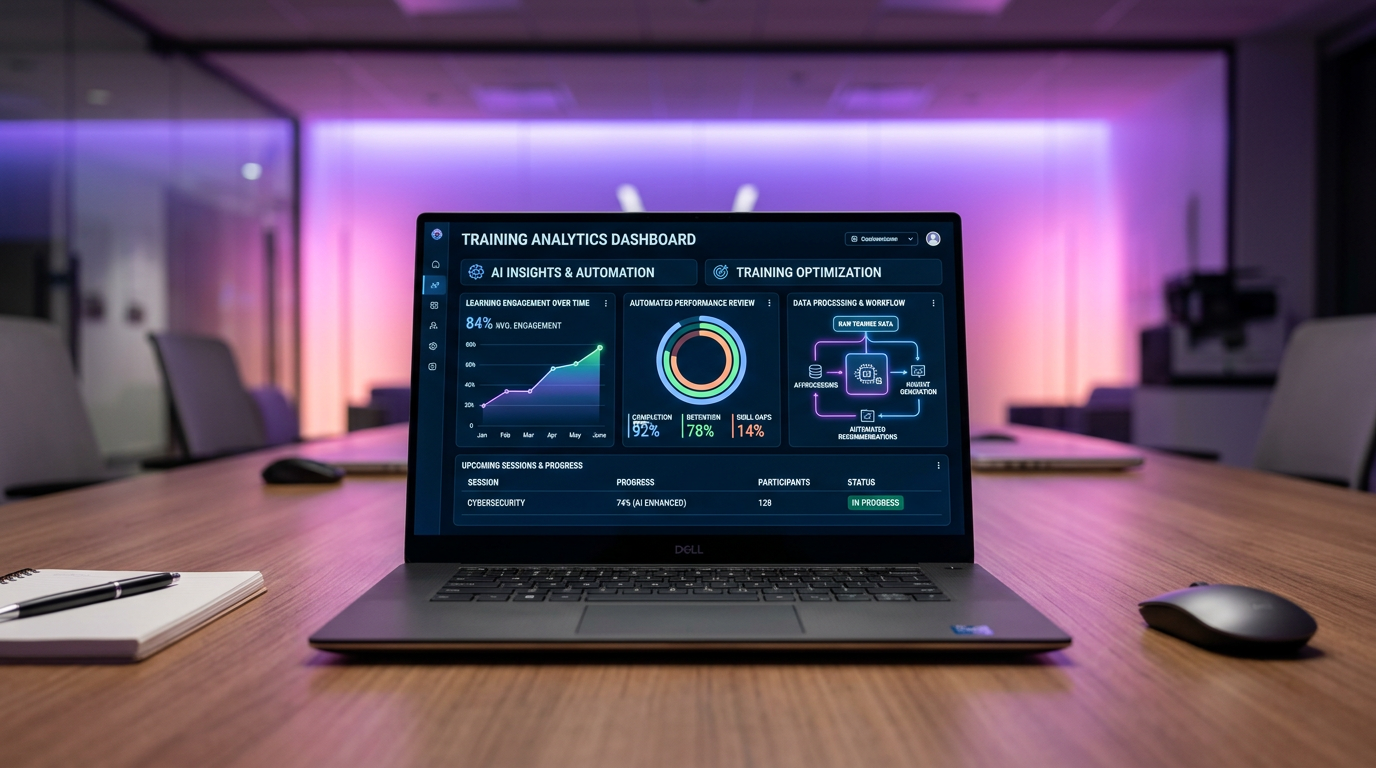
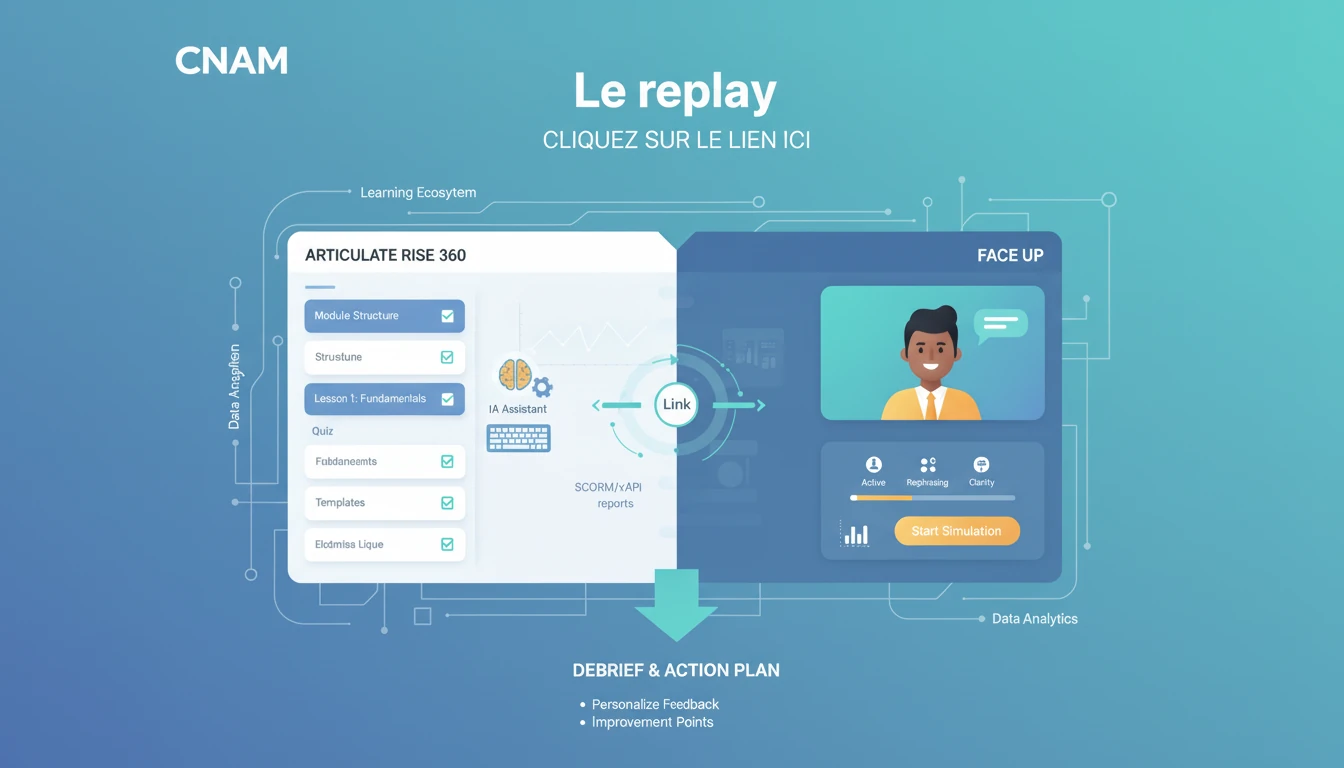
The core of the programme combines theory with intensive practice. Trainers go through the exercises they will later facilitate: they play the learner, the difficult customer, the observer. That first-hand experience builds empathy and a much finer understanding of how learning actually happens. The programme also covers digital tools: how to use a conversational learning platform, how to read session analytics to personalise a debrief, and how to combine in-person and digital elements in a blended pathway.
Training alone is not enough. A certification process validates a trainer's ability to run sessions independently. That can include a session delivered in front of peers, an assessment by a senior trainer, and feedback from real learners. After certification, continuing support — supervision, a community of practice, co-facilitation — maintains the standard and keeps trainers developing.
Trainers can practise using AI applied to training in exactly the same way their learners do. Avatar-based simulation platforms let trainers rehearse debriefing, handling a difficult group, or facilitating emotionally charged situations, without needing real learners in the room. It shortens the gap between theoretical training and the first session run independently.
As training goes digital, trainers also need to master content creation tools. Designing a conversational scenario, configuring an avatar with the right personality, interpreting session analytics to personalise a debrief — these skills are becoming as important as the ability to hold a room.
The first indicator is learner satisfaction. Comparing satisfaction scores before and after the programme, trainer by trainer, gives a direct measure of impact. Other indicators fill in the picture: recommendation rates, client contract renewals, and the number of complaints. Providers that invest seriously in train-the-trainer typically see a clear and sustained lift in their satisfaction scores.
The quality of your trainers has a direct effect on the provider's own return on investment. Better-trained facilitators generate more renewals and more referrals, and they make a premium price point defensible. The cost of a train-the-trainer programme is usually recovered within the first year through improved client retention alone.
The best train-the-trainer programmes do not stop at the initial course. They create continuing momentum: monthly co-development sessions, sharing of what works, analysis of difficult cases, and keeping up with developments in the field. That community of trainers becomes a strategic asset — a reservoir of expertise and of teaching innovation.
The skills developed in the programme should reflect the provider's commercial priorities. If the catalogue is expanding into sector-specific programmes — banking, transport, retail — trainers need working knowledge of those sectors. If the strategy is built on digital delivery, trainers need to be fluent in the corresponding tools.
Train-the-trainer is the highest-return investment a training provider can make. Better-trained facilitators deliver a better experience, generate more satisfaction, and support commercial growth. For soft skills in particular — where a trainer's credibility rests on their ability to embody what they teach — it is not optional. Digital tools such as AI role-plays, session analytics and conversational learning platforms accelerate that development and make it possible to sustain a high standard over time.