
Assessing soft skills raises a fundamental problem: these skills are contextual, subjective and dynamic. Unlike a technical skill — operating a piece of software, knowing a regulation — a behavioural skill shows up differently depending on the situation, the other person and the level of stress. Someone can excel at interpersonal communication with colleagues and struggle badly with an aggressive customer.
Assessment is nonetheless indispensable. Without measurement, how do you know whether a soft skills programme is producing results? How do you identify the development priorities? How do you justify the investment to the executive team? Organisations that do not measure soft skills are flying blind, and risk wasting their training budget.
The good news is that reliable methods for assessing behavioural skills now exist. None is perfect on its own, but combined they give a picture precise enough to guide decisions.
Self-assessment asks the individual to rate their own behavioural skills against a predefined scale. It is the simplest method to run and the least expensive. It also has pedagogical value: the act of self-assessing prompts reflection on one's own practice.
Its limits are well known. Self-serving bias means people overrate themselves, and the Dunning-Kruger effect means the least competent overrate themselves most, which makes self-assessment a poor objective measure. It is useful for raising awareness and setting an initial baseline, not for measuring progress.
A 360 gathers views from several sources — line manager, peers, direct reports, sometimes internal customers — on an individual's behavioural skills. The value lies in cross-referencing perspectives to build a fuller, more objective picture than self-assessment alone.
A well-designed 360 measures observable behaviour, not personality traits. "To what extent does this person paraphrase what the other person has said to check their understanding?" works far better than "Is this person empathetic?" The first is observable and actionable; the second is a global judgement you cannot do much with.
The 360 is particularly relevant for assessing leadership and management skills, emotional intelligence and communication — skills that surface in interaction and are therefore perceived more accurately by those around the person than by the person themselves.
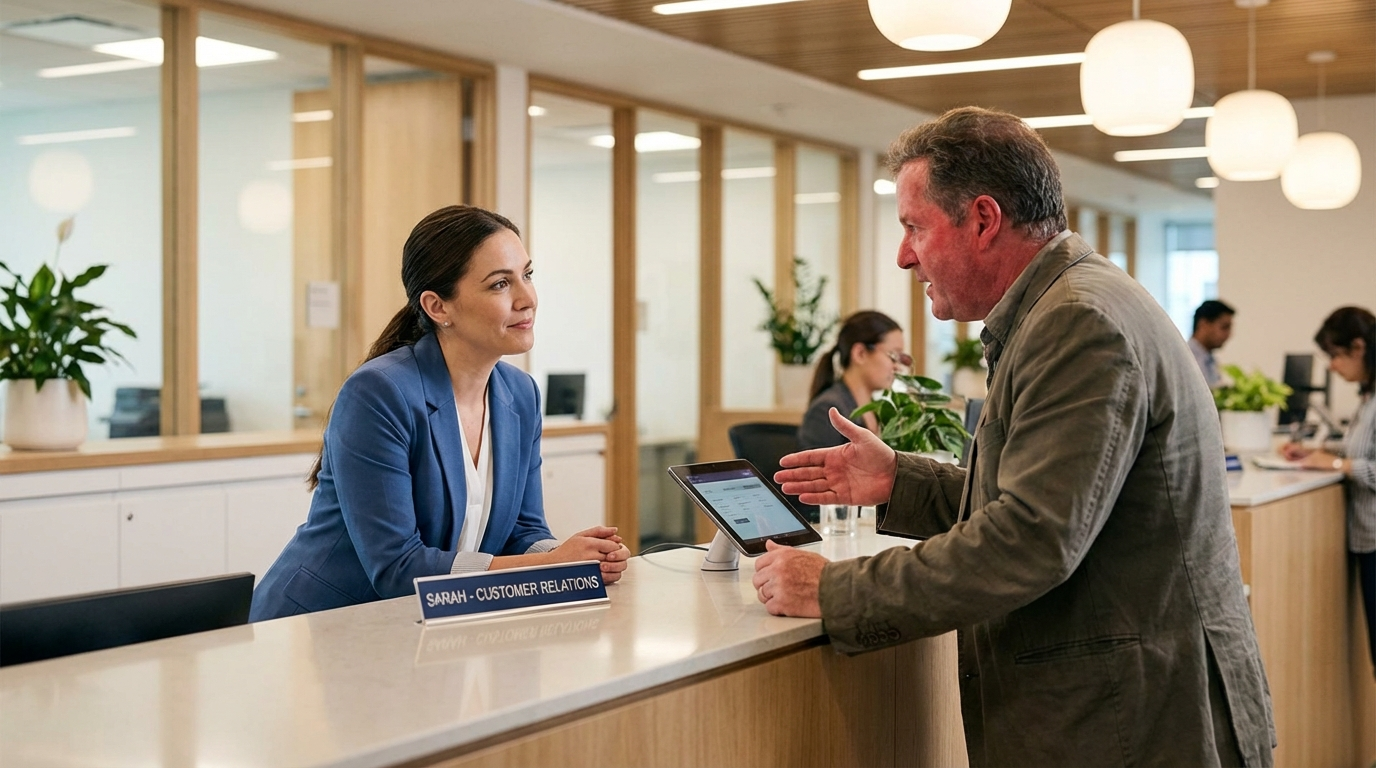
Standardised simulations allow behavioural skills to be observed in action. The principle is to place the individual in a realistic scenario — an unhappy customer, a team conflict, a negotiation — and observe their responses against a predefined assessment grid.
This is the most reliable method, because it measures actual behaviour rather than perception. Its historical constraints — high cost, the need for trained assessors, the difficulty of standardising — long confined it to assessment centres used for senior executive recruitment.
Today, AI-based simulators change the picture. They make it possible to put every employee through standardised, automatically assessed simulations, at scale and at reduced cost. The AI analyses the content of the exchange (what the learner says), the delivery (how they say it — tone, pace, vocabulary) and, in some cases, body language. That multimodal assessment offers a precision not previously available.
The line manager is uniquely placed to observe their team's soft skills day to day. Structuring that observation — with grids, dedicated moments, explicit criteria — turns it into a usable assessment tool.
Managerial observation is especially useful for measuring transfer into real situations: is the individual actually applying what they learnt in training? This is level 3 of the Kirkpatrick model, and the level most often neglected in training evaluation.
For it to be useful, the manager has to be trained in behavioural observation: distinguishing fact from judgement, identifying specific behaviours rather than general impressions, framing constructive feedback. It is an investment that benefits the manager too, by developing their own coaching skills.
Before measuring, you have to define what you are measuring. A behavioural competency framework describes the soft skills expected for each role or job family, with observable behavioural indicators for each level of mastery.
A good framework respects three principles.
Skills expressed as observable behaviours. "Active listening" is not an observable behaviour. "Paraphrases what the other person has said to check understanding", "maintains eye contact during the exchange", "asks open questions to deepen understanding" — those are observable and assessable.
Progressive levels of mastery. Each skill should be described across several levels, typically four or five, from beginner to expert. That allows progress to be measured over time and realistic development objectives to be set.
Contextualisation by role. Communication in a sales role does not look like communication in a customer service role. The framework has to reflect those differences if it is to be relevant and accepted by the teams.
Assessment of soft skills makes full sense when it is built into the learning journey.
Diagnostic assessment (before). It identifies the priority needs and allows the programme to be personalised. Recommended tools: self-assessment, plus a 360, plus an initial simulation where available. The output is an individual skills profile that serves as the baseline.
Formative assessment (during). It measures progress mid-programme and allows real-time adjustment. AI simulators are particularly effective here: each session generates a performance score, making the progression curve visible. The facilitator can spot learners who are struggling and adapt their support.
Summative assessment (after). It measures results against the original objectives. The ideal set-up combines a final simulation, a post-training 360, and managerial observation at three and six months. This delayed assessment is what measures genuine transfer into the job.
Four levels of indicator, drawn from the Kirkpatrick model, make it possible to measure the impact of a soft skills development programme.
Level 1 — Satisfaction. Are participants satisfied with the training? This indicator is necessary — a badly received course will not produce results — but nowhere near sufficient. A 95% satisfaction score tells you nothing about what was actually learnt.
Level 2 — Learning. Have participants acquired new skills? Measured through assessed simulations before and after, situational quizzes, or simulation scores. This is the level that is most directly measurable.
Level 3 — Transfer. Are participants applying the skills in real situations? Measured through managerial observation, relational performance indicators such as customer satisfaction and interaction quality, or peer feedback. This is the most critical level, and the most frequently neglected.
Level 4 — Business impact. Has the training produced tangible results for the organisation? Measured through indicators such as sales conversion rates, customer satisfaction (NPS, CSAT), turnover, or team results. This is the hardest level to isolate, since many factors move those numbers, but it is the most persuasive for decision-makers.
Artificial intelligence is transforming behavioural assessment by solving several long-standing problems.
Standardisation. Every employee is assessed under the same conditions: same scenario, same character, same criteria. The variability introduced by different human assessors disappears. AI applies identical criteria to every assessment, delivering a fairness that human assessment struggles to reach.
Scalability. Assessing 500 people through simulation used to be prohibitive in both cost and logistics. With an AI simulator it becomes an exercise of a few weeks, with no assessor panel to convene.
Depth of analysis. AI can analyse verbal content (word choice, structure of argument, paraphrasing), paraverbal signals (tone, pace, pauses, intonation) and, in some cases, non-verbal cues such as facial expression and posture, all at once. That multimodal analysis exceeds what a human observer can achieve in precision and reproducibility.
Longitudinal tracking. Data from every session is stored and comparable over time. You can see each person's progression curve, identify which skills are improving and which have stalled, and adjust the programme accordingly.
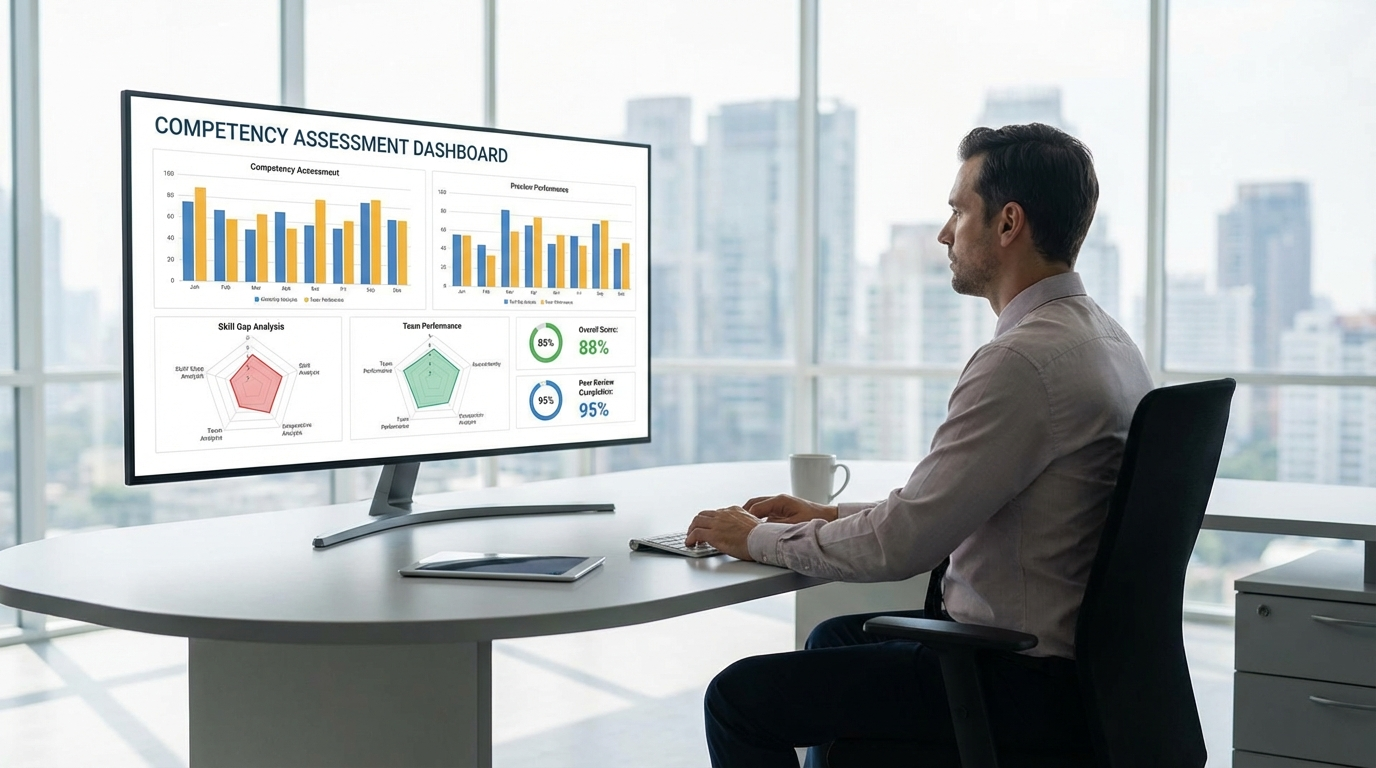
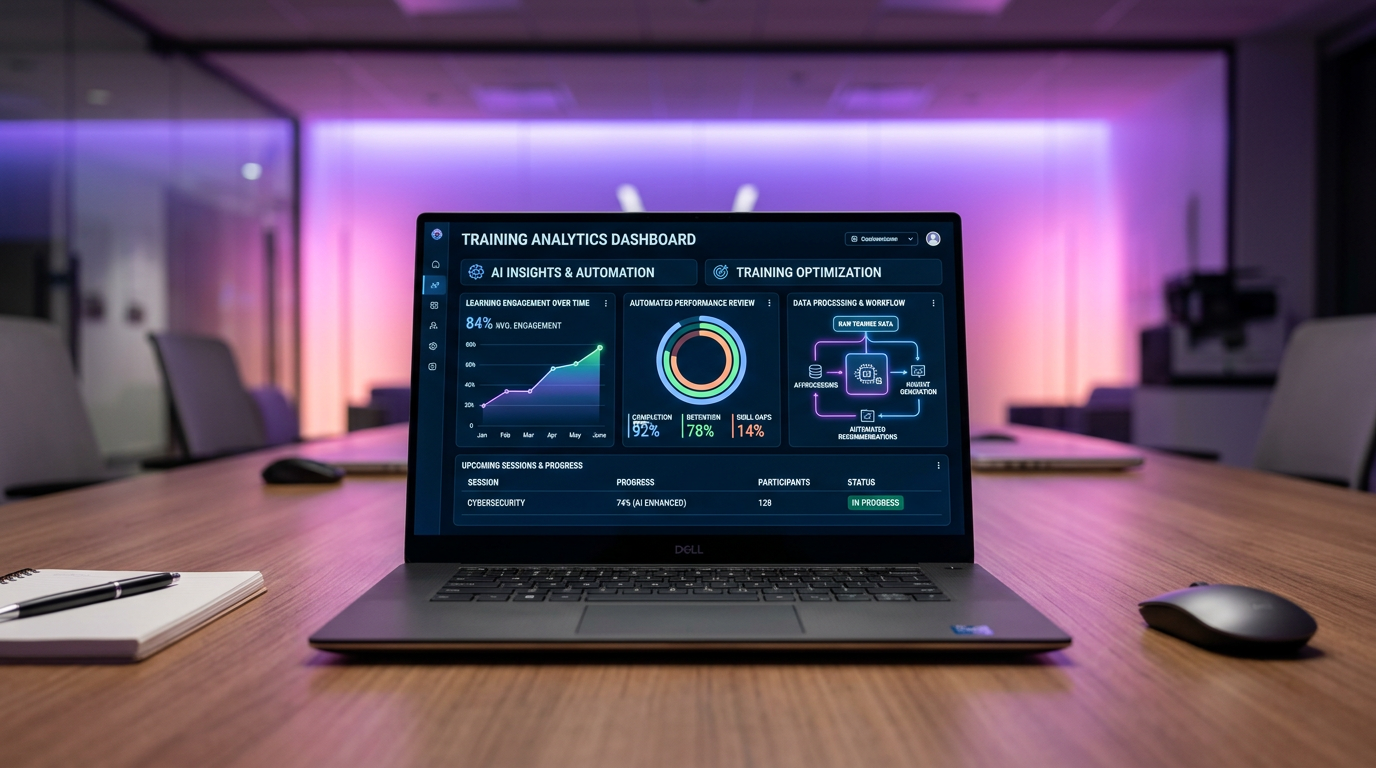
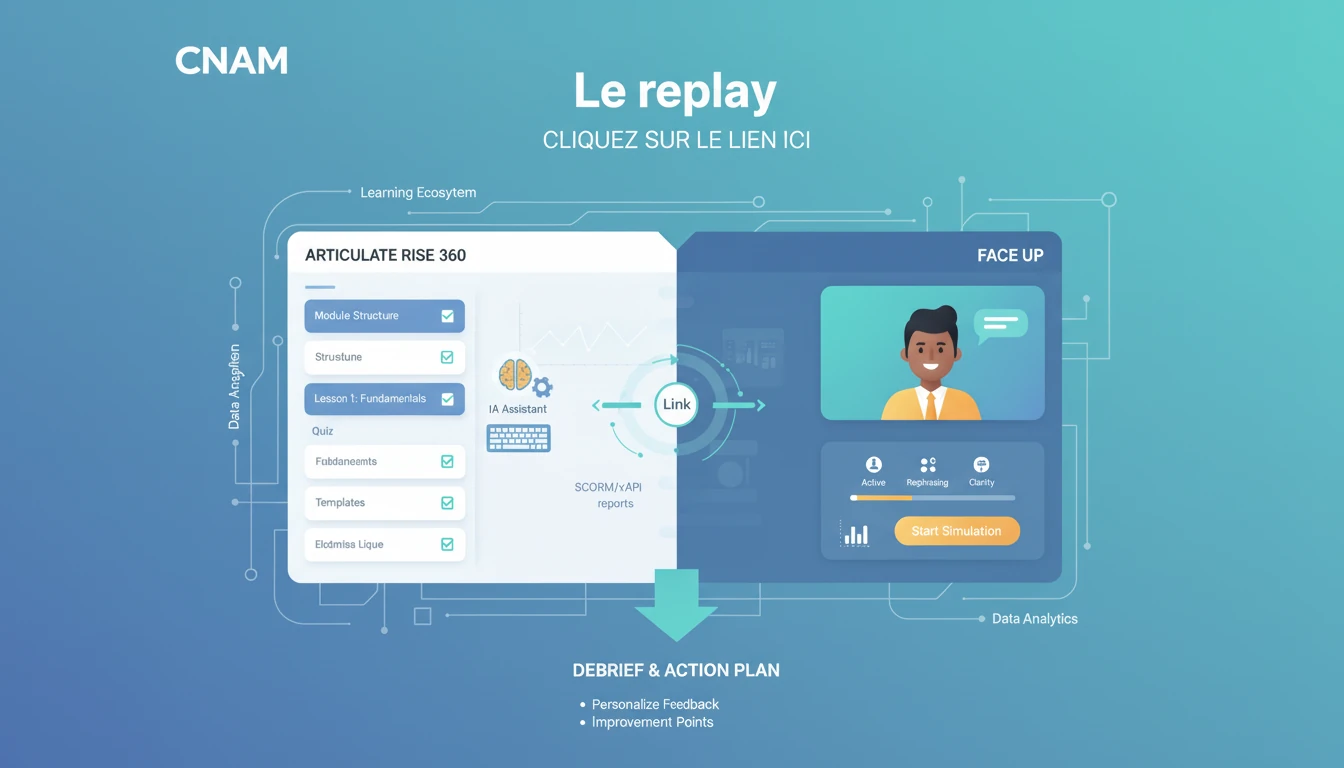
At Face Up, assessment is built into every practice session. The facilitator has a dashboard with each learner's scores, session replays, and progression indicators by skill. That is the logic of continuous assessment: each session is both a moment of practice and a moment of measurement. Assessment stops being a one-off event and becomes a process embedded in the learning journey.
Assessing personality instead of behaviour. Soft skills are not personality traits such as extraversion or agreeableness. They are skills that can be learnt and developed. Assess specific, observable behaviours, not general dispositions.
Relying on a single source. No assessment method is reliable on its own. Self-assessment is biased. A 360 depends on the quality of the respondents. Managerial observation is limited to the situations observed. AI simulation measures behaviour in a simulated context, which is not necessarily the real one. Cross-reference the sources for a complete picture.
Assessing once and forgetting. Soft skills change over time; they can improve or regress depending on the professional context, stress and changes in environment. A one-off assessment is a snapshot. Only regular follow-up allows skill development to be steered.
Using assessment to sanction. If soft skills assessment is perceived as a judgement tool, people will adopt avoidance strategies — social desirability bias, refusal to take part. Assessment has to be positioned as a development tool, in the service of each individual's progress. That implies confidentiality of individual results and a clear separation between developmental assessment and performance appraisal.
Ignoring context. Soft skills show up differently in different contexts. Someone can be excellent at communicating with colleagues and struggle with customers. A meaningful assessment takes account of the range of situations and interlocutors. This is why multiple simulations — different scenarios, different levels of difficulty — give a fairer picture than a single assessment.
The ultimate aim is to move from one-off assessment — an assessment centre once a year — to a culture of continuous assessment, in which every professional interaction is an opportunity for feedback and development.
That culture rests on three pillars. Regular managerial feedback: monthly conversations dedicated to behavioural skills, based on factual observation and clear improvement objectives. Peer feedback: team rituals in which colleagues give each other feedback on their interactions, after a client meeting, a presentation or a cross-functional project. And embedded measurement tools: AI simulators that assess each practice session automatically, regular internal satisfaction surveys, and relational performance indicators tracked continuously.
Organisations that adopt this approach observe a virtuous circle: regular measurement motivates development, development improves results, and results justify the investment. That is how you build a soft skills programme with a demonstrable ROI — and therefore a durable one.