
Artificial intelligence is no longer a distant promise in corporate learning. It is already changing how organisations develop their people's behavioural skills. But beyond the technology hype, what are the real use cases? What results are companies actually getting? And, most importantly, how do you fit AI into a soft skills training strategy in a way that makes sense?
Three technology waves have shaped AI's arrival in workplace learning. The first, in the early 2020s, brought recommendation engines and adaptive learning: algorithms that tailored a learning path based on the learner's answers. Useful for technical knowledge, limited for interpersonal skills.
The second wave, driven by generative language models, made realistic conversation simulation possible. For the first time, a learner could interact with a virtual counterpart that understood context, responded coherently and adapted to the conversation in real time.
The third wave, the one we are in now, adds multimodal analysis: the ability to assess verbal content, tone of voice, facial expression and body language at the same time. That convergence opens genuinely new ground for soft skills training, where how something is said matters as much as what is said.
AI conversational simulation platforms let learners practise complex interpersonal situations by talking to AI-driven avatars. Unlike traditional peer role-play, these simulations are available at any time, endlessly repeatable and fully configurable.
Conversational simulation covers a wide range of workplace situations. Sales and negotiation practice lets sales teams run discovery conversations, handle objections and rehearse closing techniques with virtual buyers of varying profiles. Difficult-situation practice gives customer service teams a safe space to work with unhappy, aggressive or confused customers. Managers rehearse sensitive conversations: announcing an unpopular decision, delivering critical feedback, handling conflict inside the team. And onboarding moves faster thanks to graduated scenarios that prepare new joiners for real interactions.
Organisations that have deployed conversational simulation report significant outcomes. Onboarding time on interpersonal skills is cut by up to half, because learners reach real situations far better prepared. Sales conversion improves as targeted repetition embeds technique. Learner satisfaction runs very high, largely because people can practise at their own pace with nothing at stake.
One of AI's most distinctive contributions to soft skills training is its ability to analyse not just what the learner says but how they say it. Multimodal analysis covers verbal content (word choice, argument structure, clarity), paraverbal signals (pace, intonation, volume, hesitation) and non-verbal cues (facial expression, posture, eye contact).
This produces detailed, objective feedback that even an experienced trainer cannot deliver consistently. In a face-to-face role-play, the trainer observes the interaction as a whole. AI breaks it down moment by moment: the second at which the conversation started to deteriorate, the shift in tone that triggered a negative reaction, the point at which the learner lost the thread of their argument.
AI-generated feedback does not replace the trainer, it augments them. The trainer gets an annotated replay of each session, with time markers on the key moments. That allows a targeted, factual debrief built on precise observations rather than general impressions. The precision is especially valuable for emotional intelligence, where the nuances are what matter.
Every employee has a different profile of strengths and gaps when it comes to soft skills. One listens well but struggles to structure an argument. Another communicates clearly but lacks empathy when challenged. Traditional methods struggle with that diversity: in a group of twelve, the trainer has little choice but to standardise.
AI makes genuinely individual learning paths possible. Starting from an initial assessment (a diagnostic simulation), the system identifies each learner's strengths and gaps. It then builds a path that targets exercises at the priority development areas, adjusts difficulty in real time and concentrates effort where it will pay off most.
This is particularly effective for large-scale rollouts: it keeps the experience individually relevant while industrialising the process. Each employee follows a unique path, generated automatically, without consuming additional instructional design resource.
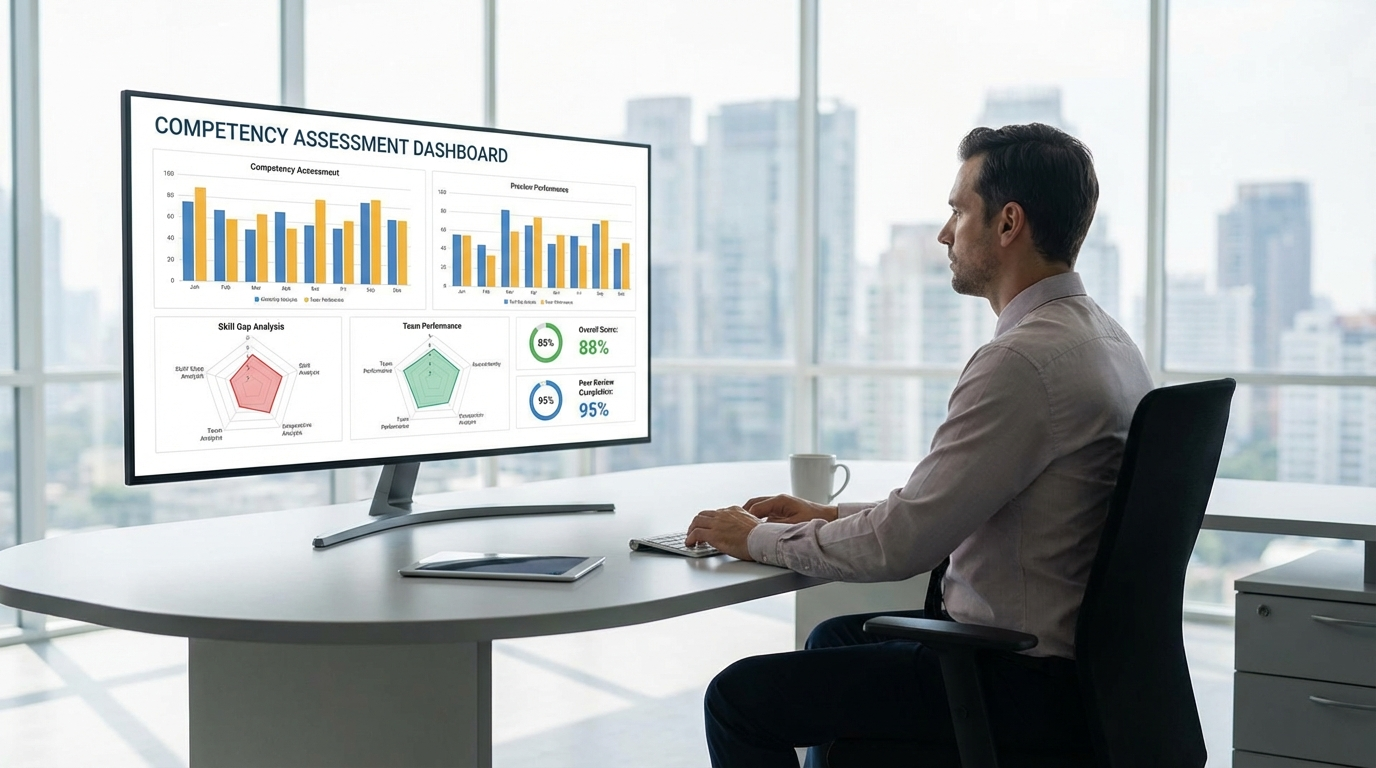
Soft skills assessment has always been a weak point in corporate learning. Satisfaction questionnaires measure feeling, not capability. 360-degree reviews are subjective and time-consuming. AI offers, for the first time, objective and repeatable metrics on behavioural skills.
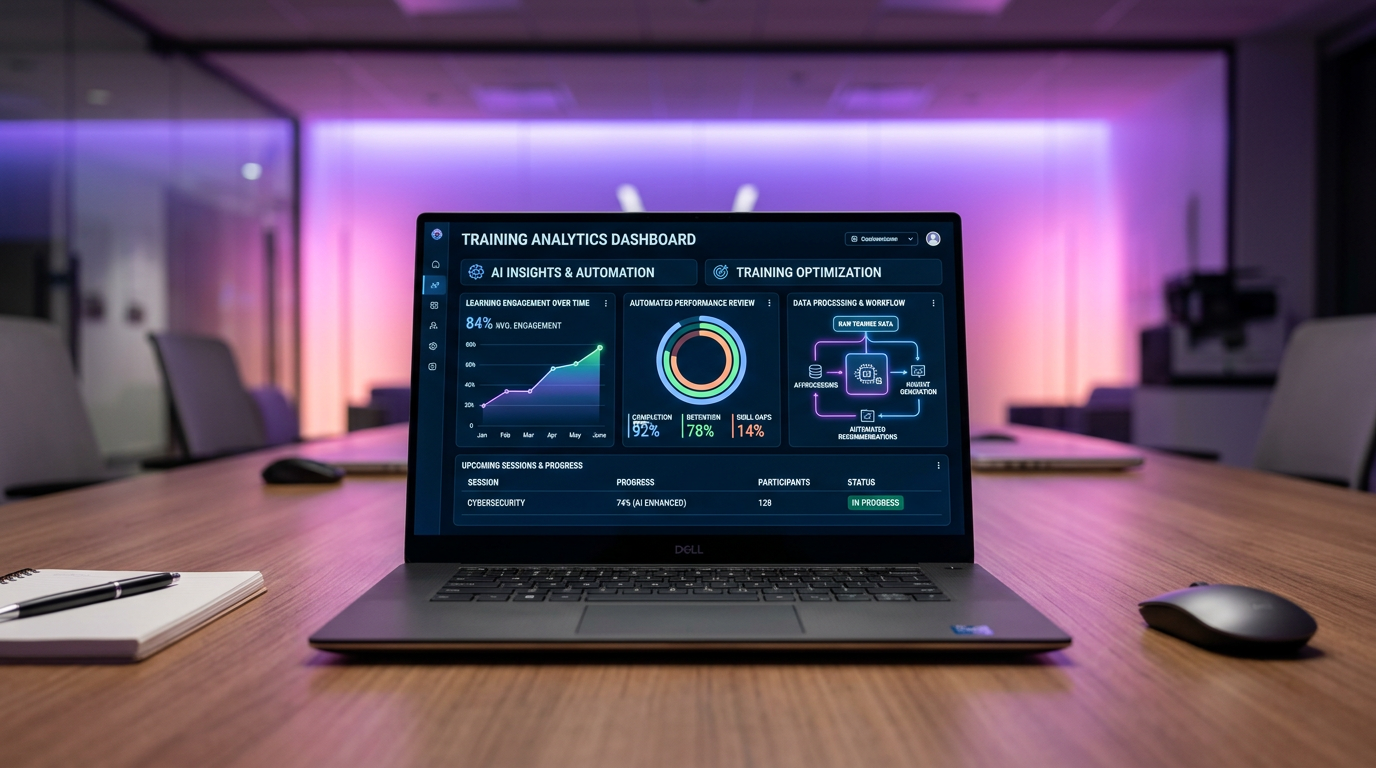
Simulation platforms automatically generate performance scores against predefined criteria: quality of listening, relevance of reformulation, emotional regulation, argument structure, adaptability. Calculated at every session, these scores make it possible to track progress over time and to correlate skills improvement with business indicators.
With that data, learning teams can finally demonstrate return on investment factually. Cross-referencing simulation scores with operational indicators — conversion rate, customer satisfaction, retention — establishes robust correlations between soft skills development and business performance. That changes the conversation with the executive team: training moves from being a cost line to a measurable investment.
For all its progress, AI does not fully reproduce the complexity of a real human exchange. Genuine empathy, group dynamics, the emotional pressure of a high-stakes conversation — these remain things only human interaction can create. That is why the most effective approaches combine the two: simulation for preparation and repetition, face-to-face for experimenting under real conditions.
Too much technology can, paradoxically, undermine the development of interpersonal skills. If learners only ever practise with machines, they risk developing reflexes optimised for algorithms rather than for people. The balance is delicate: AI should multiply human practice, not replace it. Trainers keep an irreplaceable role in decoding complex situations and supporting personal development.
AI models reproduce the biases present in their training data. In soft skills training, that can mean assessments skewed by a learner's accent, communication style or cultural references. Responsible vendors are actively working to reduce these biases, but vigilance remains necessary. The ethics of AI in learning is a subject organisations should take seriously.
Rather than digitising everything at once, identify where AI adds the most value. Typically that is where the population to train is large, the target skill is primarily conversational, and repetition is the key driver of progress. Training sales teams in negotiation, or frontline teams in customer relationship management, are high-ROI starting points.
AI is a tool in the service of trainers, not a substitute for them. Bring them in at the design stage. Their expertise is essential to defining relevant scenarios, calibrating assessment criteria and using the resulting data in their debriefs. Change management with the learning team is a success factor that is often underestimated.
The market for AI learning solutions is expanding rapidly. Selection criteria should include the quality of the generated conversations (natural and coherent), the depth of multimodal analysis, how easily you can build custom scenarios, integration with your existing LMS and GDPR compliance. Favour solutions with an authoring tool for trainers — they are the ones who design the most relevant scenarios.
Define clear success indicators from the outset and measure regularly. Securing funding for soft skills training that uses AI increasingly requires evidence of results. Collect comparative data (before and after, with and without AI) and share it with stakeholders to justify continuing or extending the programme.
Artificial intelligence does not overturn the fundamentals of soft skills learning. Practice, feedback and support remain the three pillars. What AI adds is the ability to scale all three to a degree that was previously impossible, with a level of precision and personalisation no manual process could match.
The organisations getting the most from AI in learning are those that place it inside a clear pedagogical vision, with trainers involved and objectives that can be measured. The 2026 trends suggest this convergence between human expertise and artificial intelligence will only accelerate. Those preparing for it now will build a decisive lead.