
Behavioral skills training has become a top priority for HR leaders, L&D teams and training providers. Listening, assertiveness, conflict management, adaptability: these skills decide the outcome of a sales meeting, a difficult conversation with a direct report or an angry customer call. Yet most programs fail to build them, because they treat behaviors as knowledge to explain rather than reflexes to build. The result: learners who can recite the method perfectly, but cannot apply it under pressure. This 2026 guide covers the essentials: what behavioral skills actually are, why they are learned differently from technical skills, which methods genuinely work, and how to structure, fund and evaluate a program.
"Behavioral skills" is the term used by HR competency frameworks and job references. It describes the ability to adopt the right behavior in a given professional situation: listening to an unhappy customer without getting defensive, addressing an underperformance issue without alienating the person, defending a position in a meeting without aggression. It is the institutional cousin of "soft skills", with one useful nuance: the word "behavioral" points to what can be seen and observed in a situation, not to a supposed quality of the person.
That nuance changes everything for training. A behavior can be described, practiced and measured. Where "having leadership" stays vague, "restating the objection before answering" is a precise move that can be trained, observed and assessed. That is also the form in which assessment frameworks expect them. In practice, they show up everywhere: job descriptions, performance review grids, certification frameworks. The labels vary — behavioral competencies, interpersonal skills, soft skills — but the assessment logic converges on the observable. For the broader vocabulary, our article on the definition, list and examples of soft skills covers the concept; and for ten skills detailed with their observable behaviors, see our 10 key behavioral skills examples.
A technical skill transfers largely through explanation: you show the procedure, the learner understands it, then applies it. A behavioral skill does not follow that path. Knowing the principles of active listening does not make you able to listen to an aggressive counterpart. Everyone knows you should "stay calm with a difficult customer"; very few manage it the first time.
The mechanism is well documented: under stress, the brain does not retrieve declarative knowledge (what I know) but automatisms (what I have already done). If the learner has never lived the situation, they improvise — and fall back on their default reflexes. That is why transfer through theory alone is so weak: the knowledge exists, but the behavior was never wired in. A salesperson can recite objection handling flawlessly in a classroom and freeze the moment a prospect raises their voice. Effective behavioral training must therefore make people live the situation, not just explain it. For trainers, that is a change of posture: less top-down delivery, more role play and debriefing. Research on training transfer confirms the gap: the share of a lecture-style course actually applied on the job remains marginal when no supported practice follows.
Three ingredients show up in every behavioral program that produces measurable results: realistic practice, structured feedback and spaced repetition.
This is the core of the system: the learner plays the real situation — the meeting, the negotiation, the complaint — opposite a counterpart who reacts. Peer role play works, but it runs into limits of time, realism and fear of colleagues' judgment. AI roleplay removes those constraints: everyone practices as many times as needed, opposite a credible counterpart who improvises, without borrowing a colleague's time. Conversational learning solutions like Face Up structure these sessions in short formats of ten minutes maximum, immediately followed by a debriefing.
Practicing without feedback means repeating the same mistakes with growing confidence. Debriefing turns the attempt into learning: what worked, when the exchange tipped, which precise behavior to change on the next try. A good debriefing relies on observable facts ("you interrupted three times") rather than judgments ("you don't listen enough"), and ends with a concrete commitment for the next attempt.
A behavior stabilizes through repetition over time. A single session creates awareness; it is the second, third and fifth attempts — spaced a few days apart — that install the reflex. Effective programs therefore schedule several passes on the same family of situations, with rising difficulty: a counterpart who is first cooperative, then rushed, then openly hostile. This is also the strongest argument for spacing sessions over time rather than packing everything into a single day, whose effect fades within weeks.
Top-down e-learning — videos, narrated slides, knowledge quizzes — remains the most deployed and the least effective format for behavior. It transfers knowledge; it does not create reflexes. A 90% quiz score says nothing about the ability to handle a real conflict; worse, it feeds an illusion of mastery, because the learner confuses "I understand" with "I can do it". The same goes for expert talks and compliance modules: useful for setting a shared frame, insufficient for changing a practice. These formats belong upstream, to prepare the practice — never in its place. Our comparison of the best soft skills training methods details the relative effectiveness of each format. E-learning keeps its full value for the knowledge part, though: completing a short module before the practice session means arriving with the framework in mind and devoting all synchronous time to training.
An effective program alternates three phases: a short input (the frame, the method, the success criteria), intensive practice (repeated role plays with debriefing), and on-the-job anchoring (real application, follow-up by the manager). Designing each module follows a precise logic — behavioral objective, triggering situation, observable criteria — detailed in our method for designing a soft skills training module. For sequencing over time, our 12-week soft skills program model shows how to alternate input, practice and consolidation without overloading calendars. And to understand the acquisition mechanics behind that sequencing, read how to develop behavioral skills through practice. A simple ratio helps arbitrate: at least half of training time devoted to practice and debriefing, versus 10 to 20% in most current programs.
Behavioral skills qualify for training budgets like any other program, provided you meet sponsors' expectations. Budget holders and funding bodies — in France, the OPCO — look at three things. First, objectives phrased as assessable skills: not "raise awareness about communication", but "conduct a feedback conversation following a given structure". Second, a course design that specifies the methods: role plays, debriefings, between-session assignments, durations. Third, a documented assessment of acquired skills at the end of the program, with evidence. Certified providers must also track attendance and satisfaction. The good news: practice-based formats naturally tick these boxes, because every session produces far richer activity and assessment records than an e-learning module watched passively. Before submitting a funding request, also check your sector's priorities: several funding bodies earmark specific budgets for managerial and relational skills, with ceilings separate from the standard training plan.
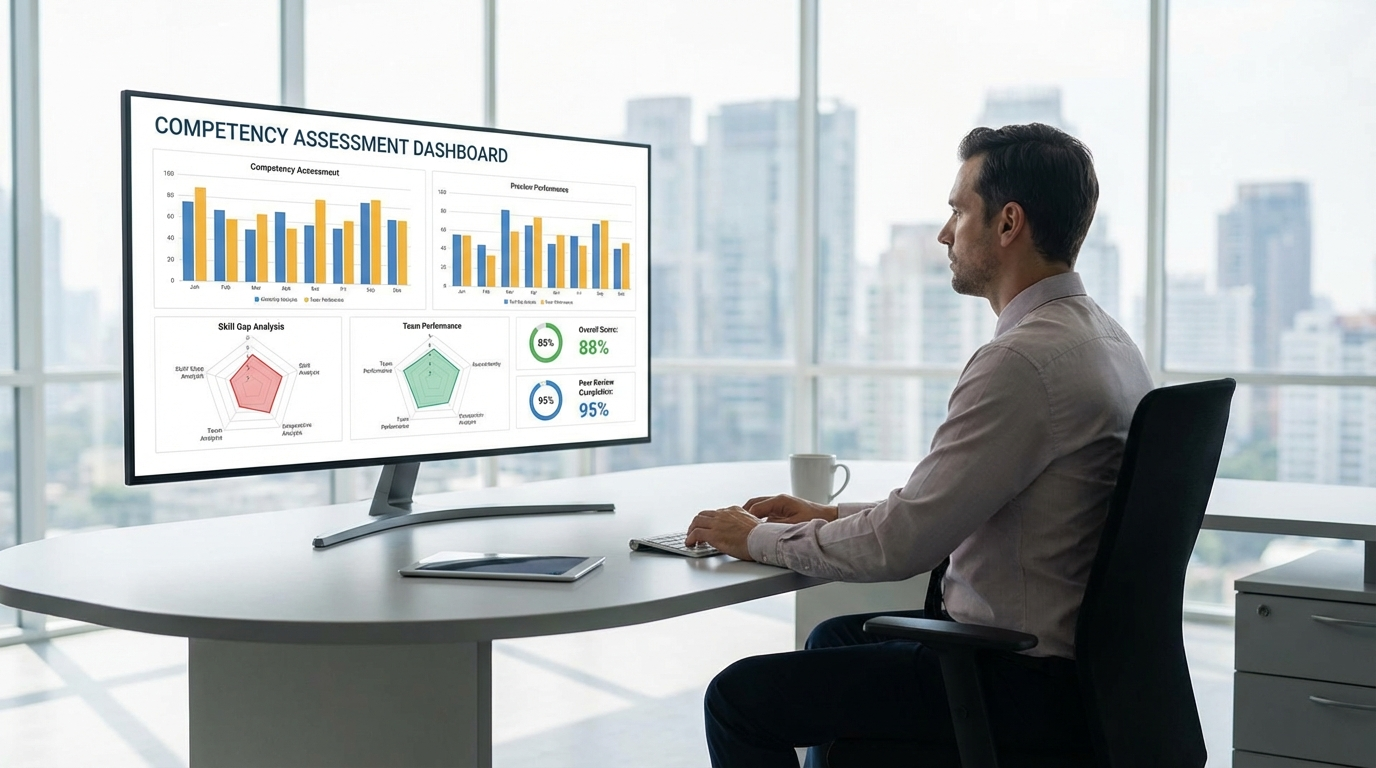
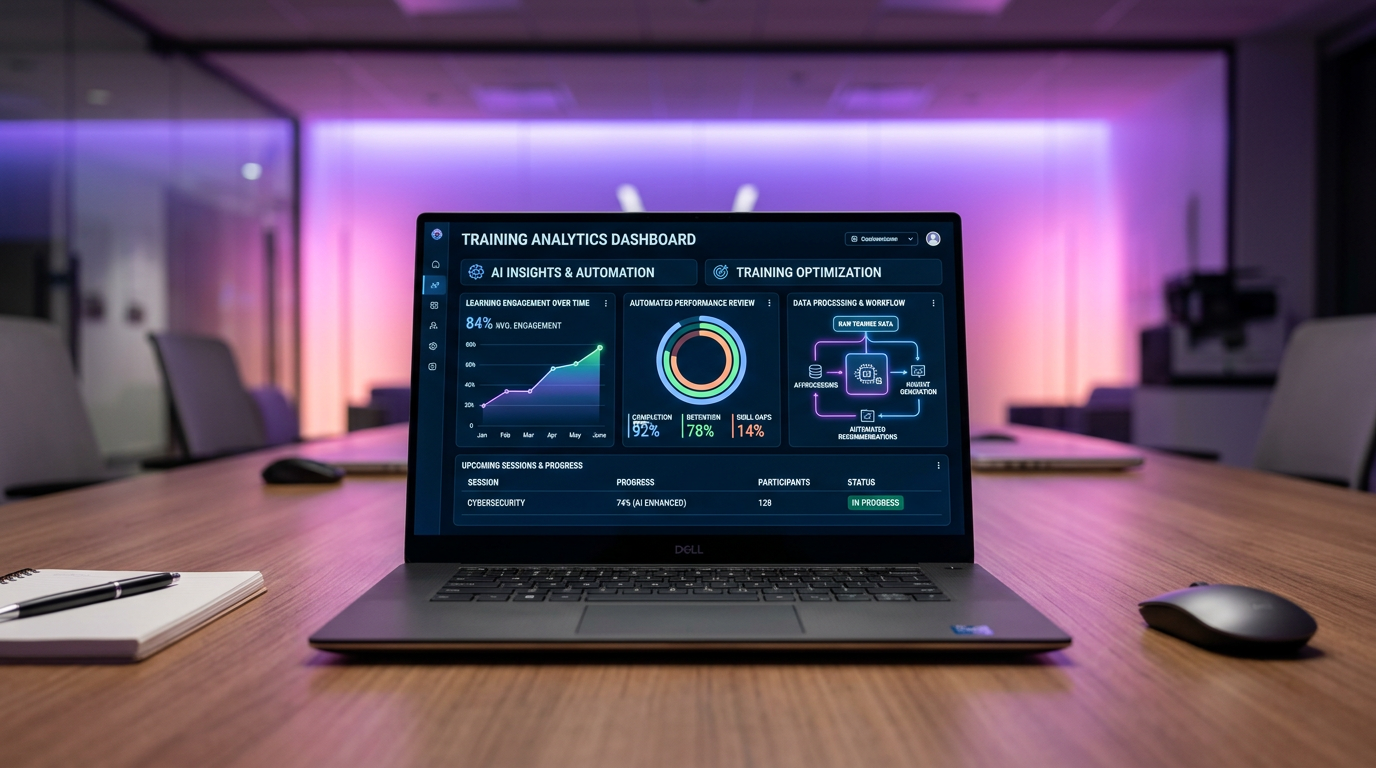
Evaluation must target behavior, not knowledge. Three levels complement each other. First, an assessment role play at the end of the program, scored against a grid of observable behaviors defined at design time. Second, a before/after comparison on the same criteria, which makes individual progress objective. Third, at three months, field indicators: quality of real conversations, customer feedback, team climate. Our guide on how to evaluate and measure soft skills offers ready-to-use grids and protocols. One pitfall to avoid: relying on questionnaires alone. Self-assessment measures confidence, not competence — and the two often diverge, with the least skilled being precisely those who overestimate themselves the most.
Training behavioral skills means accepting a simple principle: you do not learn a behavior by hearing about it, you learn it by living it. Role play, debriefing, spaced repetition — the trio is well known, and conversational learning tools now make it possible to deploy at scale without multiplying classroom days. What remains is structuring the program, funding it and proving its effects: everything this guide has just mapped out. To go deeper into the method that carries the whole system, read our complete guide to roleplay training.