
If there is one principle to take from learning science, it is this: we learn by doing. The research is consistent — interpersonal skills develop through deliberate practice, not through reading or observation. That is why role-play sits at the heart of any serious customer relations training programme.
But "role-play" can mean very different things. A face-to-face exercise with a trainer. A virtual reality scenario in a headset. A conversation with an AI avatar on a laptop. Each format has its strengths, its limits and its costs. This article sets out an objective comparison to help you pick the right one for your context.
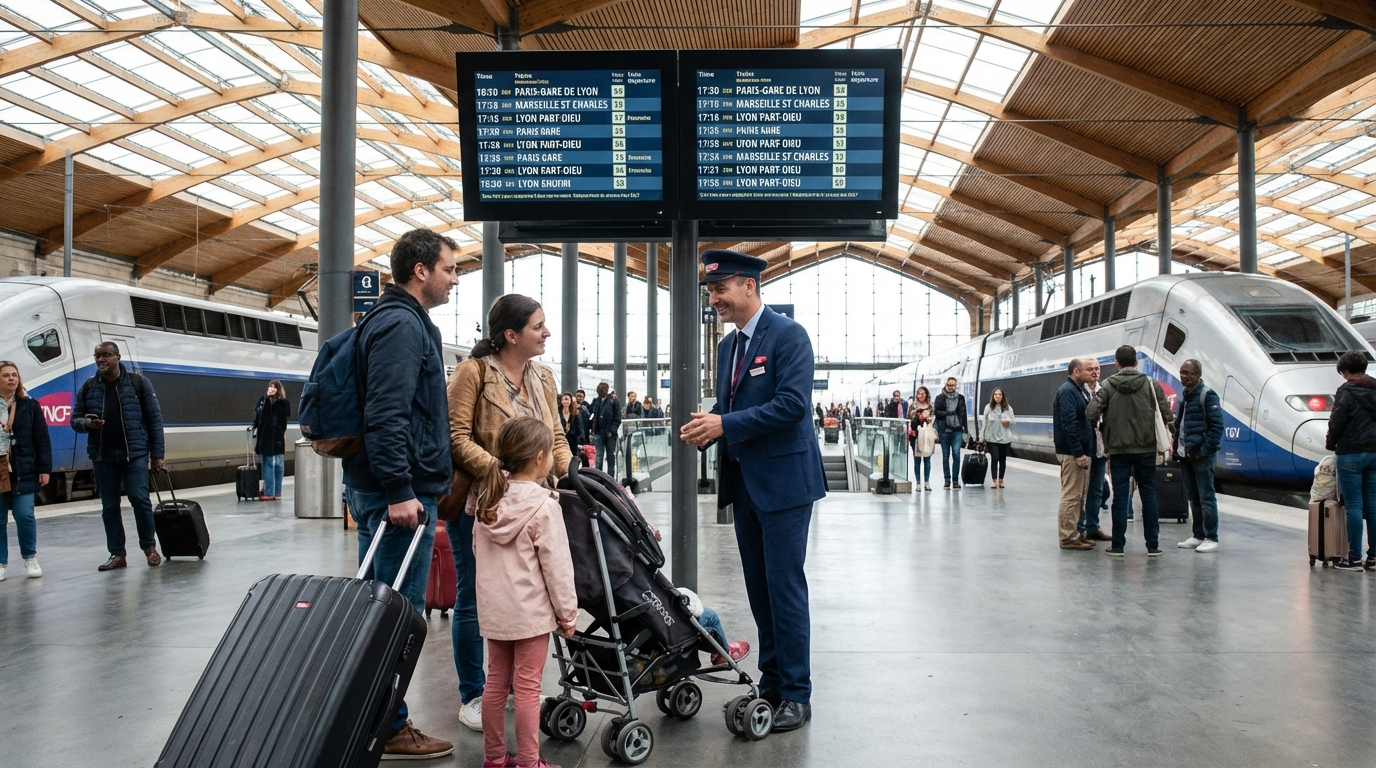
In-person role-play puts the learner in front of a trainer, an actor or a peer playing a customer. The exchange happens in real time, with every dimension of verbal and non-verbal communication in play. The rest of the group observes, and the trainer runs a debrief after each turn.
Nothing replaces the richness of a full human interaction. Body language, micro-expressions, physical proximity, the energy of the room — all of it creates emotional pressure close to the real thing. The trainer can adjust difficulty on the fly, respond to an unexpected reaction, and tailor the debrief to the individual.
Group dynamics are a strength specific to the classroom. Watching colleagues handle — or fail to handle — a difficult situation is powerful observational learning. The discussions that follow build a shared vocabulary across the team.
Cost is the main constraint. A qualified trainer typically costs €1,000 to €2,000 a day. Add the room, travel expenses, and the time participants spend away from the front line. For a team of 200 people, in-person delivery quickly runs into tens of thousands of euros.
Scalability is limited. Running ten groups of twelve takes at least two months. Consistency is uneven: quality depends heavily on the individual trainer. And retention is fragile without a follow-up mechanism after the workshop.
The learner puts on a headset and finds themselves in a 3D environment — a branch, a shop floor, a service desk. A virtual character speaks to them and reacts to their answers. Some solutions use speech recognition; others work through multiple choice.
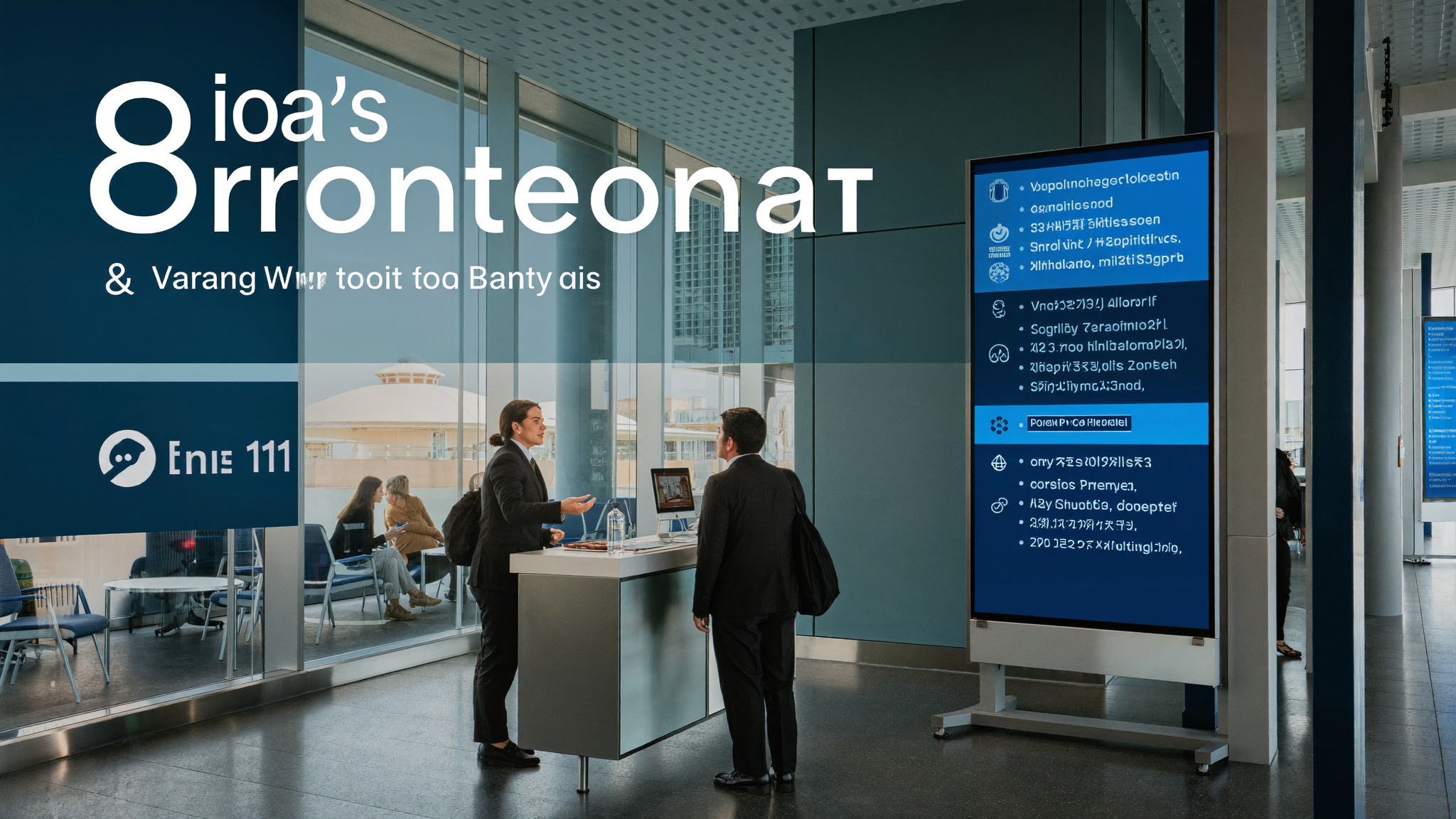
The "wow" effect is real. VR creates a sense of presence that drives high engagement. The visual environment anchors the experience in a concrete setting. For some roles — station staff, retail sales — reconstructing the physical space adds genuinely useful context.
Production cost is prohibitive. Building a good VR scenario costs somewhere between €20,000 and €100,000. Every update to that scenario is a further investment. The hardware — headsets, charging stations, maintenance — adds a significant logistical layer.
More fundamentally, most VR solutions are branching scenarios wrapped in 3D rather than genuine conversations. The learner picks from pre-written responses, which is radically different from having to formulate an answer themselves, as they would with a real customer. Conversational authenticity is sacrificed for the visual shell.
The learner holds an open conversation with an AI avatar — by audio, video or text. The avatar plays a customer with a personality, a context and objectives defined by the trainer. The conversation is natural and unpredictable: the avatar responds to the learner's words, tone and attitude.
Conversational authenticity is the key differentiator. The learner does not choose from options — they formulate their own answers, in their own words, exactly as they would with a real customer. That freedom is what builds genuine reflexes.
Scalability is close to unlimited. Once a scenario is designed, hundreds of learners can practise simultaneously, around the clock. The marginal cost per session is low — in the order of €1 to €2 for five minutes — which makes repetition economically viable.
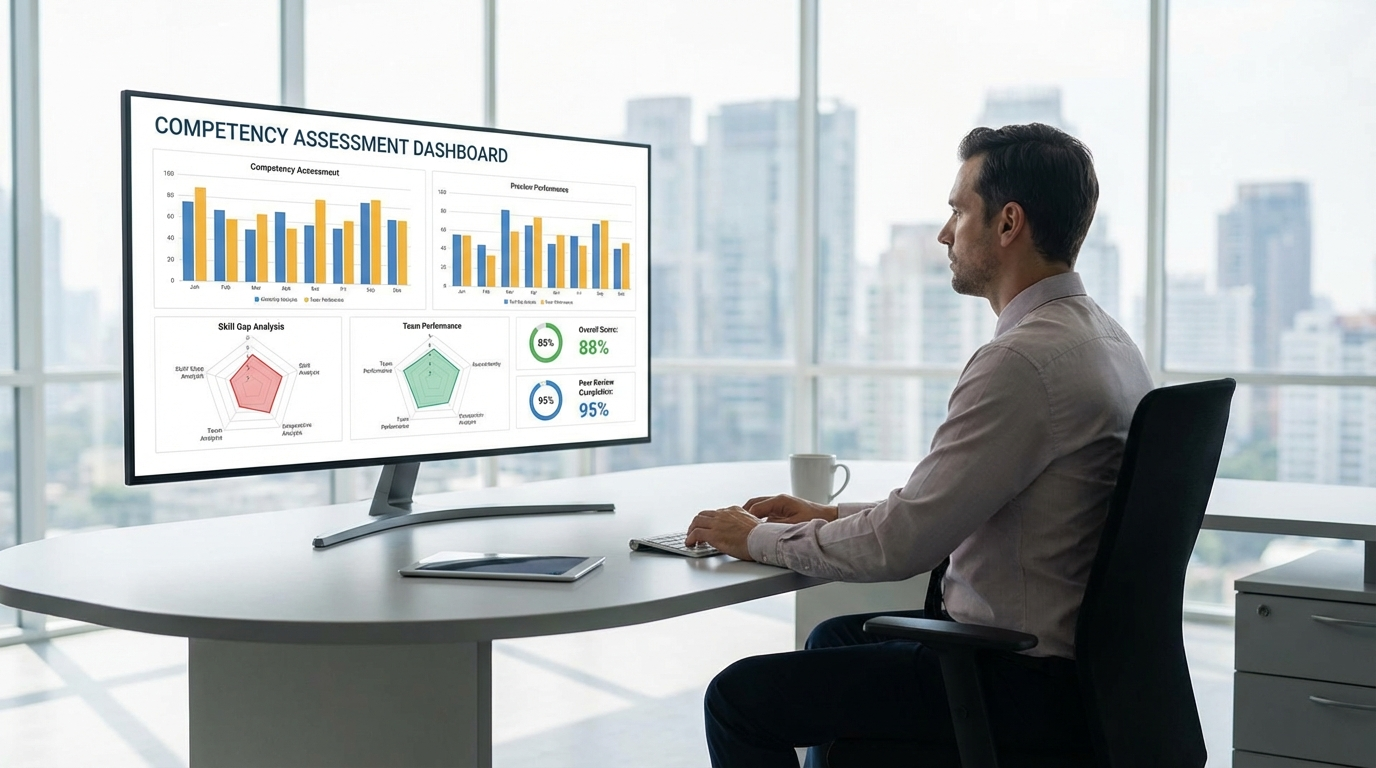
Multimodal analysis delivers objective, detailed feedback that even an experienced trainer cannot match: analysis of what was said, of vocal tone, of detected emotions, and for video sessions, of posture and facial expression. That feedback is available immediately, for every session.
And unlike VR, scenarios can be modified in minutes through a no-code authoring tool. The trainer keeps creative and pedagogical control — the "trainer-first" approach Face Up argues for.
Conversational AI does not yet reproduce every nuance of a human exchange. Highly complex or emotionally extreme situations are still better handled face to face with a trainer. And the group dimension — watching peers, discussing together — needs an in-person or virtual complement.
To make the choice easier, here is how the three formats compare on the criteria that matter.
On conversational authenticity, in-person and AI both beat VR, which is often limited to multiple choice. On scalability, AI and VR outperform the classroom. On cost per session, AI is the most economical. On depth of feedback, AI multimodal analysis goes further than either alternative. On ease of deployment, AI wins again: a web browser, no specific equipment.
In practice, the most effective training programmes combine formats according to the stage of the learning journey.
Discovery: an in-person workshop to set the frame, build group dynamics, and run the first supervised role-plays.
Intensive practice: AI avatar sessions to repeat, experiment and build reflexes at each learner's own pace. Learners practise against different customer types — the difficult customer, the confused customer, the customer in a hurry — with immediate feedback.
Debrief and coaching: the trainer reviews the AI sessions (replays, statistics, key moments) to run a targeted, personalised debrief.
Retention: microlearning with five-minute AI sessions to keep the reflexes alive over time.
This combination gives the best value for money by using the strengths of each format: the classroom for human richness, AI for repetition and feedback, and blended learning as the overall architecture of the journey.
Three simple questions will orient the choice. How many learners? Beyond fifty, an all-classroom approach becomes slow and expensive. What budget per learner? Under €200 points towards digital; above €500 leaves room for in-person work. What is the priority outcome? Building reflexes favours repeatable formats (AI, microlearning); team cohesion favours the classroom.
Whichever format you choose, the ingredients of success are the same: credible scenarios, structured feedback, and repeated practice over time. That combination is what turns theoretical knowledge into operational skill.