
Research from the National Training Laboratory places "active practice" at the top of the learning pyramid: learners retain around 75% of what they practise, against 5% of what they hear in a lecture and 10% of what they read. For soft skills, that gap matters even more. Nobody becomes a strong communicator by studying communication theory, any more than they become a strong swimmer by reading about swimming.
Behavioural competencies are embodied skills: they live in the body, the voice, the reflexes. Interpersonal communication, stress management, leadership — every one of them requires experience, error, feedback and repetition. That is exactly what role-play and simulation deliver.
An effective role-play starts with a well-built scenario. Four elements are essential.
A realistic, recognisable context. The scenario has to evoke situations participants actually meet (or will meet) in their working day. A shop-floor salesperson will not engage with a diplomatic negotiation case. Identification with the situation is the first lever of engagement.
A clear stake. The learner must understand what is on the line: satisfying an unhappy customer, convincing a decision-maker, defusing a team conflict. The stake creates the tension that emotional learning requires.
A detailed persona. The "customer" or "colleague" the learner will face must be characterised precisely: profile, emotional state, expectations, likely objections. A good persona makes the interaction unpredictable, and therefore instructive.
Defined learning objectives. Each scenario should target a limited number of skills — two or three at most. Too many objectives dilute the learning. "Practise active listening and reflect the customer's emotions back to them" is precise and assessable.
Not all role-plays are alike. Here are the main formats and what each is good for.
Paired role-play. Two participants work face to face, one holding the professional role, the other playing the customer or colleague. Simple to set up, and it lets everyone practise at once. The limitation: the quality of the interaction depends on how convincingly the "extra" plays their part, which is not always realistic.
Role-play with the trainer. The trainer plays the customer or colleague opposite a volunteer participant. The advantage is considerable — the trainer can calibrate difficulty, introduce twists and create a very realistic interaction. The drawback: only one participant practises at a time while the rest observe.
Fishbowl. A pair works in the centre of the group while the others observe using a predefined observation grid. This format is powerful for collective debriefing, because observers bring varied perspectives. It works particularly well for communication skills, where non-verbal cues are central.
Progressive role-play. Difficulty rises in steps across scenarios: first a mildly dissatisfied customer, then an angry one, finally a threatening one. That progression builds the learner's confidence before exposing them to more demanding situations.
A role-play without a debrief is just an exercise. The debrief is what converts experience into durable learning. A good one follows a four-step structure.
1. How the learner felt. "How did that exchange feel to you?" The question surfaces the emotions involved — stress, frustration, pride, confusion — and connects them to the behaviours adopted. It is the starting point of self-awareness.
2. Factual observation. What did the learner actually do? Which words did they use? What tone? What posture? Observers and trainer share factual observations without judgement. A video recording is ideal, because it anchors observations in concrete evidence.
3. Analysis and alternatives. What worked? What could have been done differently? The group explores alternatives: "At that moment you could have named the customer's emotion before offering a solution." The trainer adds theoretical framing tied to what was observed.
4. Commitment to action. The learner states one concrete commitment: "Next time I face a dissatisfied customer, I will acknowledge the emotion before addressing the substance." That commitment bridges the training room and the job.
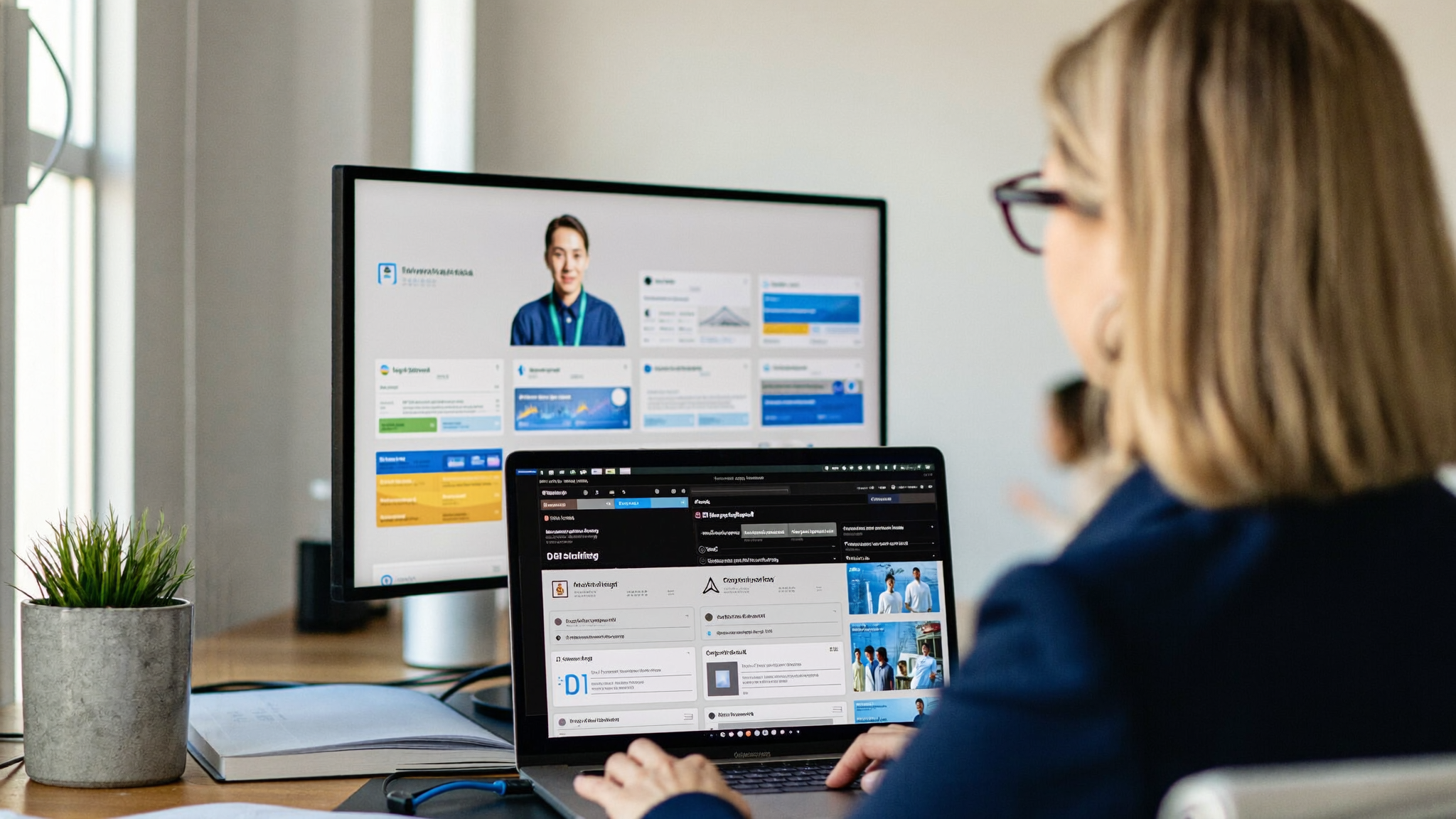
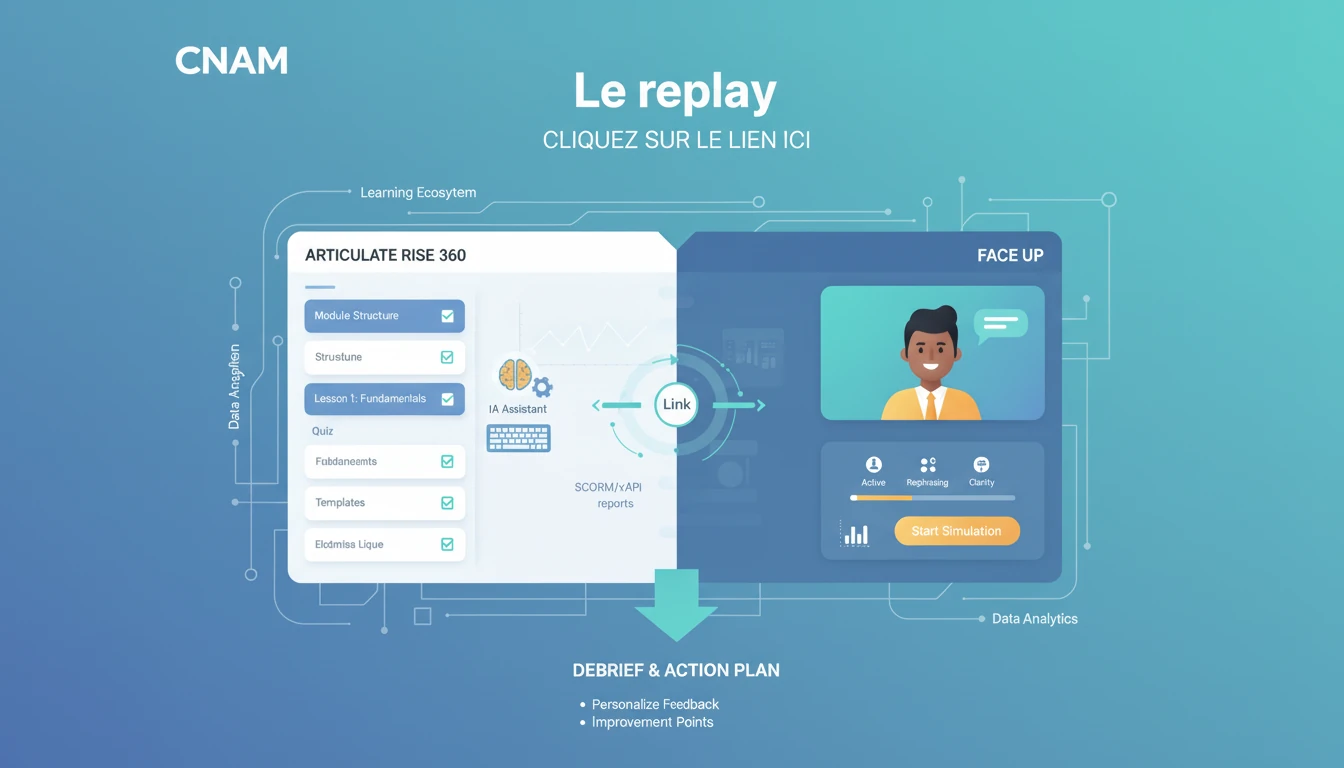
At Face Up, the debrief sits at the centre of the approach. The platform lets trainers observe sessions live, review replays with precise timestamps, and deliver multimodal feedback covering both substance and delivery — content, tone, posture, emotion. It is that observation–analysis–feedback loop that separates an exercise from actual learning.
The "I'm not an actor" reflex. Many participants resist role-play out of fear of looking foolish or a lack of confidence. To get past it, start with short, low-exposure exercises. Set an explicit frame of trust: no judgement, the right to get it wrong, goodwill throughout. Model it yourself by playing an imperfect role. The most reluctant participants often become the most engaged once the initial barrier is down.
A scenario too far from reality. If participants do not recognise themselves in the situation, they disengage. Use cases drawn from their own working day — ideally co-built with them or with their managers. A scenario based on a real customer complaint will always land harder than a generic case.
A rushed debrief. The temptation is to run more simulations at the expense of the debrief. That is a mistake: two well-debriefed role-plays beat five with no structured feedback. Allow at least 15 minutes of debrief for every 10-minute exercise.
No progression. Offering scenarios that all sit at the same difficulty level gives the learner nowhere to go. Structure your scenarios into levels — beginner, intermediate, advanced — and match the difficulty to each participant's profile.
The limits of traditional role-play — dependence on the trainer, few repetitions, difficulty standardising — now have a technological answer in AI-based simulators.
The principle is simple: the learner interacts with an AI avatar playing a realistic character. The AI adapts its responses in real time to the learner's behaviour. Take an empathetic stance and the "customer" calms down; take a defensive tone and they escalate. That responsiveness is what makes the experience immersive and instructive.
The advantages stack up. First, repeatability: each learner can run the same scenario as many times as they want, testing different strategies. That is impossible in classroom training, where time is finite. Second, volume of practice: a learner can complete 10 to 15 simulations in an hour, against two or three in a classroom. Third, automated feedback: the AI analyses the content of the exchange, tone of voice and speech pace, then returns a detailed report immediately after each session.
This does not replace the trainer, and it is worth being clear about that. The trainer remains essential for designing scenarios, running collective debriefs and supporting learners who are struggling. What the AI simulator does is free the trainer from the repetitive work — playing the same difficult customer 15 times in a row — so they can concentrate on where their value actually is: observation, analysis and debrief. That trainer-first stance is the one Face Up is built around.
The two approaches complement each other more than they compete.
On realism of interaction, traditional role-play with an experienced trainer still wins. Human contact, non-verbal richness, the unpredictability of a real person — nothing fully replaces that. But AI simulators have improved considerably and now deliver highly credible interactions, particularly for verbal exchanges.
On volume and frequency of practice, the AI simulator wins comfortably. A learner can train whenever they like, wherever they like, as often as they like. The learning science here is unambiguous: spaced repetition is the most powerful lever for embedding reflexes.
On feedback, the two are complementary. The trainer brings a human, nuanced, contextualised read. The AI brings objective, quantified, repeatable analysis. The ideal is both: AI for immediate feedback after each session, the trainer for a deeper debrief at regular intervals.
On scalability, the AI simulator is incomparably stronger. Training 500 frontline staff through traditional role-play means dozens of sessions, dozens of trainers and months of logistics. With an AI simulator it is a matter of weeks and licences.
Simulations are not an end in themselves — they are one component of a wider learning design. Here is how to integrate them into a soft skills training programme.
Before the simulation. Preparation time is essential. The learner should know which skills are targeted, have revisited the theoretical basics, and have set themselves a personal objective for the exercise. An e-learning module or a preparation sheet does this job. A blended learning approach works best here.
During the simulation. The frame must be clear (rules, duration, objectives), the environment psychologically safe (right to fail, confidentiality), and the conditions realistic (setting, props, time pressure). The closer the environment is to working reality, the easier the transfer.
After the simulation. A structured debrief is non-negotiable, but it is not sufficient on its own. An individual action plan, reinforcement exercises and follow-up sessions (coaching or peer development) complete the design. Assessment both immediately after and several weeks later is what lets you measure progress and adjust the programme.
The scenario: a customer spots unexpected charges on their statement and arrives at the branch visibly annoyed. The adviser has to receive the dissatisfaction, understand the situation and propose an acceptable resolution while staying inside internal procedure.
Skills worked: active listening, managing the customer's emotions (and their own), empathetic communication, problem-solving. This kind of scenario maps directly onto verbal and non-verbal communication techniques in customer-facing roles.
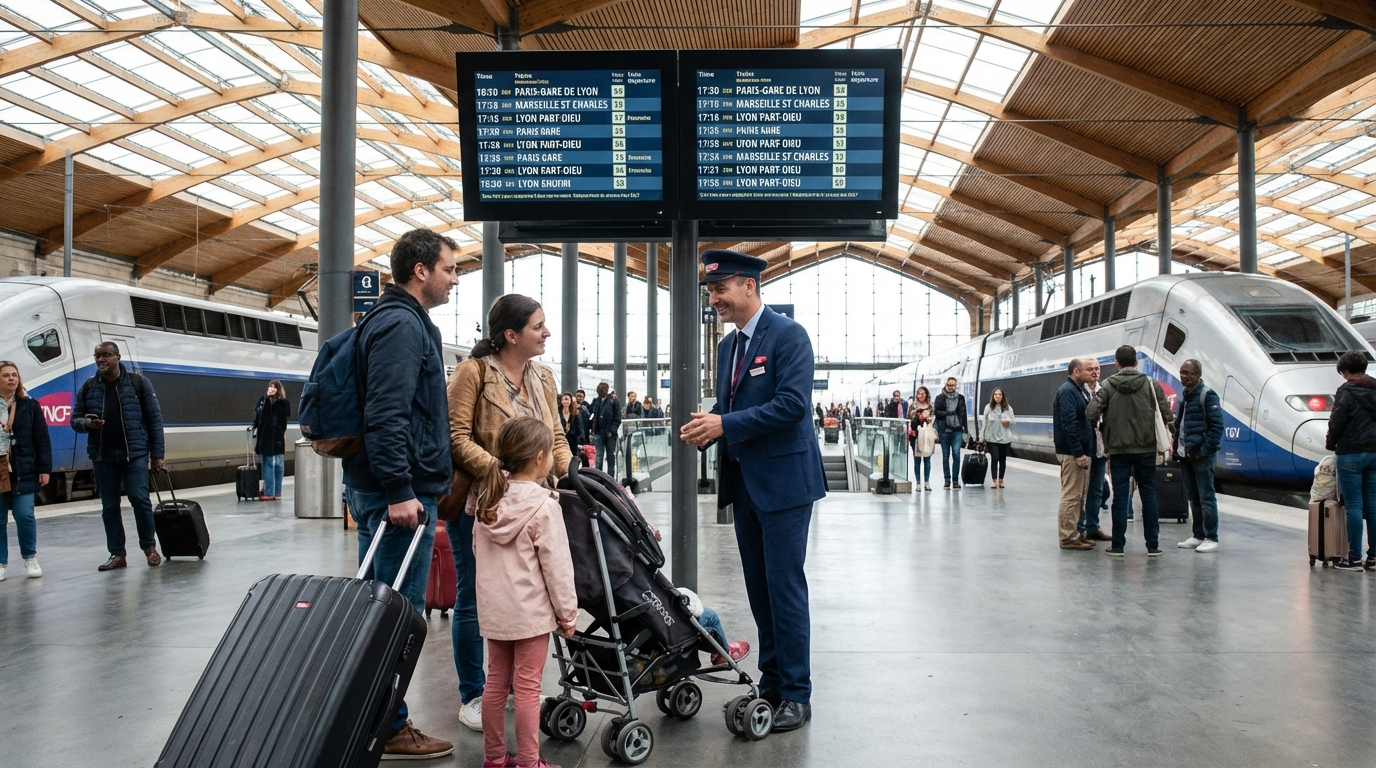
The scenario: an information agent has to tell a passenger in a hurry that their train is cancelled and no alternative exists for two hours. The passenger gets angry, threatens to complain formally and demands a manager.
Skills worked: handling aggression, de-escalation, staying calm under pressure, communicating clearly in a crisis. Rail and public transport teams face these situations daily.
The scenario: a customer walks in to buy one specific product. The salesperson has to identify complementary needs and suggest additional products naturally, without the customer feeling pushed.
Skills worked: open questioning, listening for buying signals, adapting the pitch to the customer profile, handling objections. These scenarios sit within the essential soft skills for sales professionals.
Three major trends are redefining simulation in training.
Generative artificial intelligence makes it possible to create increasingly realistic virtual characters capable of fluid, contextually appropriate conversation. Scenarios become dynamic: the "customer" genuinely reacts to the learner's choices instead of following a linear script.
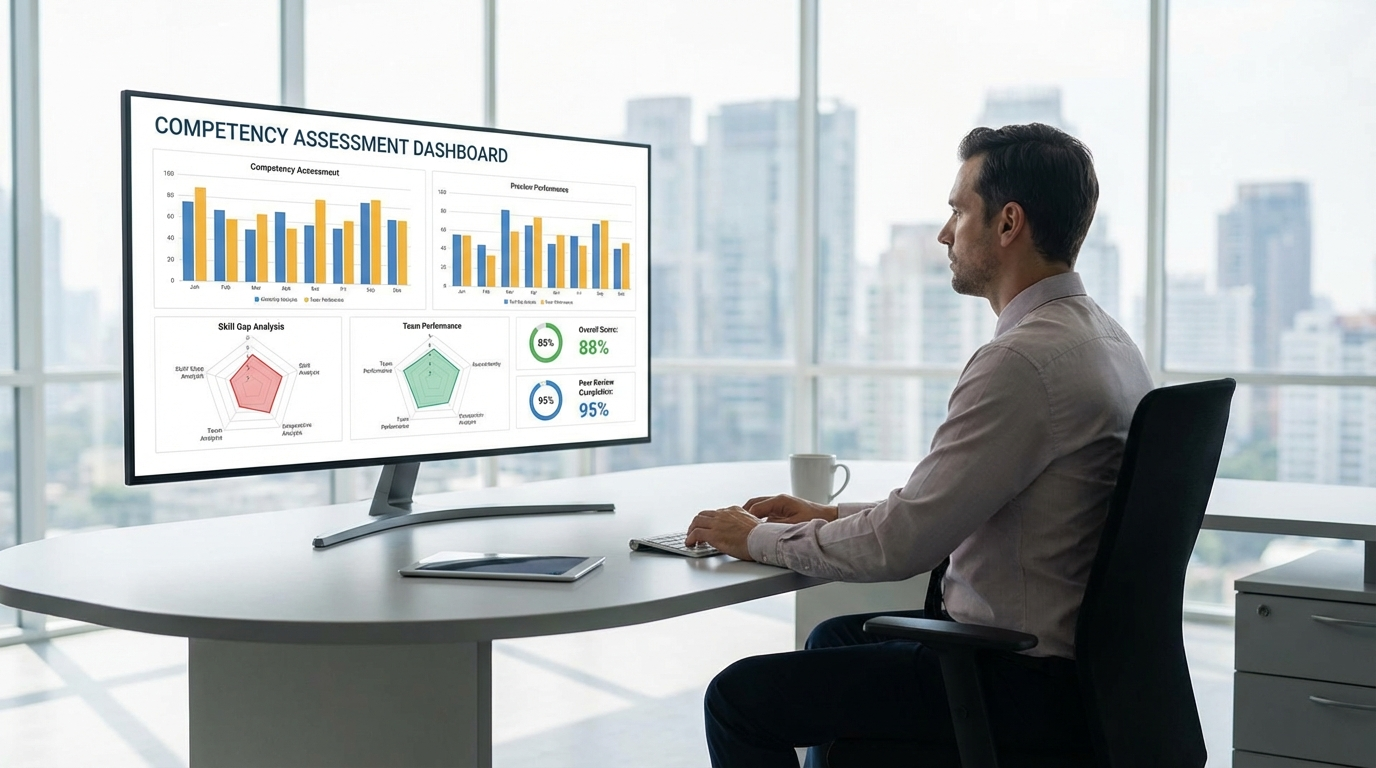
Multimodal analysis combines analysis of text (what the learner says), voice (how they say it) and, potentially, video (their body language). That three-dimensional feedback gives a complete picture of performance, which traditional tools cannot produce.
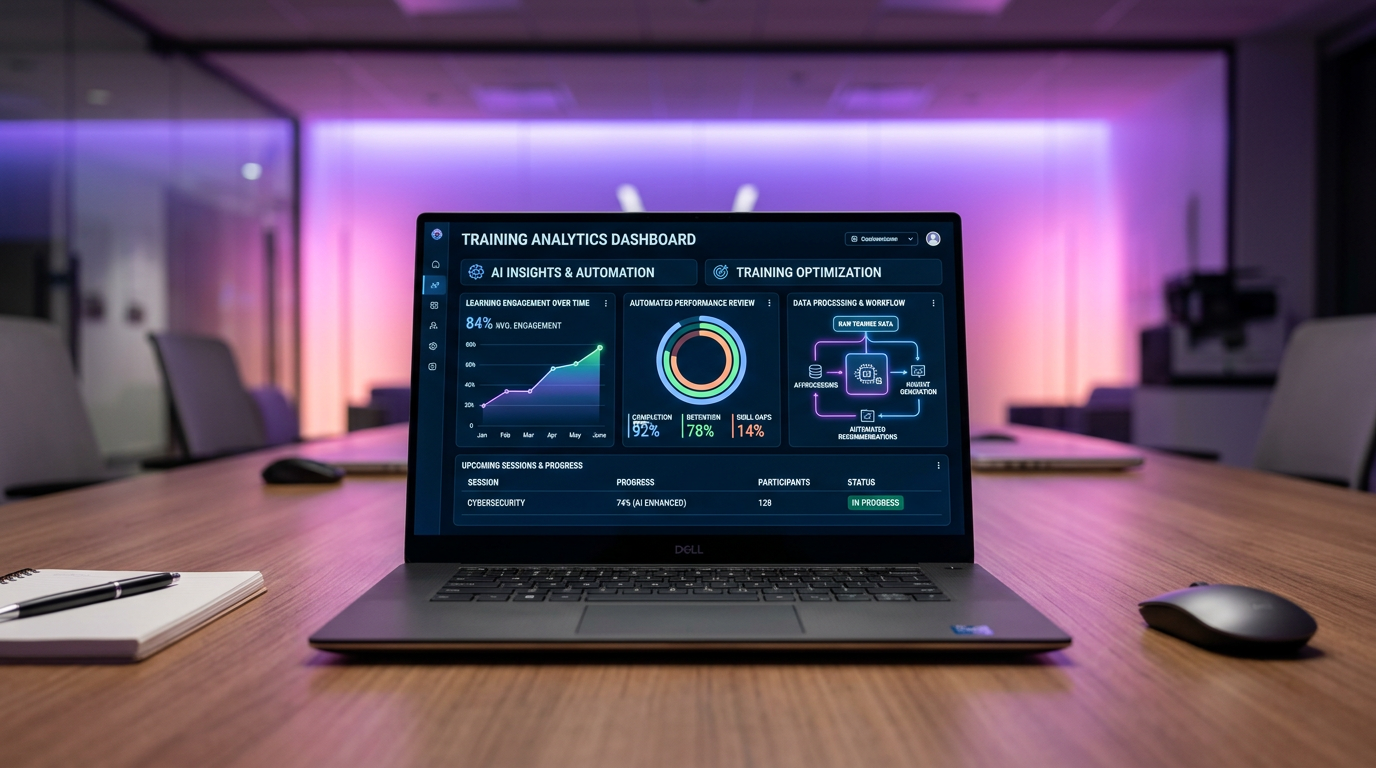
Adaptive personalisation. Intelligent platforms automatically adjust scenario difficulty to the learner's level. A beginner starts with simple, structured situations. An advanced learner faces complex ones with unpredictable counterparts. That personalisation makes every learner's time count.
These trends converge on the same goal: making soft skills practice as accessible and as effective as possible, for as many people as possible. That is the real challenge facing soft skills training, and the mission we pursue at Face Up.