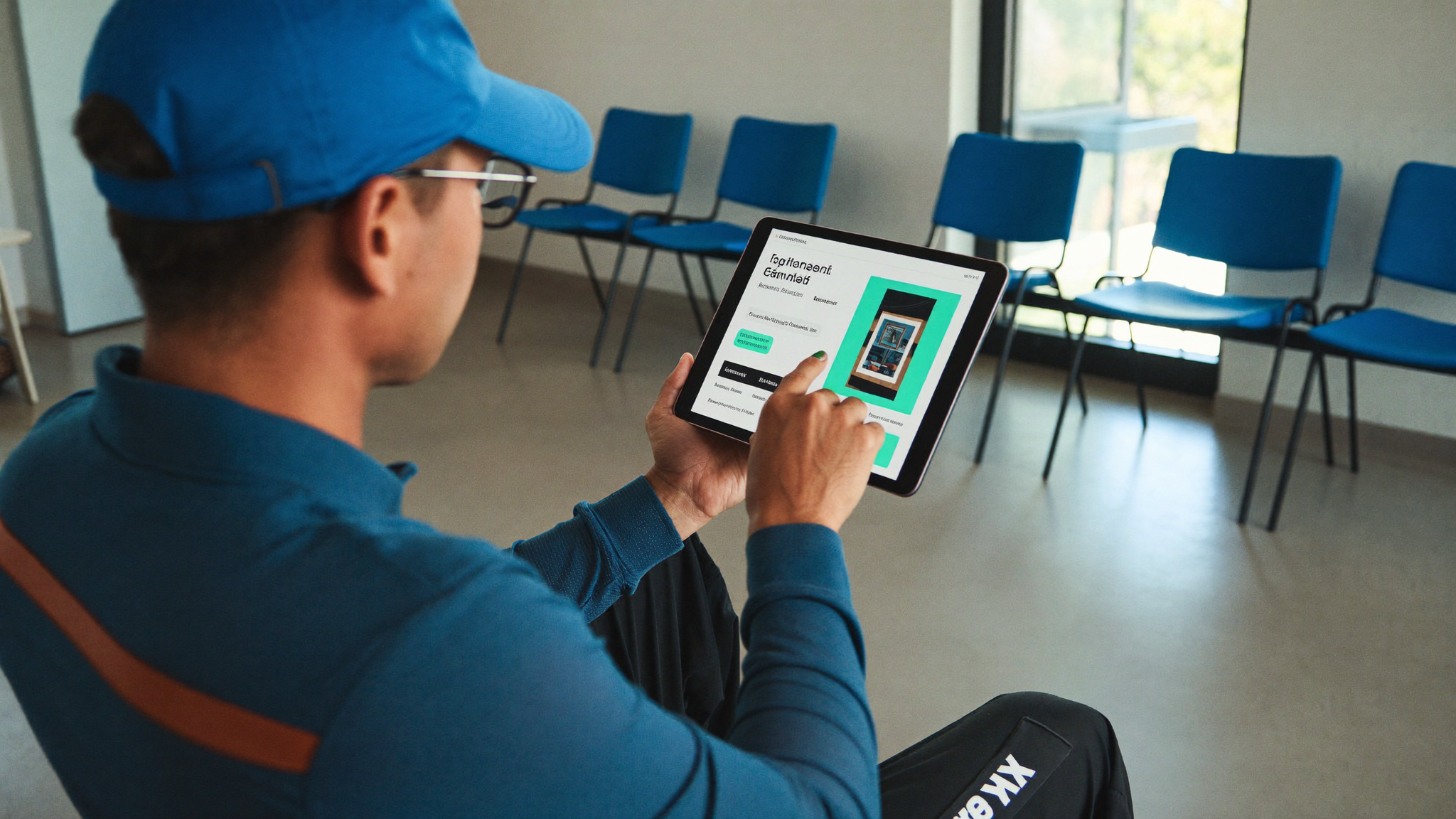

AI roleplay is emerging as one of the most effective ways to train people skills at work. The principle: hold a conversation with an AI persona playing a customer, an employee or a candidate, in a realistic scenario, then receive a detailed debriefing. No more waiting for the next classroom session, no more awkward acting in front of colleagues. Everyone can practice whenever they want, as many times as needed, on the conversations that actually matter in their job. Definition, how it works, benefits, use cases: here is everything you need to know to understand this approach and decide whether it belongs in your training programs.
An AI roleplay is a conversational scenario in which a learner talks, by voice and in real time, with a character played by artificial intelligence. That character — the persona — embodies a specific professional counterpart: an unhappy customer, a demotivated employee, a job candidate, a rushed prospect. The learner plays their own professional role. They lead the conversation exactly as they would in real life, with their own words, hesitations and arguments.
The difference with a classic e-learning module is fundamental. No video to watch passively, no multiple-choice quiz. The learner speaks, listens, argues, and adapts to the other person's reactions. That is the core of conversational learning: you build a people skill by actually practicing it, not by reading its theory. Just as nobody learns to swim on a bench, nobody learns to handle a difficult customer by watching slides.
AI roleplay also differs from the traditional role play between colleagues. The counterpart is not a peer improvising with mixed success: it is a calibrated character that behaves the same way, with the same level of challenge, for every learner. We compare both formats in detail in our article on AI roleplay vs traditional role play. The approach belongs to the broader family of role-playing simulations for soft skills, with one specific trait: everything happens through conversation.
Behind the simplicity of the experience — you speak, the other side answers — a well-designed AI roleplay relies on four complementary building blocks. Their quality is what separates a gimmick from a real training tool.
The persona defines who is talking to the learner: identity, job, personality, communication style, emotional starting point. A blunt, time-pressed purchasing director does not react like an employee worried about her position. The more precise and consistent the persona, the more credible the scenario — and the more easily the reflexes built during practice transfer to the field.
The scenario sets the situation: context, facts, stakes, and the objective the learner must reach. Announce a reorganization, secure a meeting, defuse a complaint. It also defines the persona's levers: which arguments will move them, which missteps will shut them down. That is what gives the dialogue its coherence and its teaching value: the conversation does not drift, it tests one specific skill.
The exchange happens by voice, in natural language. The learner phrases things as they would on the phone or face to face. The persona reacts to both substance and tone: an open question draws them out, a dismissive answer makes them tense, a badly placed silence makes them doubt. A session lasts ten minutes at most — a short format that fits a manager's or a salesperson's calendar.
At the end of the session, the learner receives a structured debriefing: what worked, what was missing, the key moments of the conversation, and concrete suggestions for the next attempt. This try-analyze-try-again loop is what turns a simple conversation into measurable progress. Without a debriefing, you repeat your mistakes; with one, you fix them one by one.
Nobody learns to negotiate by negotiating once. Yet in real life, every difficult conversation counts: a botched reprimand damages the relationship, a botched negotiation costs a contract. AI roleplay offers a consequence-free practice space. You can fail, start over, try a different approach. Learning research is consistent on this point: repeated practice with feedback — not theoretical exposure — is what builds lasting reflexes.
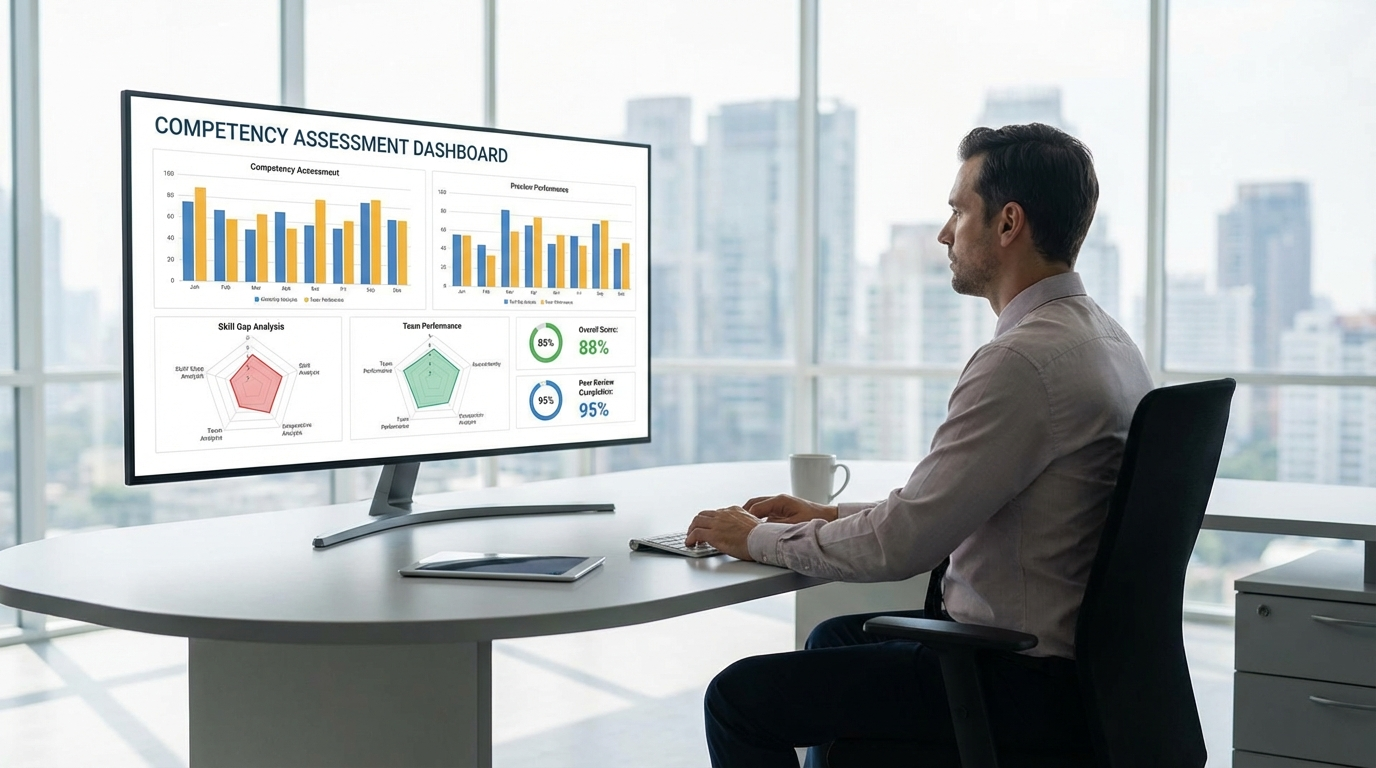
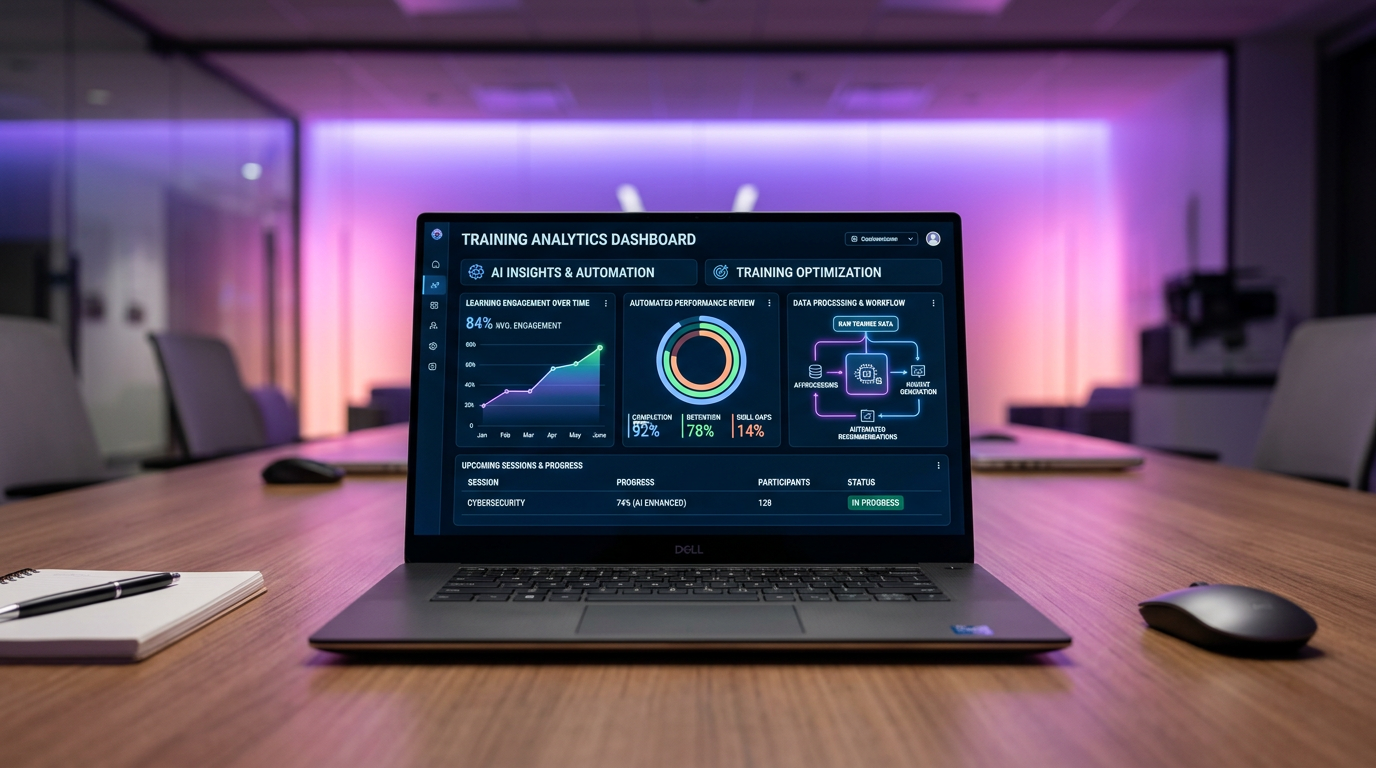
In a role play between colleagues, feedback depends on the observer: their mood, their relationship with the learner, their personal reading grid. The debriefing of an AI roleplay applies the same criteria to everyone, in every session. A salesperson in Lille and one in Lyon are assessed against the same grid. For a training manager, that means comparable data across teams and a real measure of progress over time.
A trainer cannot have 200 managers rehearse an annual review in the same week. An AI persona can. Practice becomes available on demand: before an important meeting, between two calls, the night before a dreaded conversation. That availability changes the status of training itself: from a one-off event, it becomes a regular practice — exactly what building a behavioral skill requires.
Many learners hate acting in front of their peers. That discomfort skews the exercise: people play it safe to get it over with, and never dare to test what they have not yet mastered. Facing an AI persona, the audience disappears. Learners dare to try, fail, and try again. The limits of the classroom format on this point are well documented — we analyze them in full in our article on the limits of in-person role play.
Training organizations, first. AI roleplay lets them add a practical dimension to their programs: trainees apply between sessions what they saw in the classroom, and the trainer gets precise data on what each person has actually acquired. It is also a strong commercial differentiator against programs that remain purely theoretical.
L&D and HR teams, next. They can roll out consistent practice across hundreds of employees, measure individual and collective progress, and target their organization's critical skills: feedback, interviews, conflict management, sales posture. All without mobilizing weeks of classroom time or blowing up the travel budget.
Managers, finally. A manager rarely prepares difficult conversations; they endure them. With an AI roleplay, they can rehearse a reprimand or a sensitive announcement the night before, test two approaches, and keep the one that holds up. The practice scenario becomes a preparation tool as much as a training tool.
No need to overhaul your entire training plan. The most effective approach fits in four steps:
Dedicated solutions such as Face Up roleplays provide ready-to-use personas, scenarios and debriefings, with sessions capped at ten minutes and designed for operational calendars. And to make practice stick over time, our article on developing behavioral skills through practice explains how to build a training routine that lasts.
AI roleplay is not a tech gimmick. It is the direct application of a proven teaching principle — people skills are learned by practicing them — finally made available at scale. Credible persona, structured scenario, voice dialogue, objective debriefing: each building block answers a well-known limit of classic formats. What remains is to integrate it intelligently into a complete program, where it complements the classroom instead of claiming to replace it. That is exactly what our complete guide to roleplay training covers. And if you are looking for concrete ideas to start with, browse our 7 AI roleplay examples to train your teams.