
Every training manager knows it: interactions with difficult customers are the situations frontline teams dread most. And yet the evidence points to a counter-intuitive paradox. A customer whose complaint has been handled well often becomes more loyal than a customer who never had a problem in the first place. This is the service recovery paradox, documented across decades of relationship marketing research.
So the problem is not the difficult customer. It is the team's inability to carry the emotional load of these situations. Without proper training, the natural reactions — defensiveness, avoidance, escalation — reliably make the conflict worse. With structured training, advisers build reflexes that take the heat out of the exchange and rebuild trust.
This is the most intimidating profile and often the most straightforward to handle. Behind the anger there is usually a legitimate frustration: an unresolved problem, a broken promise, a feeling of not being heard. The key is to respond to the cause, not to the emotion.
The first step is always active listening: letting the customer get the frustration out without interrupting. The first minute is critical. An adviser who resists the urge to justify themselves during that phase has won the exchange before saying a word.
This profile uses intimidation, threats (“I'll take this to social media”, “I know your director”) or guilt to extract an advantage. The strategy here is to stay factual and hold the frame, without being drawn into the emotional game.
The adviser needs to master the art of setting limits respectfully: “I understand you are unhappy and I genuinely want to help. Here is what I am able to do for you.” Neither submission nor confrontation — a firm, professional position delivered with goodwill.
Less dramatic but every bit as delicate, this customer does not understand the situation, asks question after question, and keeps circling back to the same points. Impatience is the main trap for the adviser. The right response combines patience, explanation and careful structuring of the information.
The most dangerous of all for the business. This customer does not complain and does not raise their voice — they simply leave for a competitor. Picking up the weak signals of dissatisfaction (short answers, flat tone, no smile) and reaching out proactively is an advanced skill that separates the best teams from the rest.
The DESC method, developed by Sharon Anthony Bower, is one of the most effective frameworks for handling tense customer situations. It breaks down into four steps.
Describe the situation factually, without judgement. “Your order was due to arrive on Friday and it still hasn't reached you on Monday.” That factual restatement shows the customer their situation has been understood.
Express your understanding of the emotion. “I can see how frustrating this delay is, especially if you were counting on that delivery.” Acknowledging the feeling takes a good part of the tension out straight away.
Specify the proposed solution, concretely and with commitment. “I'm opening an investigation with the carrier now and I'll call you back before five o'clock with a definite answer.” Customers need an action plan, not vague apologies.
Consequences — the positive outcome of that solution. “If the parcel cannot be traced, we'll send the order out again by express first thing tomorrow, at our expense.” The customer sees that the company is taking responsibility and acting.
The method works because it sequences the response and avoids the two most common mistakes: justifying yourself before you have acknowledged the emotion, or offering a solution before you have shown that you understand the problem.
Beyond the DESC framework, several de-escalation techniques have proved their worth in a professional setting.
Fogging means partially accepting the criticism without capitulating. “You're right, that delay isn't acceptable.” By conceding the legitimate point, the adviser removes the customer's line of attack while keeping control of the exchange.
The broken record is useful with customers who insist on the impossible. It means calmly restating your position in different words: “I understand what you're asking for. Unfortunately that option isn't available. What I can offer you instead is...” The key is calm and consistency, with no escalation.
Reframing shifts attention from the problem to the solution. Rather than going back over what happened, the adviser turns the conversation forward: “Here is what we're going to do to put this right.” This works particularly well with customers who keep looping back over their dissatisfaction.
The dimension training often neglects is the adviser's own stress. Faced with an aggressive customer, the nervous system responds automatically: raised heart rate, muscular tension, a narrowed field of attention. Those physiological reactions degrade communication and listening precisely when both are needed most.
Three techniques allow that stress response to be regulated in real time. Controlled breathing (four seconds in, six seconds out) activates the parasympathetic system in under a minute. Cognitive separation means reminding yourself that the customer's aggression is aimed at the situation, not at you. Internal reframing turns the thought “this customer is attacking me” into “this customer needs help and doesn't know another way to ask for it”.
These emotional regulation skills cannot be learned from a slide deck. They develop through repeated practice under simulated stress, where the brain gradually learns to keep its cognitive capacity intact under pressure.
Not every situation can be resolved on the front line. Knowing when to escalate matters as much as knowing how to de-escalate. Situations that call for escalation include extreme physical or verbal threats, requests beyond the adviser's authority, legally sensitive situations, and the recurrence of a systemic problem.
Escalation should be presented to the customer as a step up, not as a hand-off. “So that I can give you the best possible answer, I'm going to put you through to my manager, who has the authority to [specific action].” The customer needs to feel they are moving towards a resolution, not being bounced from department to department.
Conventional methods for training on difficult situations — written case studies, videos with quizzes — share one fundamental limitation: they do not generate the emotional stress of the real thing. And it is precisely under stress that the bad reflexes come back.
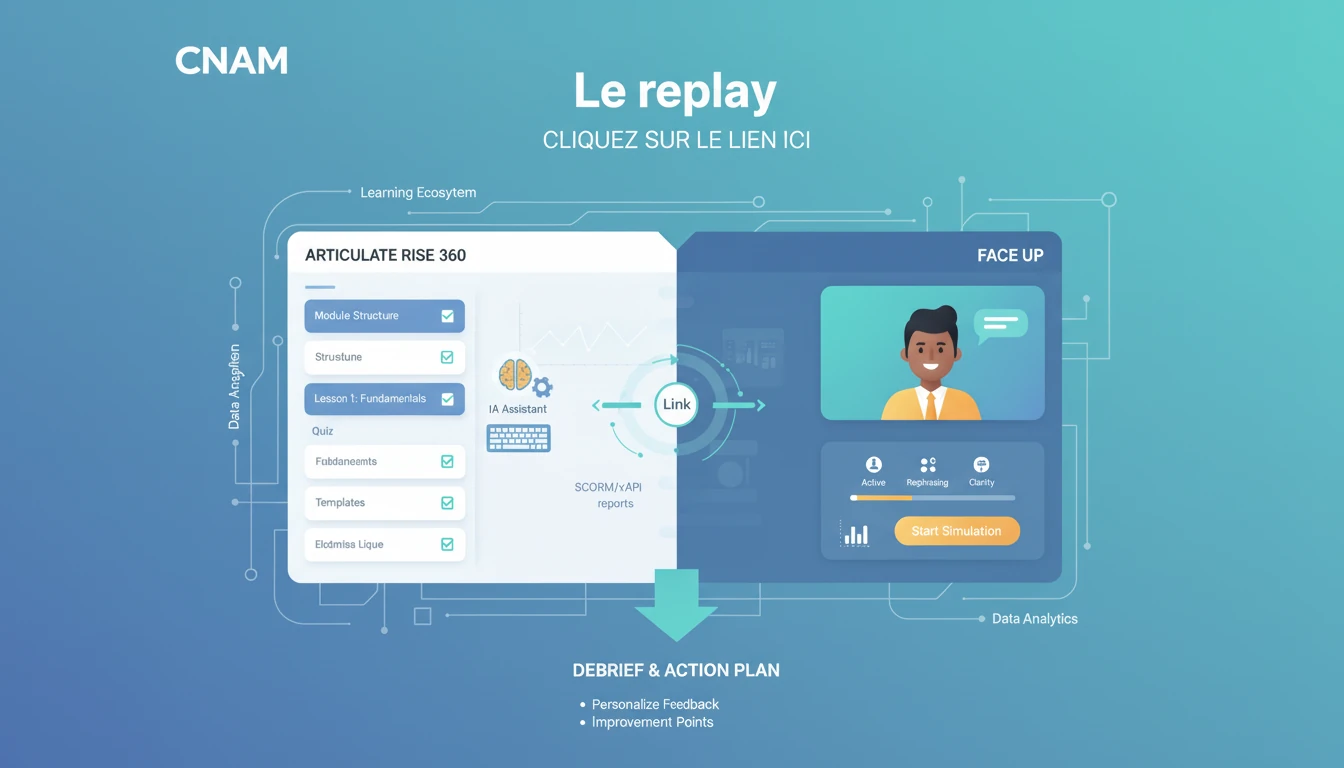
In-person role-play remains a powerful method, but it has its constraints: cost, trainer availability, and the discomfort some learners feel performing in front of colleagues. AI-driven conversational learning resolves those constraints by offering realistic simulations, available at any time, with avatars whose personality and difficulty level can be configured.
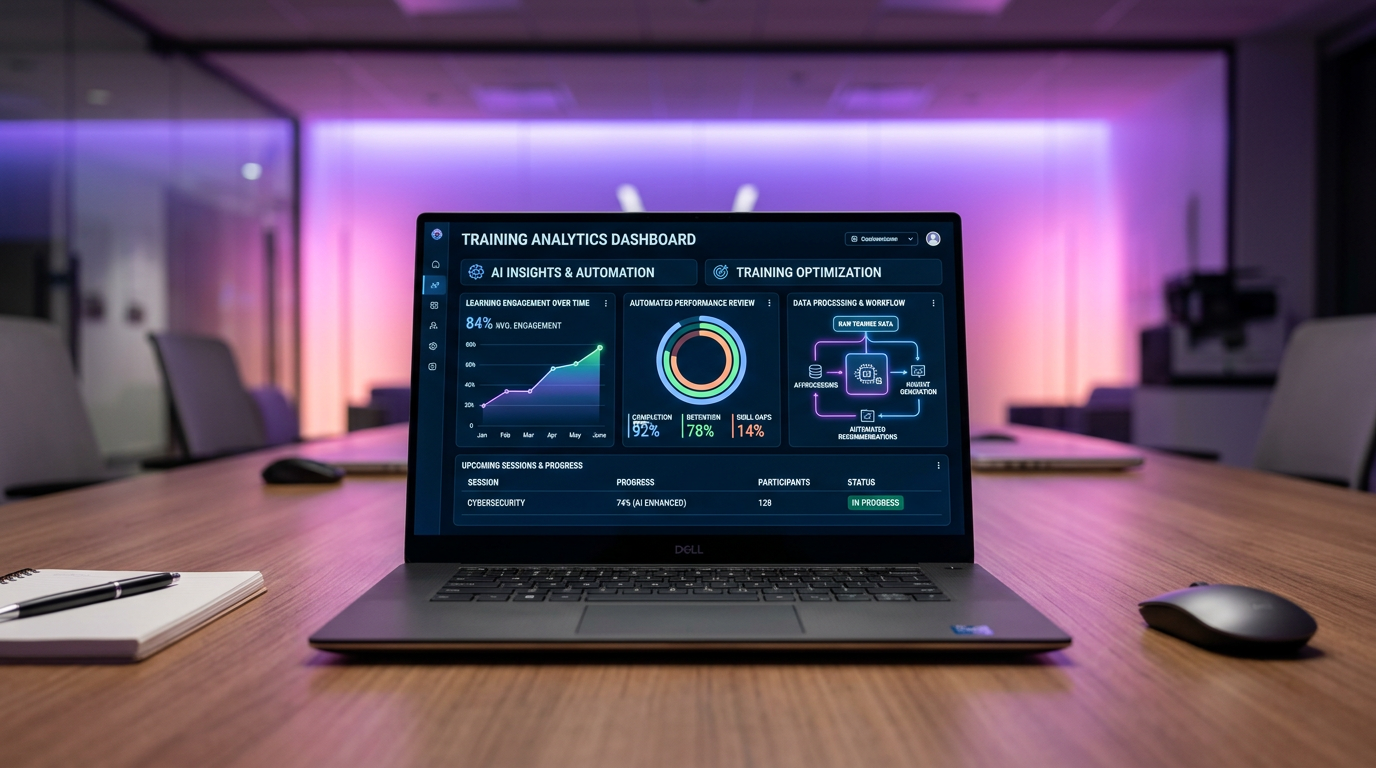
The decisive advantage of this approach is repetition without judgement. An adviser can face a furious customer ten times in a row, testing different strategies, without anyone watching. Each session produces structured feedback: analysis of what was said, of tone, and of the emotions detected. The trainer can then review the replays and focus the debrief on the moments that matter.
To build durable capability in handling difficult customers, we recommend a four-phase programme.
Phase 1 — Theoretical framework (two hours): an introduction to difficult customer profiles, the DESC method, de-escalation techniques and stress management. The aim is to give people a reference framework, not to create automatic responses.
Phase 2 — Guided practice (four hours): practice sessions of increasing difficulty. Start with a mildly dissatisfied customer, then work up to an angry customer, a manipulative customer, an escalation scenario. Each one is followed by an individual debrief.
Phase 3 — Independent practice (ongoing): access to a library of scenarios of increasing difficulty so people can train on their own. Conversational learning platforms can generate endless variations on a situation, which avoids the “I've already done this one” effect.
Phase 4 — Embedding on the job (ongoing): analysis of the real situations teams encounter, group debriefs, microlearning refreshers, and one-to-one coaching for the hardest cases. Regular skills assessment makes progress measurable and lets you adjust the programme.
Handling a difficult customer is not an innate talent. It is a core competency acquired through structured, regular practice. Organisations that invest in this training see fewer escalations, better customer satisfaction and, above all, lower turnover in frontline teams — because an adviser who feels competent in the face of difficulty is an adviser who stays.