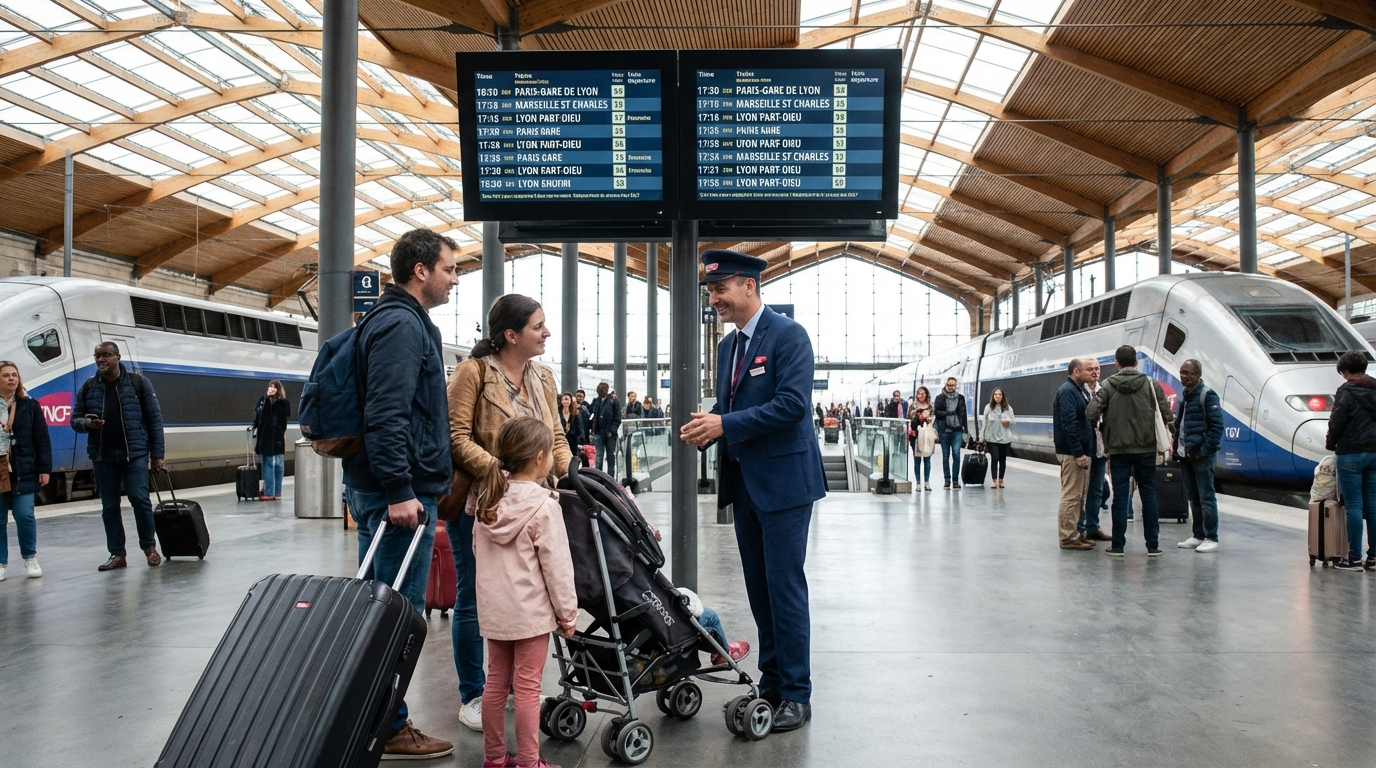

Reception staff, customer advisers, shop-floor sales assistants, checkout operators, information agents in transport hubs, hotel front-desk teams — these employees are the first, and often the only, human point of contact between a company and its customers. Every interaction they handle shapes brand perception, customer satisfaction and revenue.
Yet these roles sit at the heart of a paradox: relational excellence is expected of them every single day, while investment in soft skills training remains concentrated on managers and senior staff. That is a strategic mistake. The behavioural skills of frontline teams are the most direct lever an organisation has for improving customer experience and business results.
Customer relationship training is central to developing these profiles. But beyond relational technique, it is the deeper behavioural skills — empathy, emotional regulation, adaptability — that separate adequate service from service customers remember.
Unlike back-office colleagues, frontline teams absorb the emotions of dozens or hundreds of customers every day: frustration, impatience, anger, anxiety, but also gratitude and satisfaction. That emotional load is a major driver of fatigue and staff turnover.
Without skills in emotional intelligence and stress management, employees develop protective habits that damage service quality: emotional distance, mechanical responses, gradual disengagement. Training these teams in emotional regulation protects both their wellbeing and their ability to deliver quality service over the long term.
Frontline teams handle a far wider range of situations than any script or procedure can cover. A customer arriving with an unexpected problem, a dispute between two customers, a request that falls outside the rules, a vulnerable customer — these all demand adaptability and judgement that only soft skills provide.
The answer is not more procedures. It is to develop each employee's ability to read a situation quickly, identify the most appropriate response and deliver it naturally. This capability — situational intelligence — is built through repeated practice across varied contexts.
Frontline roles have traditionally seen high turnover, which creates a permanent training challenge. Onboarding programmes that include soft skills are essential to bring new joiners up to speed quickly.
But training cannot stop at onboarding. Established employees also need regular practice to maintain and extend their skills, absorb new ways of working and avoid the routine that quietly erodes service quality.
Active listening is the foundational skill of any customer-facing role. It allows the employee to understand what the customer actually needs — which is not always what they ask for — to defuse tension and to make the customer feel recognised. A customer who feels heard is considerably more satisfied, even when the problem is not resolved on the spot.
Empathy completes listening by adding the emotional dimension. Understanding what the customer is feeling, not just what they are saying, allows the employee to adapt their response and create a human connection that turns a transaction into a positive experience.
Frontline employees need effective interpersonal communication across very different settings: service desk, telephone, email, chat, shop floor, reception counter. Each channel has its own verbal and non-verbal characteristics.
Command of verbal and non-verbal communication matters most in face-to-face contact. Posture, a smile, eye contact and tone of voice carry as much meaning as the words themselves. Training teams to become aware of these signals and to control them transforms the quality of the welcome customers receive.
Unhappy customers, complaints, disputes, rudeness — frontline teams regularly deal with emotionally charged situations. The ability to handle difficult customers and defuse conflict protects both service quality and the employee's own wellbeing.
The skill breaks down into stages: recognising the signals of escalation, staying calm and professional, acknowledging the customer's emotion without conceding on substance, offering a solution and closing the interaction on a positive note. Each stage takes a level of command that only repeated practice delivers.
A strong frontline employee knows when to go beyond the script. They pick up what the customer really needs — sometimes information, sometimes reassurance, sometimes simply someone who will listen — and adapt accordingly.
That service instinct, which separates a mechanical exchange from a memorable one, rests on a combination of skills: observation, empathy, initiative and the ability to decide in the moment. These develop by exposing employees regularly to varied situations and helping them analyse their own reactions.
Training frontline teams involves very different constraints from training office-based or senior populations. Employees are spread across many sites, shift patterns make it hard to release whole days, and training budgets per head are generally tighter.
Those constraints point towards particular training methods: short formats, remotely accessible, easy to fit into the working day. A blended learning approach pairs targeted in-person sessions with regular digital practice to maximise impact within those limits.
Training only works if the practice scenarios are relevant. A transport agent does not face the same situations as a bank adviser or a shop assistant. Scenarios have to reflect the daily reality of each role.
For transport staff, typical scenarios include directing a stressed traveller, managing a significant delay or dealing with abusive behaviour. For public transport operators' frontline staff, these situations are the core of the job and call for regular practice.
For bank advisers, scenarios centre on uncovering financial needs, declining a loan application or handling a customer unhappy with an investment. Programmes designed for banking also build compliance requirements into the scenarios themselves.
AI simulators offer a concrete answer to these constraints. Available at any time from a smartphone or tablet, they let each employee practise during quiet periods, at the start or end of a shift, or between customers.
The benefit is twofold. Employees get a volume of practice far beyond anything traditional training can offer. And AI analysis provides personalised feedback on every session, so progress can be targeted at the skills that most need work.
Case studies in the transport sector show significant improvements in customer satisfaction after these tools are rolled out to frontline teams.
The line manager is central to developing a frontline team's soft skills. Through daily observation, regular feedback and hands-on coaching, they connect the training to real practice.
To do that well, managers themselves need training in coaching and observation techniques. A manager who can watch a customer interaction, identify strengths and areas to improve, and give constructive feedback multiplies the impact of the training through their day-to-day support.
Frontline teams are often the largest population in the business. Training 500, 1,000 or 5,000 employees across dozens of sites requires an industrialised approach that still preserves pedagogical quality.
Large-scale deployment rests on three pillars: a digital platform for individual practice, a network of internal trainers or manager-coaches for human support, and an analytics layer to track progress and identify the sites or teams that need extra help.
The number of people to train makes funding a particularly sensitive question. Training budgets and external funding schemes can cover a significant share of the investment, provided programmes are structured to meet the eligibility criteria that apply.
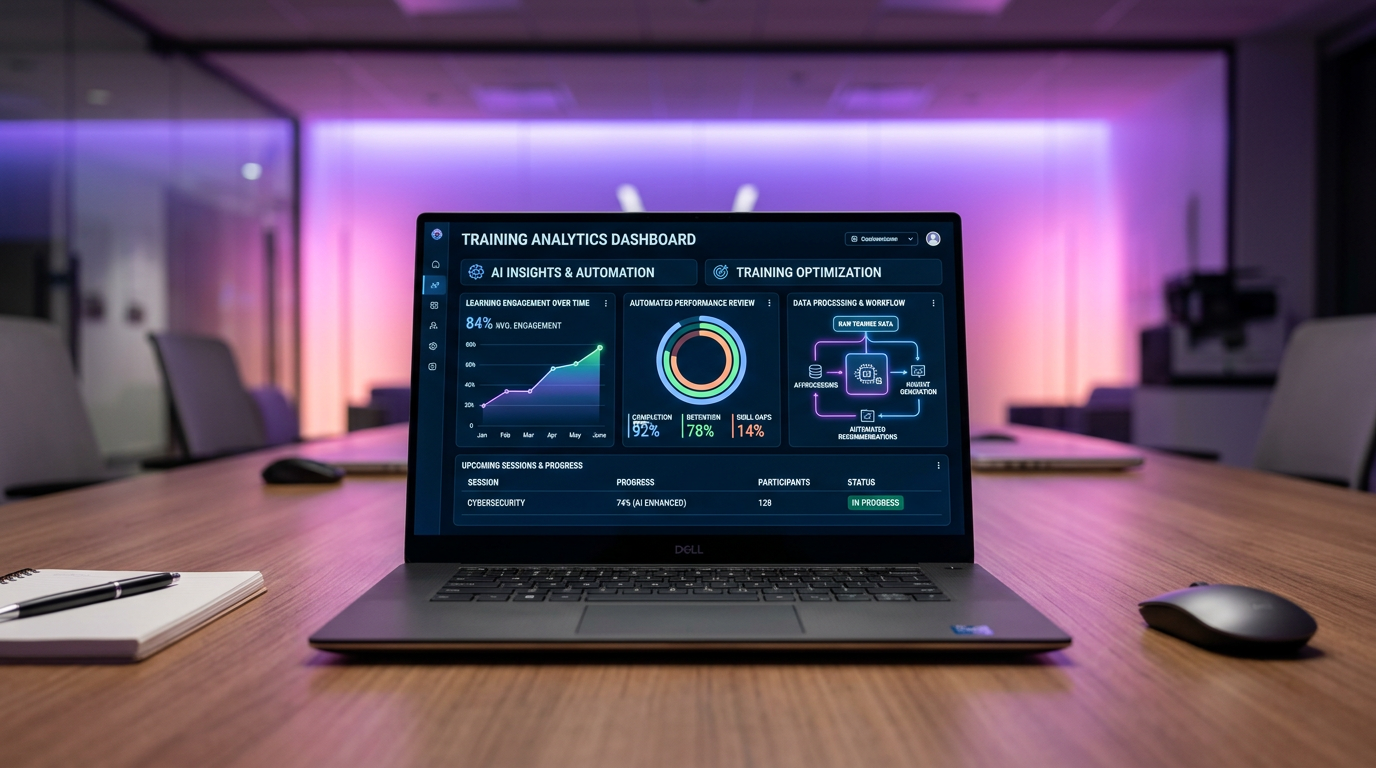
Soft skills assessment tools track each employee's progress and aggregate the data by site, region or role. That visibility lets learning and development teams steer the rollout precisely and demonstrate return on investment to the executive team.
The most useful indicators for frontline teams include customer satisfaction scores (NPS, CSAT), complaint volumes, first-contact resolution rates and customer retention. Correlated with training data, these metrics provide concrete proof of the impact of investing in behavioural skills.
In transport, information and reception staff are the operator's public face. Typical use cases include managing disruption (delays, cancellations), directing travellers under stress and dealing with abusive behaviour. Sector-specific requirements shape training content around these recurring situations.
Branch advisers have to combine relational skill with regulatory compliance. Training brings together consultative selling scenarios, complaint handling and delivering unfavourable decisions. Feedback from programmes deployed in banking shows customer satisfaction and compliance rates improving together.
In store, the issues are the quality of the welcome, personalised advice and the ability to close a sale. Retail case studies show soft skills training having a direct effect on average basket value and customer retention.
Frontline teams are the most visible and most influential link in the customer value chain. Training them in soft skills is not a luxury reserved for senior staff — it is a high-return investment that lifts customer satisfaction, retention and revenue directly.
AI-based practice now makes this training accessible at scale, even for the largest and most dispersed populations. Combined with strong managerial support, it allows an organisation to sustain a consistent standard of relational excellence across every site.
For a full overview of the available approaches and methods, read our complete guide to soft skills training. And to go further on the skills your sales teams need, see our dedicated article on soft skills for sales professionals.