
Integrating role play into soft skills training is not about adding a quick exercise at the end of the day to wake the group up. Role play is the moment where behavior is actually built: badly placed, it puts participants on the defensive or produces nothing; well placed, repeated at the right frequency and tracked over time, it turns a decent program into one that changes how people work. Here is where to place it, in which formats, at what rhythm — with a complete sequencing example for a management program.
Three placement rules prevent most of the classic mistakes — and they all follow from the same principle: role play exists to practice a method, not to discover a difficulty.
Never as a first contact. Making a participant perform cold, with no framework, in front of the group mostly produces stress and a bad first experience — one they will carry through the entire program. The only exception is the diagnostic role play, provided it is short, done without an audience, and explicitly framed as a starting point, not a test.
Always after the input. Practice installs a method the learner has just understood. Reversing the order means rehearsing mistakes. A short input — around 20% of the time — immediately followed by practice: that is the core of the 6-step method for designing a soft skills training module.
Before and for the assessment. At the end of the program, the assessment itself takes the form of a role play, scored against the same criteria as the initial diagnostic. You do not assess interpersonal skills with a quiz: you observe them in action.
The classic counter-example is the token role play: a single skit at the end of the day, performed by two volunteers, watched by ten others. Nobody builds a reflex there — it is an illustration, not practice. If the role play is not repeated by every participant, it does not do its job.
The historic format: two participants play, the group observes, the trainer debriefs. Its strength: the richness of the collective debriefing and the physical presence, valuable for emotionally charged situations. Its limits: the cost, the group's gaze that inhibits some participants, and the math — in a one-day session with twelve people, each person practices once, twice at best. It is the format to reserve for the moments where the group genuinely adds something.
The same exercise, remote and in breakout groups. Easier to schedule, it allows shorter and more frequent sessions. It keeps the constraints of the collective format, though: a shared slot, a facilitator, limited practice time per participant. It works well for mid-program checkpoints, less so for the very first learning steps.
The learner practices alone with an AI persona playing the demotivated employee or the unhappy customer, then receives an immediate debriefing — we explain how it works in detail in our article on AI roleplay. Its strengths are exactly what in-person practice lacks: unlimited repetitions, no scheduling constraint, no group watching. It is the format that makes weekly practice realistic — conversational learning solutions like Face Up are built for these short, repeated sessions.
A useful rule of thumb when choosing: you do not train a technical procedure and a difficult conversation with the same format. The difference between simulation and role play helps decide between procedural exercise and relational practice.
The right combination fits in one simple rule: in-person time for what is difficult, independent practice for volume.
This split solves the central problem of blended learning: a learning management system distributes content, but it does not make people practice. By handing the volume of practice to independent sessions, in-person time gets its real role back: dealing with what is hard. Our complete guide to soft skills training covers this trap in depth.
The optimal frequency is weekly, in short sessions — ten minutes is enough for a complete role play and its debriefing. Two mechanisms justify it. Spacing first: each spaced repetition forces the learner to rebuild the reflex, which anchors it far more durably than massed practice. Feasibility second: ten minutes a week fits in any calendar, and that is the condition for a high practice rate. It is the rhythm around which the 12-week soft skills training program model is built.
What goes into a ten-minute session? One single objective, announced upfront — "get a concrete commitment without raising your voice" —, the conversation itself, six to eight minutes, then the debriefing: what worked, the working point for next time. Short, but complete.
A simple warning sign: if your practice sessions exceed thirty minutes, they will first get postponed, then cancelled. With interpersonal skills, regularity beats intensity.
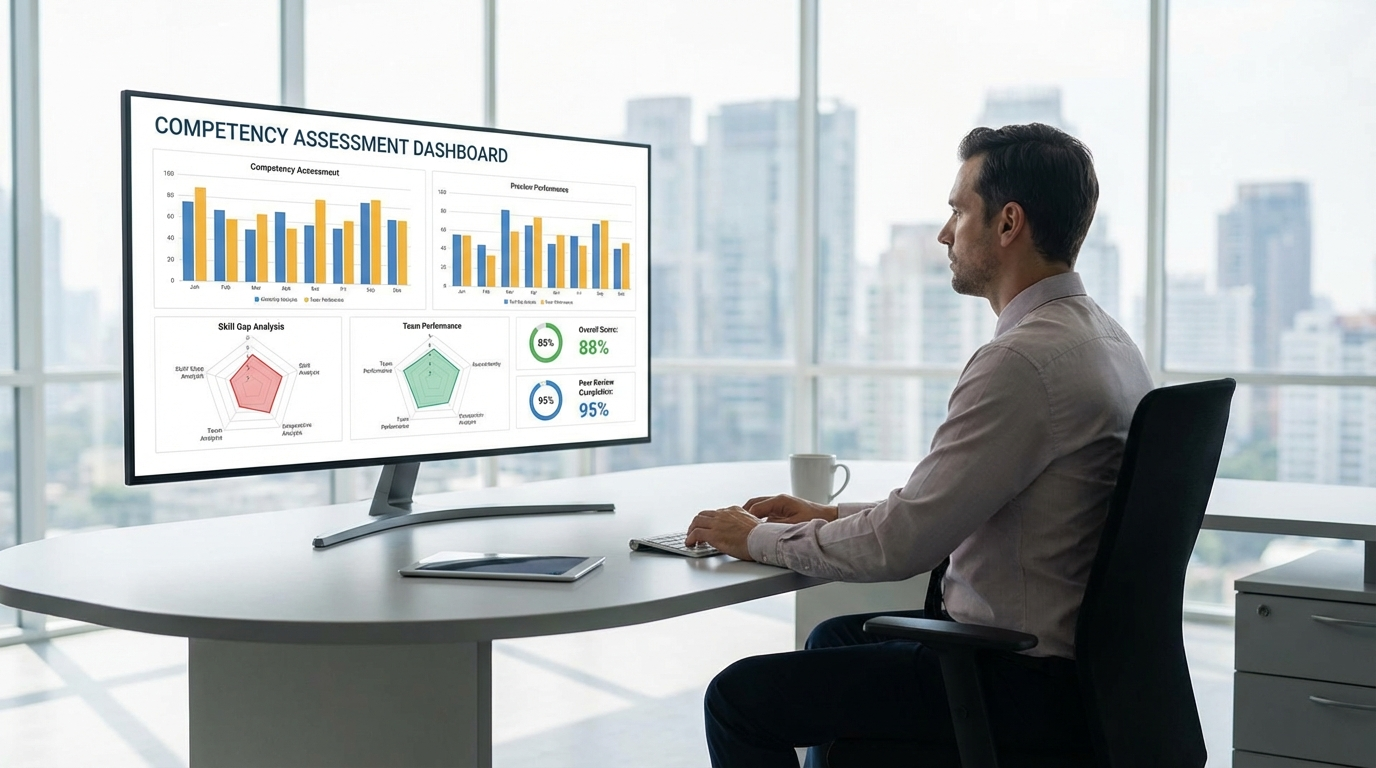
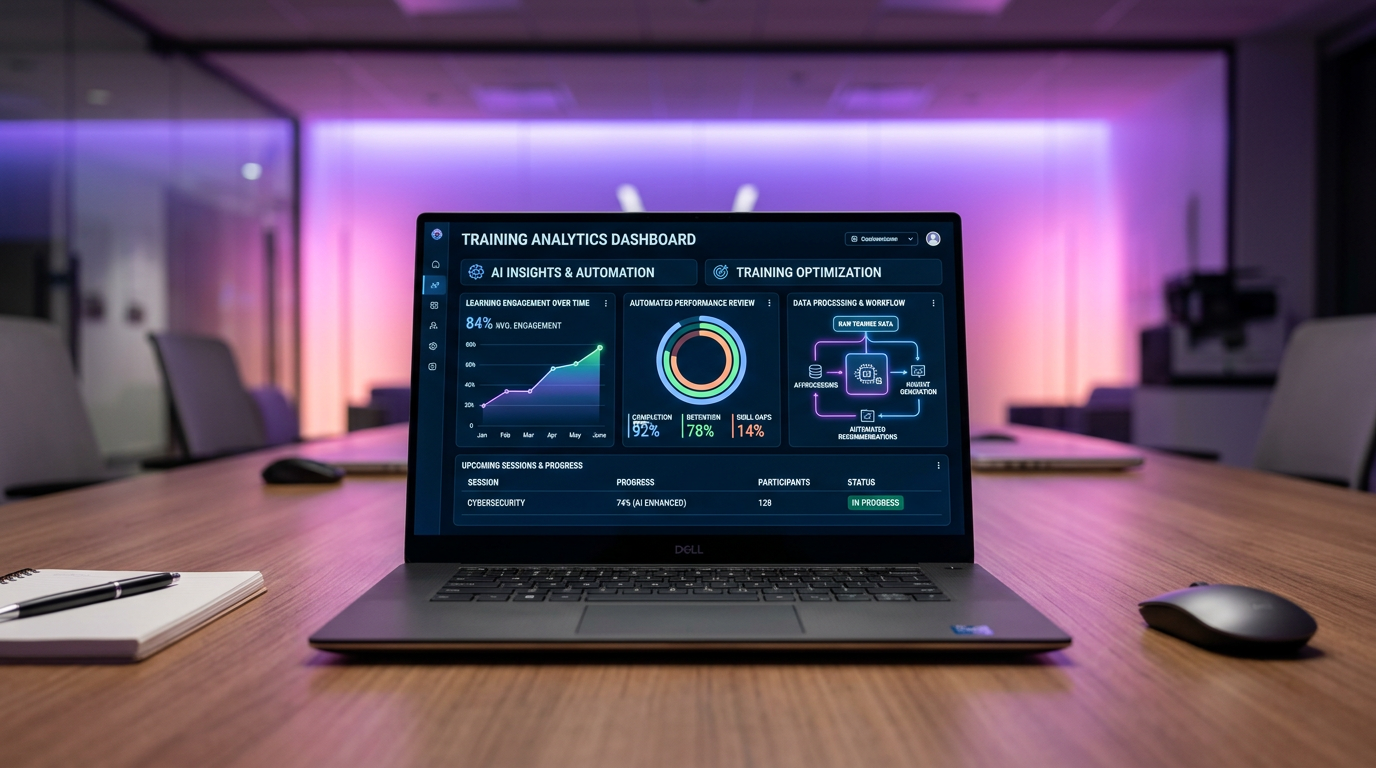
Repeated role play is only worth it if progression becomes visible. Four practices make it so:
This tracking also changes the conversation with managers and leadership: instead of a completion rate, you show progression behavior by behavior, learner by learner.
A "feedback and difficult management situations" program, eight weeks, twelve managers:
By week 8, each manager has practiced twelve to fifteen times — against once or twice in a classic seminar. That volume of repetition, impossible to reach with in-person sessions alone, is what makes the difference. The overall logic — why repeated practice changes behavior where lectures fail — is developed in our complete guide to roleplay training.
Integrating role play comes down to placement, dosage and tracking: after the input and never cold; in-person time for the hard cases, independent practice for volume; ten minutes every week rather than a quarterly marathon; a stable set of criteria to make progression visible. A program built on these rules delivers what soft skills training often promises without keeping: reflexes that hold up in real situations. To lay the foundations, go back to module design and the 12-week model — and for the big picture, the complete guide to roleplay training is the best place to start.