
Imagine rehearsing a difficult client meeting ten times over, adjusting your approach on every attempt and receiving detailed, objective feedback after each one — with no consequences for the real relationship. That is exactly what conversational simulators built on AI avatars make possible. The technology spent years confined to research labs; it is now available to organisations, and it is changing how teams build their behavioural skills.
An AI simulator for soft skills is a platform that creates virtual counterparts — avatars — capable of holding a realistic conversation around a given professional scenario. Unlike conventional chatbots that follow rigid scripts, these avatars draw on generative artificial intelligence to understand context, respond coherently and adapt in real time to what the learner says.
The avatar embodies a persona defined by the trainer: a dissatisfied customer, a hesitant prospect, a disengaged team member, an anxious patient. It reacts according to the personality, emotions and goals it has been given. The learner interacts with that avatar exactly as they would with a real person, except that nothing is at stake and repetition is unlimited.
Not all simulators are equal. The differentiators are how natural the conversation feels (the avatar has to respond believably, not robotically), the range of personas available, the ability to handle unexpected turns and, above all, the quality of the post-session feedback. A simulator that merely lets the learner talk, with no structured analysis, is a chatbot in disguise.
The best simulators also include an authoring tool that lets trainers create, edit and tailor scenarios without technical skills. This matters more than it sounds: the pedagogical value of a simulator depends directly on the quality of its scenarios, and only learning professionals can design scenarios that genuinely teach. That trainer-first stance, adopted by providers such as Face Up, keeps the technology in service of the pedagogy.
Behind the smooth experience of talking to an avatar sits a sophisticated technical architecture. The conversational engine relies on language models trained to generate contextual responses. But a language model on its own is not enough: it has to be constrained so that it stays in the defined persona, respects the learning objectives of the scenario and does not drift into incoherent or off-topic answers.
The most advanced platforms use a layered system. The character layer maintains persona consistency — personality, emotions, goals. The scenario layer tracks the progress of the conversation and triggers specific events depending on the learner's choices. The pedagogical layer continuously assesses performance and adjusts the difficulty.
The most realistic avatars have an animated visual representation: facial expressions, head movements, lip synchronisation with synthesised speech. That visual dimension is not decoration. Interpersonal communication skills include reading non-verbal signals, and practising against an avatar that displays visible emotion makes the exercise markedly more realistic.
The avatar's voice matters just as much. Modern speech synthesis reproduces emotional nuance: an unhappy customer sounds irritated, an interested prospect sounds enthusiastic. The learner has to decode those paraverbal cues and adapt their own delivery accordingly.
In a traditional role play, each participant practises two or three times at best across a full training day. With a simulator, the learner can repeat the same scenario as often as needed. Learning science is consistent on this point: spaced repetition is the most powerful mechanism available for embedding new behavioural reflexes.
Fear of how colleagues will react is the single biggest obstacle to learning soft skills in a group. Many participants hold back in role plays because they do not want to look clumsy in front of their peers. In front of an avatar, that barrier disappears. Learners take risks, test different approaches, fail and start again without consequence. That freedom to experiment accelerates progress considerably.
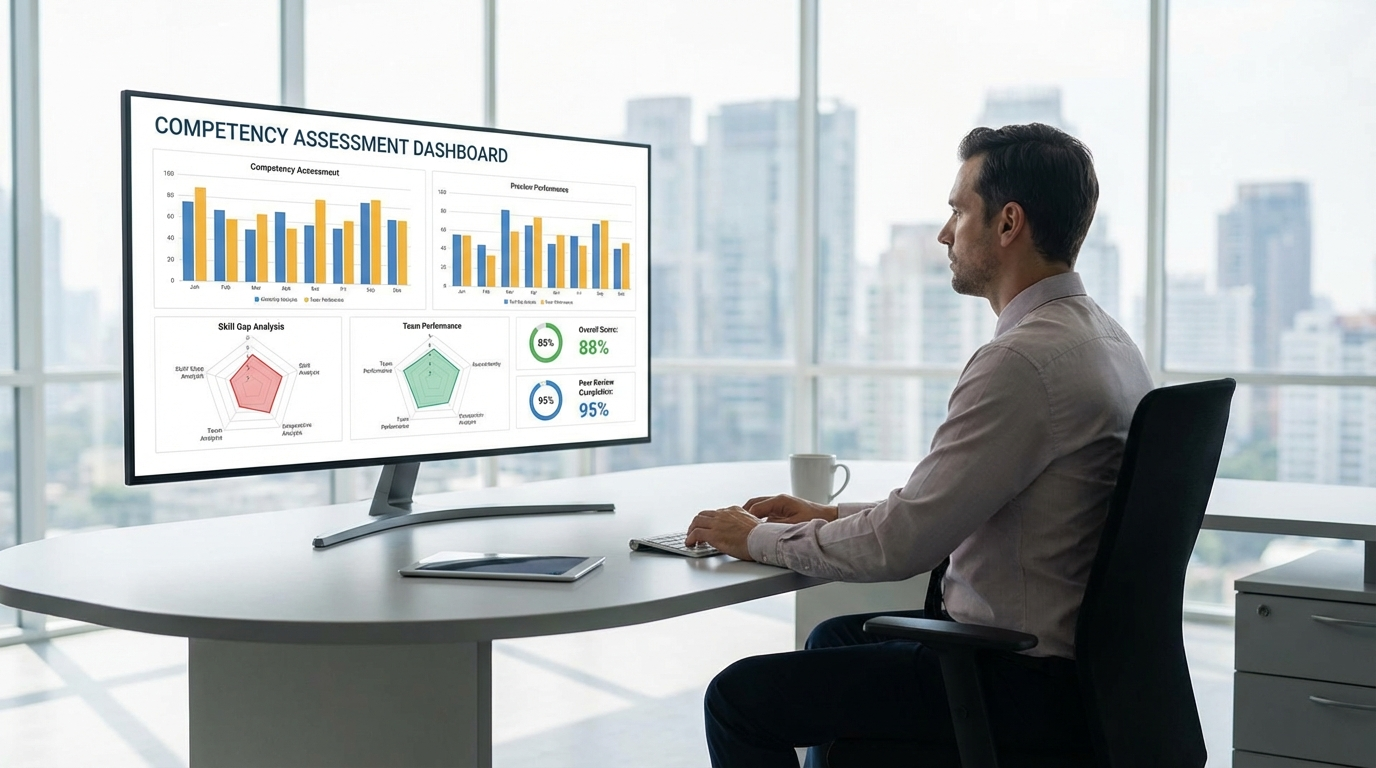
Even an excellent trainer cannot capture and analyse every nuance of a conversation in real time. The AI simulator produces structured, objective feedback: quality of listening, relevance of reformulations, moments where the learner steered the conversation off course, missed openings. That feedback is available immediately after the session, alongside an annotated replay that shows precisely what happened at each turn.
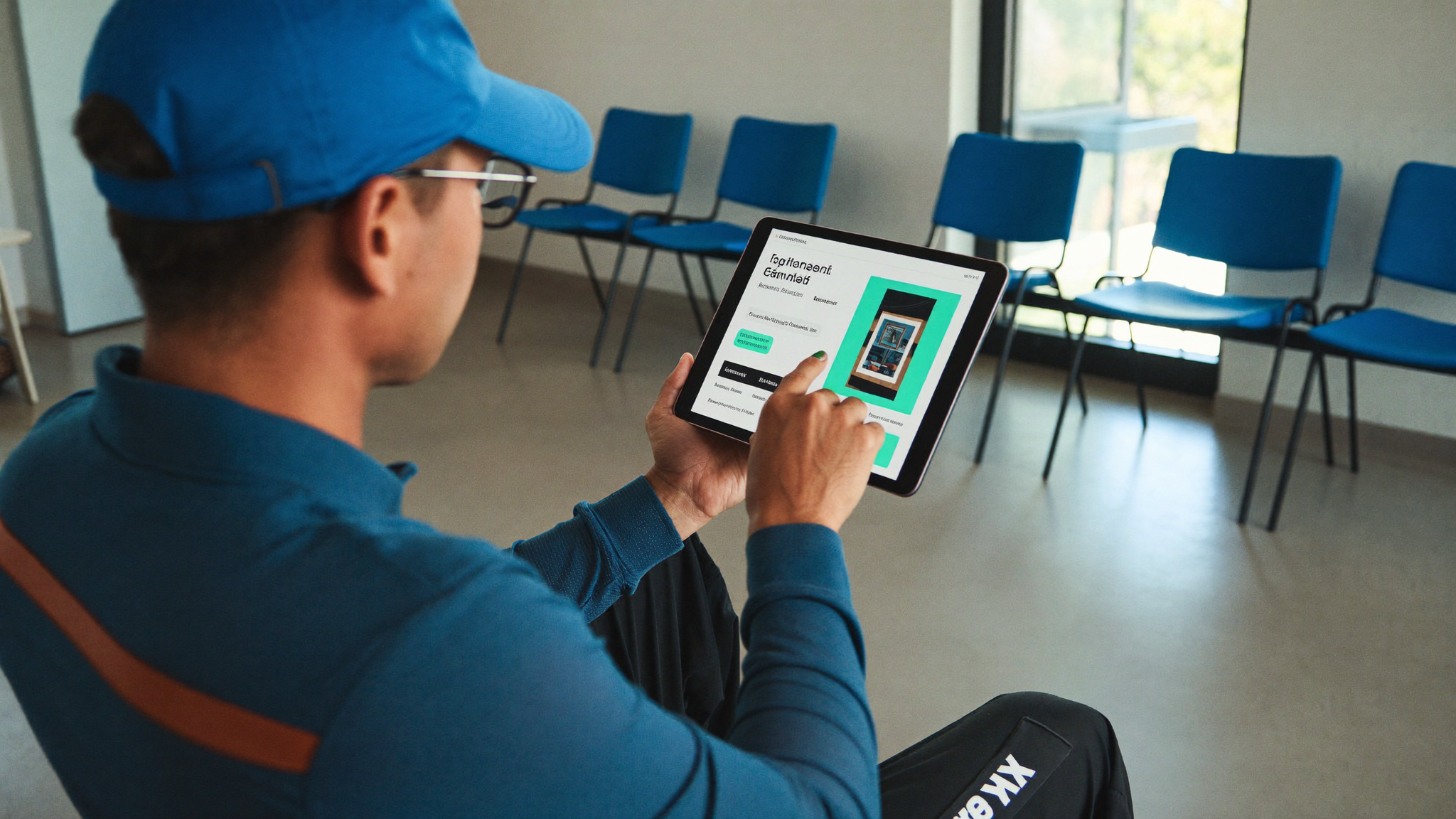
The simulator is accessible around the clock, from any connected device. For field teams on shift patterns, or for people working in geographically isolated roles, that is decisive. They can practise during a break, ahead of an important client meeting, or while commuting. This accessibility makes soft skills practice genuinely available to everyone.
Counter-intuitively, a simulator lets you standardise the training experience (same scenarios, same assessment criteria for everyone) and personalise it at the same time (adapted difficulty, individual feedback, tailored pathways). That dual capability is particularly valuable for large-scale deployment.
Salespeople benefit particularly from AI simulation. Scenarios cover needs discovery (asking the right questions, practising active listening), objection handling (reformulating, making the case, reassuring without pushing), price negotiation (defending an offer, proposing alternatives) and closing (spotting buying signals, supporting the decision). Each scenario features a different customer profile: the analytical buyer who wants numbers, the expressive one who responds to emotion, the driver who has no time.
Managers practise the situations that are hardest to get right: telling someone they have not been promoted, mediating a conflict between two team members, running a performance conversation, supporting a struggling colleague. These situations are rare in real working life — which means that without simulation, managers face those critical moments completely unrehearsed. The simulator gives them somewhere safe to build their leadership reflexes.
For teams in direct contact with the public, the simulator offers scenarios covering standard reception, complaint handling, signposting and advice. Avatars play a wide range of profiles: the customer in a hurry, the older visitor who needs a detailed explanation, the angry customer, the foreign visitor. That variety prepares staff for the full spread of situations they will meet on the ground.
Integrating new joiners benefits enormously from simulators. Rather than shadowing passively for weeks before being allowed to practise, new recruits train from their first days on situations representative of the role. The result is a noticeably faster ramp-up and more confidence going into their first real interactions.
The best simulators let trainers observe sessions live. They watch the conversation unfold, see the choices the learner makes and note the key moments for the debrief. Observing remotely is particularly useful in blended programmes: the trainer tracks progress without needing to be physically present.
After each session, the trainer has a full replay annotated automatically by the AI. Key moments are flagged: the learner's strengths, the mistakes, the openings that were missed. The trainer can add their own notes and build a structured debrief grounded in concrete evidence rather than approximate recollection.
The debrief becomes the richest moment of the whole programme. Armed with the simulator's data, the trainer can pinpoint exactly what each learner needs to work on. Instead of "you should listen more carefully", it becomes "at 3:42, when the customer expressed their frustration, you jumped straight to a solution instead of acknowledging the emotion". That precision makes feedback immediately actionable.
Framing the two approaches as rivals misses the point. The most effective soft skills training methods combine them. The simulator excels at individual preparation: repetition, desensitisation, building reflexes. Peer role play brings the social dimension: group pressure, genuine human unpredictability, feedback from colleagues. One-to-one coaching then addresses the specific sticking points the simulator has identified.
The ideal sequence often runs like this: individual practice on the simulator to acquire the fundamentals, then a group session to test those skills in conditions closer to reality, then back to the simulator to consolidate. This blended approach takes the best of each format.
If you are considering adding an AI simulator to your soft skills training strategy, these are the criteria to assess. Conversational quality first: the avatar must be able to sustain a natural conversation, pick up on what is implied, respond to emotion and stay in role. Always test the product yourself before you buy.
Then the authoring tool: trainers need to be able to create and edit scenarios easily, without technical skills. A simulator whose scenarios are frozen loses its relevance quickly. Analytics and reporting: the simulator should generate data that trainers and the wider learning team can actually use. Performance scores, individual progress and group analytics all need to be accessible and easy to interpret.
Technical integration: check compatibility with your LMS, how straightforward deployment is and what the technical requirements are on the user's side. GDPR compliance: conversations are sensitive data. Make sure the solution meets personal data regulations, that data is hosted in Europe, and that no model training is carried out on your employees' data.
AI simulators with avatars are not a technological gimmick. They answer a fundamental need in soft skills training: enabling intensive, personalised, measurable practice without the logistical constraints and ceilings of traditional formats. For trainers, they are a powerful addition to the pedagogical toolkit that does nothing to diminish their role. For learners, they offer a rare space in which a mistake is a lever for learning rather than a source of stress.
The integration of AI into training is accelerating, and the trends shaping 2026 confirm that organisations adopting these tools now are building a real lead in how their teams develop relational skills. The return on investment is demonstrable and the use cases are mature: the only step left is to take it.