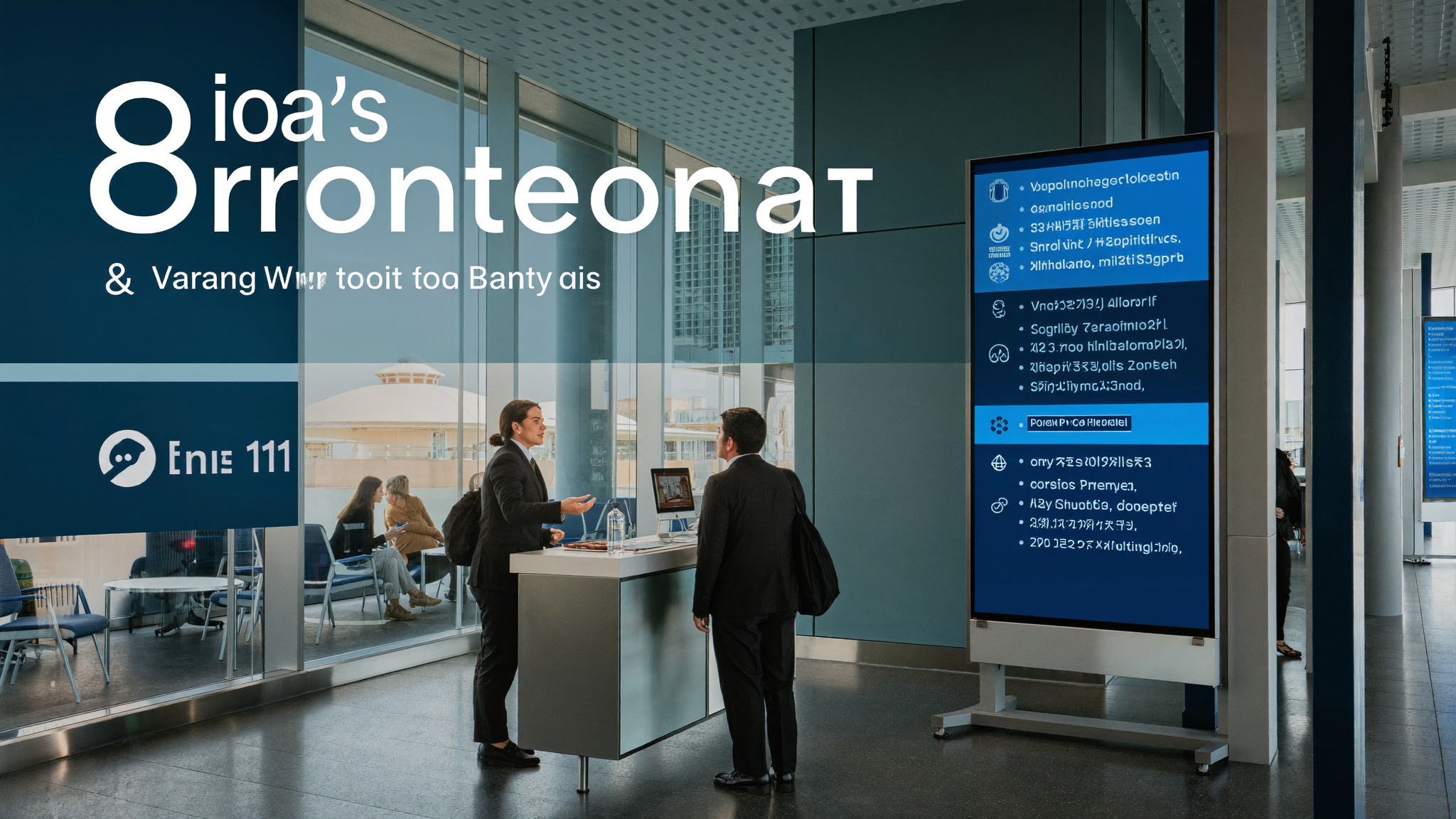
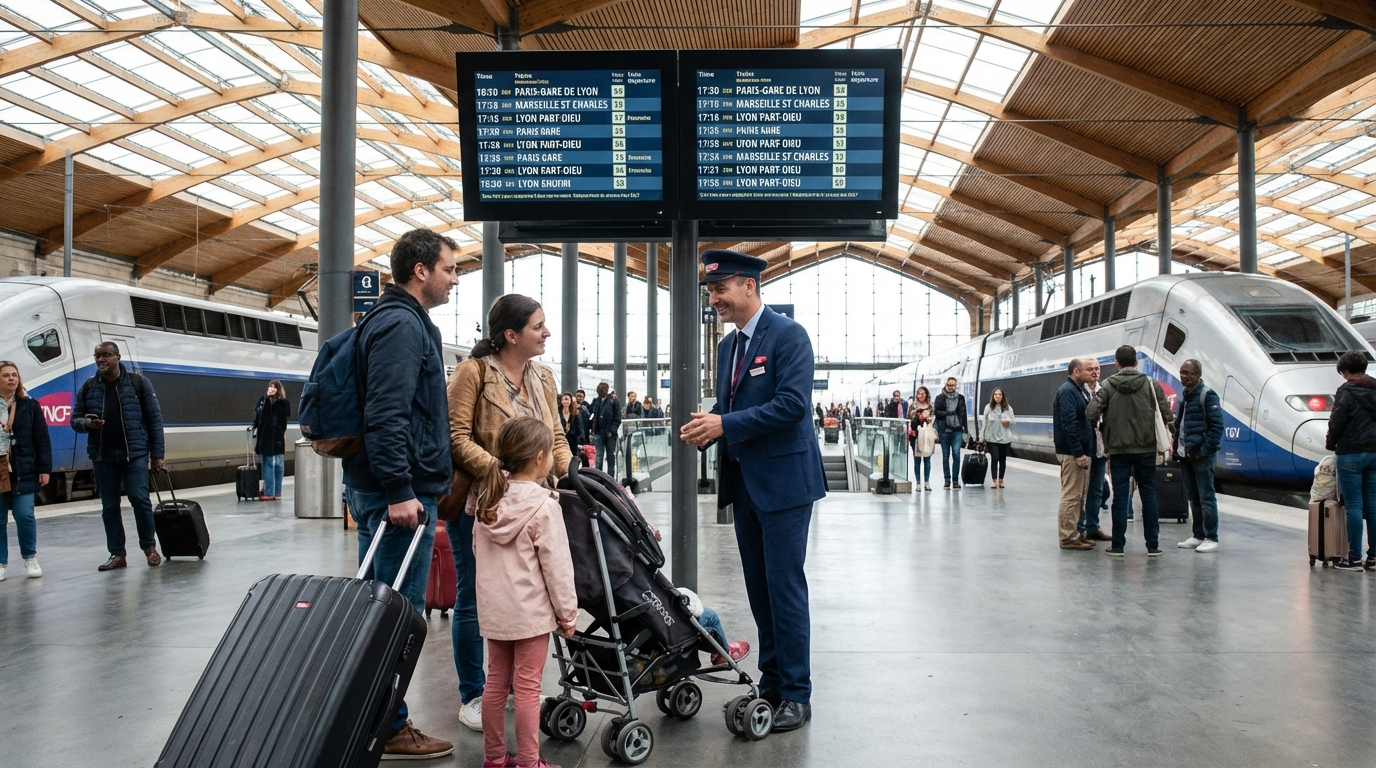
A train cancelled at the height of rush hour. Two hundred unhappy passengers. One agent alone at the desk. This is not an exceptional scenario — it is daily life for information and front-desk staff across rail, air and urban transport.
Passenger relations in public transport stack up every difficulty at once: high passenger volumes, frequent disruption, noisy environments, a wide mix of profiles (tourists, commuters, passengers with reduced mobility, families) and an intense emotional load. The interpersonal skills required go far beyond simple courtesy.
Training these agents in customer relations management is not a luxury. It is a direct lever on passenger satisfaction, safety and operational performance.
Delays, cancellations, missed connections, strikes: disruption generates a collective stress that discharges onto the front-line agent. Passengers want answers, solutions and empathy — usually all three at once.
Agents need a skill that is rarely taught: individual crisis communication. Delivering bad news (your train has been cancelled), offering a concrete alternative (the next one is in 45 minutes, here is the platform), handling the passenger's emotion (I understand your frustration) — and repeating that sequence dozens of times a day without burning out.
Handling difficult customers takes on a particular dimension here. Aggression from a passenger caught in disruption is rarely personal — it is the expression of situational stress. Agents who understand that mechanism defuse it far more easily.
In a station or an airport, a front-desk agent juggles several requests at once: a routing question, an assistance request for a passenger with reduced mobility, a lost traveller who does not speak the local language. The ability to prioritise, switch quickly between people and hold service quality under pressure is essential.
Non-verbal communication plays a major role in this setting. A welcoming look, a gesture that points the way, an open posture that reassures — these signals matter as much as the words, particularly when ambient noise makes verbal communication difficult.
Transport agents communicate across multiple channels: face to face, over the public address system, via information screens, on social media, by chat and by phone. Mastering omnichannel customer relations is increasingly critical.
Each channel demands a different register. A public announcement must be short, clear and structured. A face-to-face exchange allows for personalisation and empathy. A social media update must be factual and precise. Training agents to adapt their communication to the channel is a growing priority.
Active listening is fundamental, and particularly hard to sustain under pressure. When twenty passengers are waiting and the phone is ringing, the temptation is to cut things short and give a standard answer. Yet these are exactly the moments when listening makes the difference.
Training must prepare agents to listen effectively in degraded conditions: identify the essential need quickly, reformulate concisely, answer precisely. Less time does not mean less quality — it means more efficiency.
Repeated tension wears agents down. Burnout and disengagement are real risks in passenger-facing roles. Training must include stress management and emotional regulation techniques: breathing, stepping back, peer debriefing.
Resilience is not innate — it is built. Agents who have concrete techniques for managing their own emotional state cope better with unhappy passengers and last longer in the role.
Stations, airports and transport networks serve an international public. Relational codes vary from one culture to another: physical distance, eye contact, degrees of formality, how dissatisfaction is expressed. An agent trained in these differences avoids misunderstandings and adapts their approach.
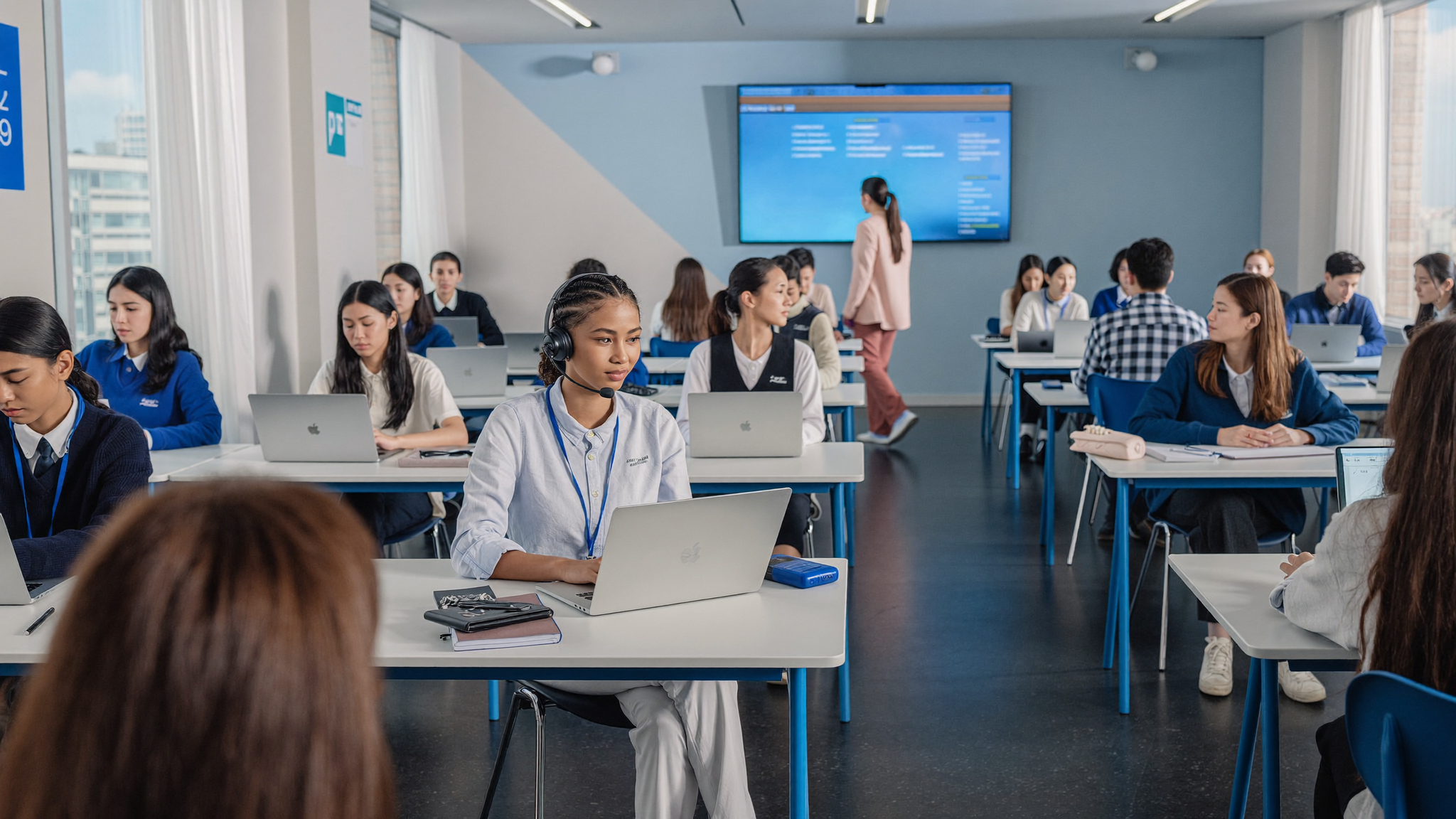
Nobody learns to handle a crisis by reading a manual. Practice-based simulation is indispensable. It puts agents in front of the most stressful scenarios in a safe setting, with a right to get things wrong.
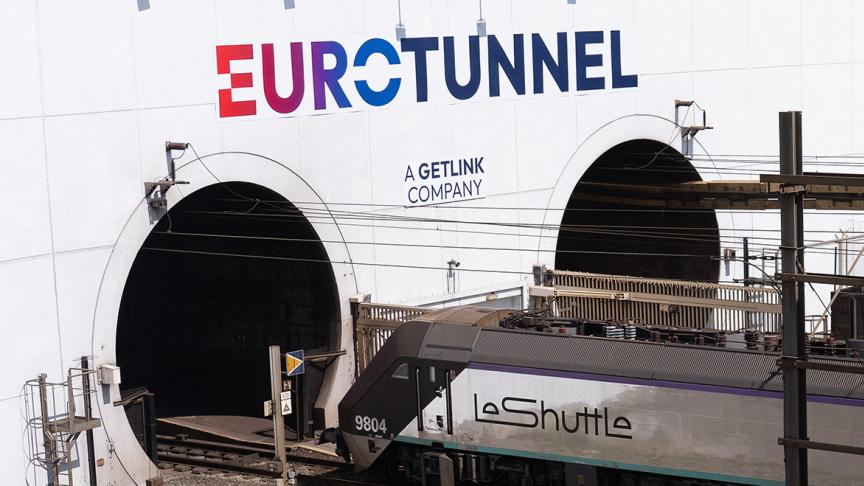
At Eurotunnel, simulations of disrupted operations transformed agent training. Instead of conventional role-plays between colleagues — where everyone knows it is only pretend — agents practise against AI avatars configured with typical passenger behaviours: the commuter in a hurry, the lost family, the aggressive traveller, the passenger with reduced mobility.
Feedback is immediate and objective: multimodal analysis assesses the content of the responses (accuracy of information, alternatives offered), the tone (calm, empathetic, directive) and the posture. The trainer can then debrief on concrete evidence.
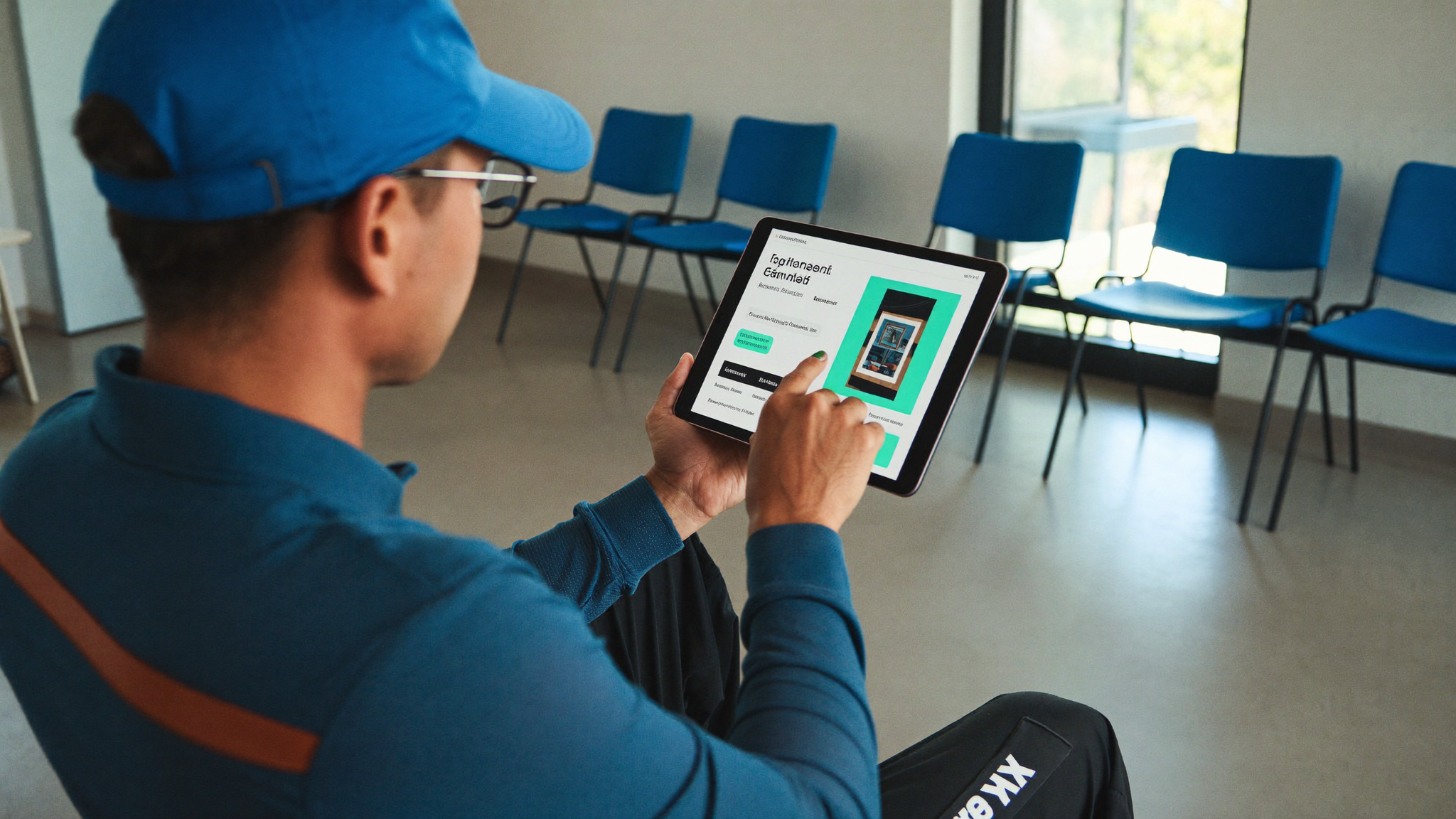
Field agents cannot be released for full days of training. Microlearning fits their constraints: five-minute modules on a single point (announcing a delay, handling a complaint, directing a tourist), available on tablet or smartphone during breaks and quieter moments.
Short AI simulations suit this format particularly well: five minutes of conversation with a virtual passenger, followed by targeted feedback. That is enough to work on one specific reflex without blocking out half a day.
Peer-to-peer experience sharing is a powerful training method in transport. Agents discuss the situations they have faced, the solutions they found and the difficulties they met. The trainer structures those exchanges and extracts good practice from them.
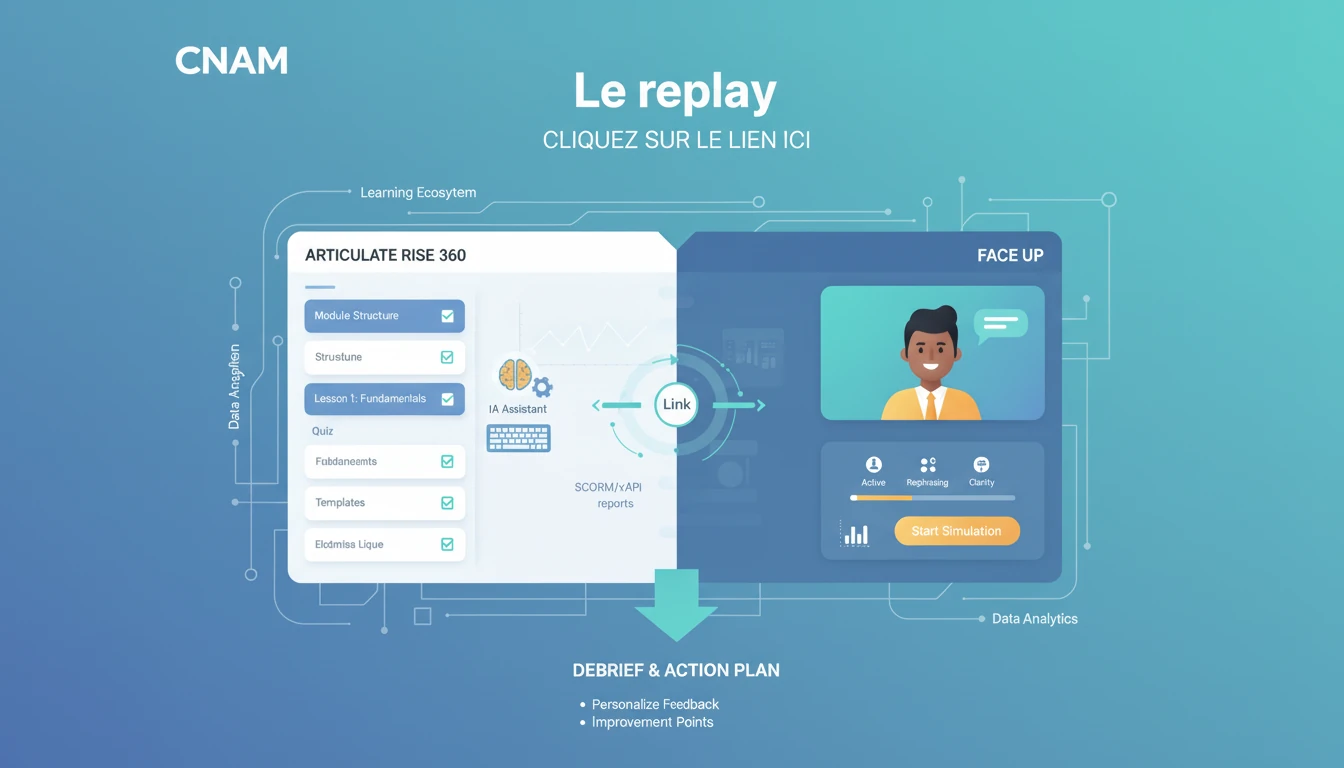
Debrief sessions can build on simulation replays: reviewing a difficult conversation with the AI avatar, analysing the key moments, identifying what worked and what can be improved. This is the principle of live observation and time-stamped replay, at the heart of Face Up's trainer-first approach.
The ultimate indicator is passenger satisfaction, measured through regular surveys (NPS, satisfaction barometers). Transport operators that invest in customer relations training see a significant improvement in these scores, particularly during disruption — the moment when relational quality matters most.
An agent trained in de-escalation defuses conflicts before they escalate. Abuse and assaults against staff are a growing problem across the sector. Training in handling tense situations contributes directly to the safety of both agents and passengers.
Agents who feel competent in difficult situations wear down more slowly. Training helps retain teams in a sector where recruitment is increasingly difficult.
An effective passenger relations programme combines several ingredients: a competency framework that is assessable and certifiable, anchored in real operational situations; simulation scenarios calibrated on the most frequent and most critical cases; a blended format combining group sessions with individual practice; and progress tracking that measures impact and allows the programme to be adjusted.
Face Up supports transport operators through this process, with a catalogue of sector scenarios and an authoring tool for building bespoke simulations. The aim is simple: every agent prepared for the most demanding situations before meeting them on the ground.