Stress management is one of the most requested skills of 2026. It is also one of the hardest to evidence when a quality audit comes around. How do you show that a learner handles stress better after the training? That is not really where the difficulty lies. The difficulty is documenting it convincingly.
Here is how to build an evidence file that stands up to scrutiny.
1. Do not confuse wellbeing with competence
Stress is a psychological state. Managing stress is a skill. That distinction is critical for any auditor.
- Weak: "Learners feel more relaxed." (A feeling, not evidence of acquisition.)
- Strong: "Learners apply three observed techniques: box breathing, a mindfulness pause, and cognitive reappraisal." (Measurable behaviours.)
Auditors want competencies, not sensations.
2. Break the skill down into sub-competencies
Stress management cannot be assessed as a single block. Break it apart:
- Recognising the signals of stress (physiological, emotional, behavioural).
- Applying a first de-escalation technique (breathing, taking a pause).
- Identifying the source of the stress in order to address it.
- Anticipating and preventing it (planning, boundaries).
- Evaluating how effective their own response was.
You do not need to measure all of them. Pick two or three, and be precise about which ones in your documentation.
3. Assess before: observation and self-diagnosis
At the start of the programme, ask specific questions:
- Open question: "Describe a recent situation where you felt under stress. How did you react?"
- Observation: Note the spontaneous reaction pattern: flooding, urgency, or logical analysis.
- Guided self-diagnosis: "Had you identified the source of the stress? Did you have a plan?" (Yes/No.)
Keep a written record of these first observations.
4. Assess during: checkpoints and practice scenarios
Build continuous assessment moments into the programme:
- Practice scenarios: Audio or video of someone under stress. The learner has to identify the stress and propose a technique.
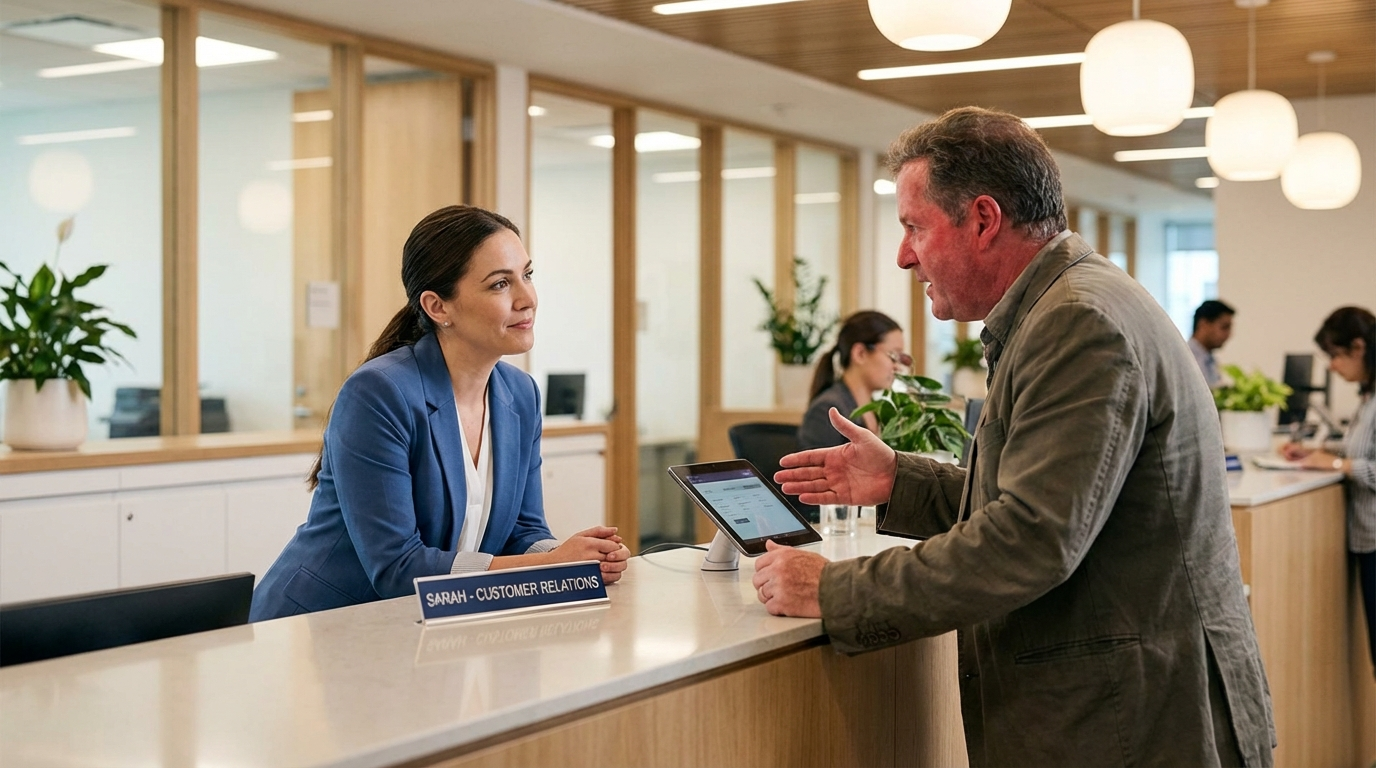
- Simulations: Play out stressful roles (an angry customer, a tight deadline) with constructive feedback. The learner applies a technique. You observe.
- Reflective journal: Each day, the learner records a stressful situation they experienced and the technique they used. The result is a body of evidence.
These checkpoints belong in the evidence file.
5. Assess after: the post-test
Run the same scenario, or a close equivalent:
- Same format (credible, and observed).
- Same observation grid, using exactly the criteria you used before.
- Establish: does the learner recognise the stress? Do they apply a technique? Does the situation settle?
The gap between pre and post is your evidence.
6. Collect and analyse the evidence
For the audit file, pull together:
- The learning objectives (your breakdown of the skill).
- The pre and post assessments, with their scoring grids.
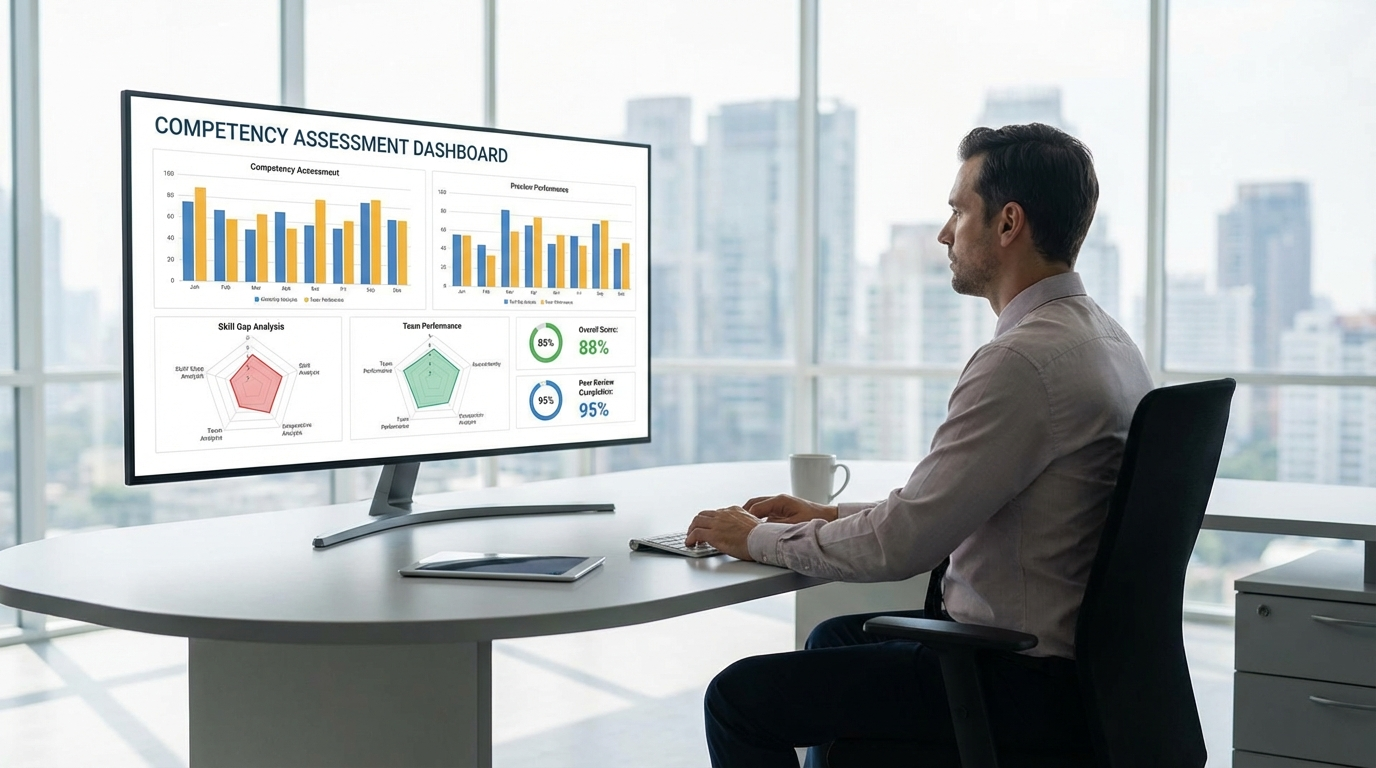
- Individual results: "Before: recognises stress (50%), applies a technique (0%). After: recognises stress (100%), applies a technique (90%)."
- Proof of progression: reflective journals, simulation recordings, audio files.
- The analysis: "12 of 14 learners progressed on both recognising stress and applying techniques."
7. Adapt the approach for remote delivery
Remotely, use:
- Scenario videos: Stage a stressful situation. The learner responds in writing or on video.
- Live simulations: Over video call, you play the stressful role. The learner reacts. You observe.
- Digital journals: The learner keeps a personal log or forum thread documenting how they handled stress between sessions.
- Audio recordings: The learner thinks aloud about their reactions, with recorded consent.
The big mistake
Too many training providers settle for a satisfaction survey: "Do you feel calmer after the training?" The answer is always yes. Auditors know it. That is not evidence, it is marketing.
Prove it instead with observations, traces, and a like-for-like pre and post comparison.
For your evidence file
The minimum structure:
- Specific objectives: "The learner recognises the signals of stress and applies two de-escalation techniques."
- Pre-assessment: spontaneous reactions recorded.
- Activities during: practice scenarios documented.
- Post-assessment: the same criteria as the pre-assessment.
- Analysis: "80% of learners now recognise the signals. 70% apply a technique."
Stress management moves from a vague skill to a measured, auditable acquisition. See our guide to structuring your evidence file. That is where you win the conversation with auditors.