
The shift in management is well under way. The model of the expert manager who knows everything and controls everything is giving way to the manager-coach who listens, inspires, develops and protects. That turn demands a set of soft skills most managers have never been formally taught.
Gallup research attributes 70% of the variance in team engagement to the quality of management. Put differently: people do not leave their company, they leave their manager. And what makes a good manager is not technical competence — it is their soft skills.
This is why the most effective soft skills training programmes often start with managers. When management changes, the rest of the organisation follows.
Emotional intelligence is the manager's meta-skill. It governs their capacity to understand their people, defuse tension, inspire trust and make decisions under pressure.
A manager with high emotional intelligence picks up weak signals: someone disengaging, latent friction between two team members, a workload heading towards burnout. They step in before the crisis rather than after it.
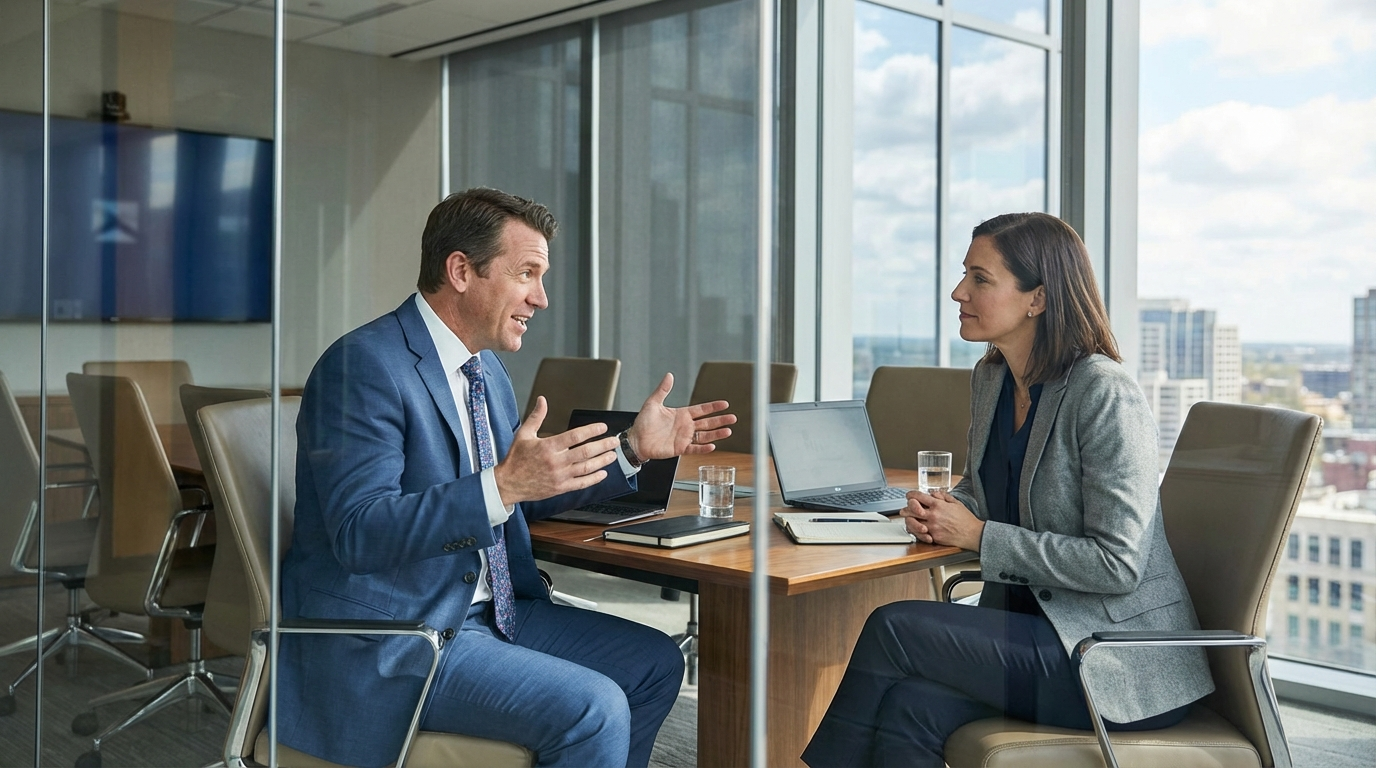
A manager communicates in every direction and in every register. Setting out an inspiring vision, correcting a behaviour, announcing an unwelcome change, celebrating a win: each situation calls for a different style of interpersonal communication.
Managers who are good at this know how to do three things.
Give constructive feedback. The SBI model (Situation-Behaviour-Impact) structures feedback around facts rather than judgement. "In the client meeting on Tuesday (situation), you interrupted the client several times (behaviour), which gave the impression we were not listening (impact)."
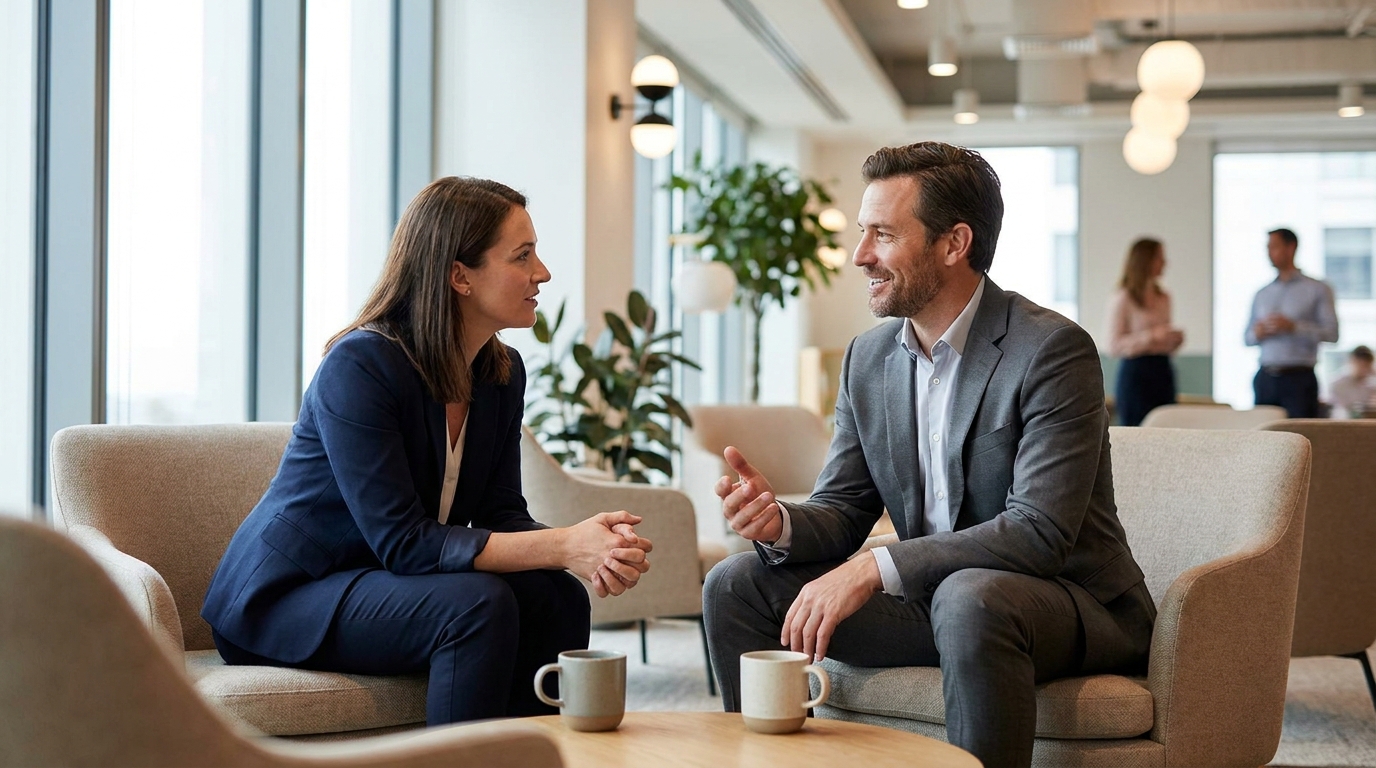
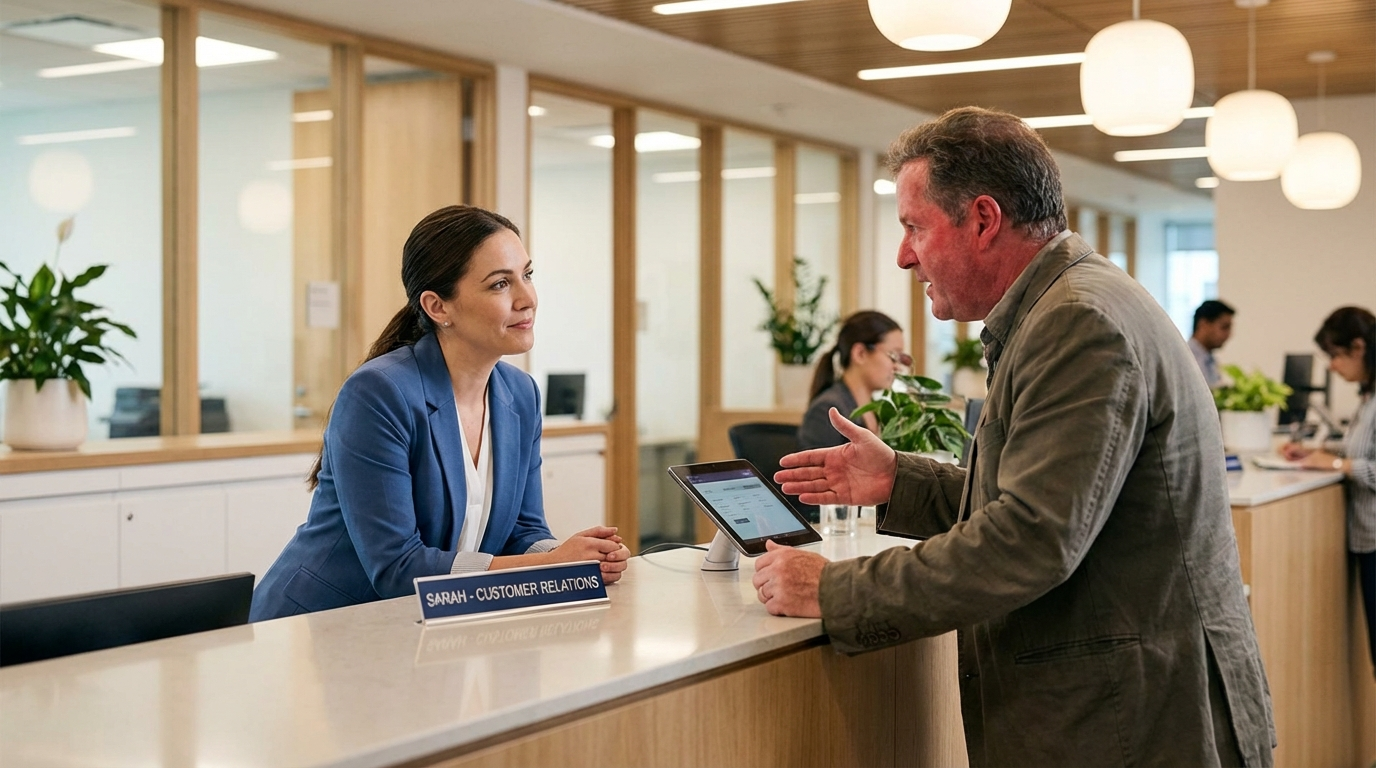
Listen properly. Create spaces where people feel able to raise their difficulties, their ideas and their concerns. Regular one-to-ones are the natural format for this.
Communicate change. In a constantly shifting environment, the manager translates change for their team. They give it meaning, answer the questions and support the adjustment.
Delegating does not mean handing over the tasks you would rather not do. It is a management act combining trust, clear expectations and follow-up calibrated to the individual's level of autonomy.
Hersey and Blanchard's situational leadership model remains a useful reference: the management style (directing, coaching, supporting, delegating) adapts to each person's level of competence and motivation on each specific task.
Conflict is inevitable in any high-performing team — it is in fact a sign of diversity and engagement. What matters is the manager's ability to handle it constructively.
Managers trained in conflict management know how to identify the real source of the disagreement (often different from the apparent subject), create a safe space for dialogue, facilitate the search for a shared solution, and follow up once it is resolved.
The manager-coach asks questions rather than supplying answers. They build their people's autonomy rather than their dependence. That stance requires specific skills: Socratic questioning, deep listening, patience, and the discipline to let someone find their own solution.
Coaching and mentoring built into everyday management practice change team culture at a deep level.
Checking every detail, approving every decision, sitting in copy on every email. Micromanagement is a symptom of low trust that demotivates teams and exhausts the manager. The way out runs through the ability to delegate and to tolerate imperfection.
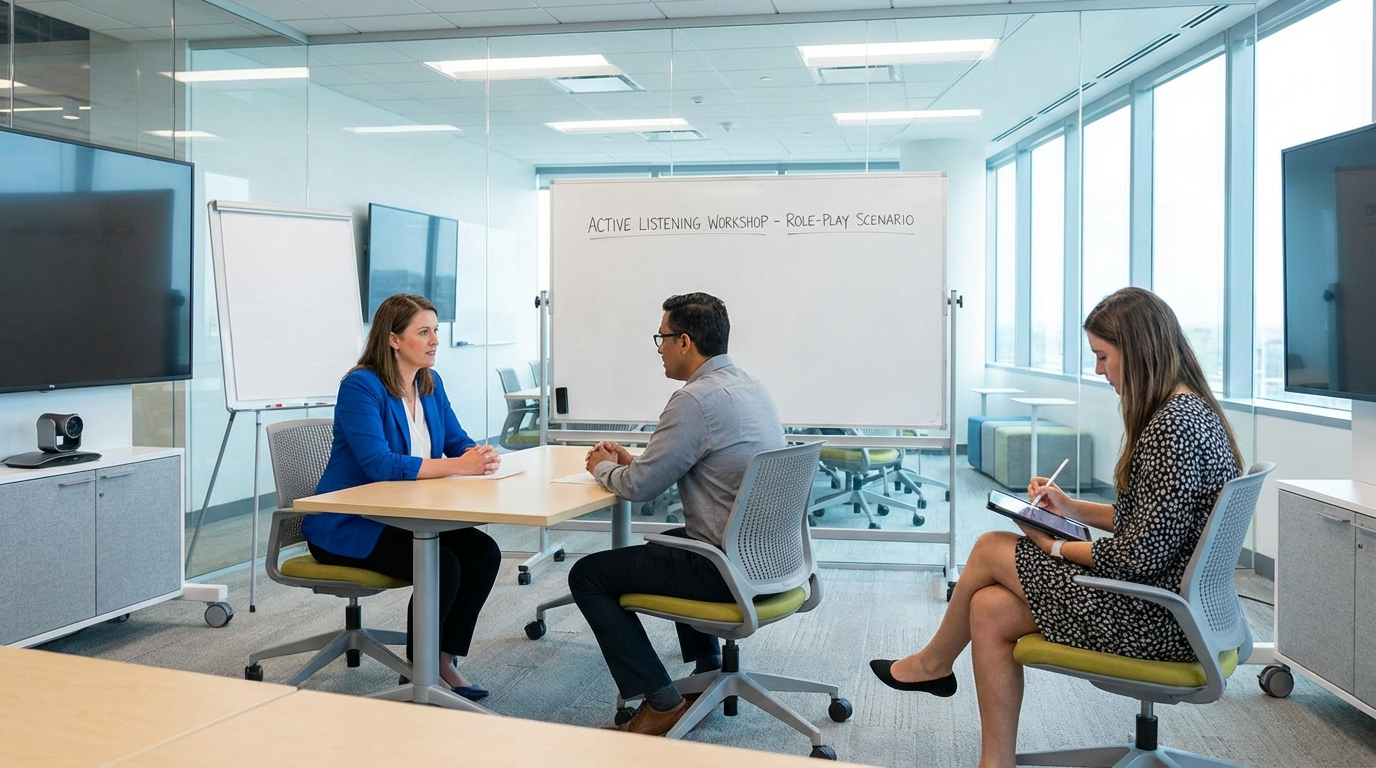
Putting off a corrective conversation, dodging bad news, talking around the point in an appraisal. Avoidance creates more problems than it solves. Role-play is particularly effective at defusing that fear, because it lets managers rehearse these conversations in a safe setting.
Many toxic managers have no idea they are. Belittling remarks dressed up as humour, unconscious favouritism, aggressive communication under stress. Awareness — often through 360-degree feedback or video review — is the first step towards change.
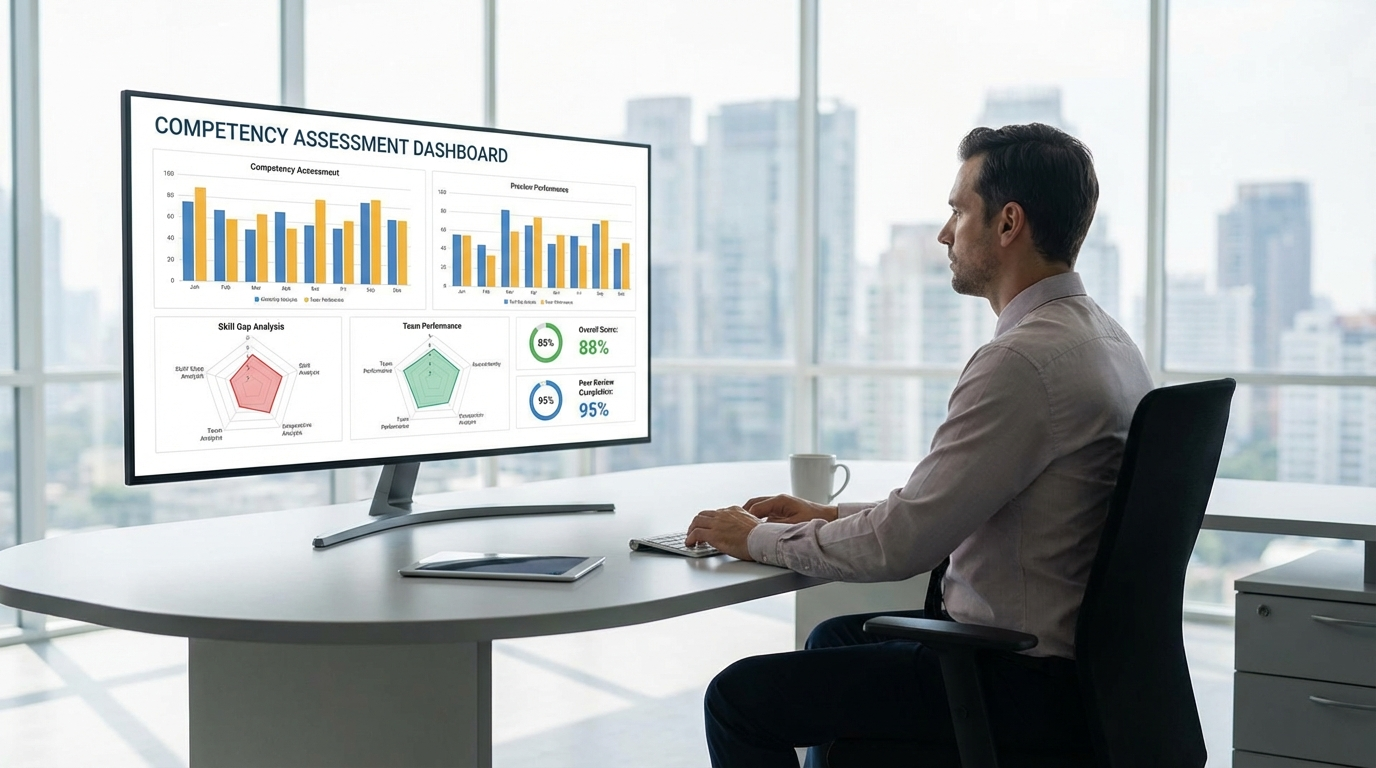
Assessment of managerial soft skills using a validated instrument, complemented by 360-degree feedback (peers, line manager, direct reports). Identification of strengths and priority areas for development.
Modules on emotional intelligence, managerial communication and constructive feedback. Each module combines theory (two hours) with simulated practice (four hours).
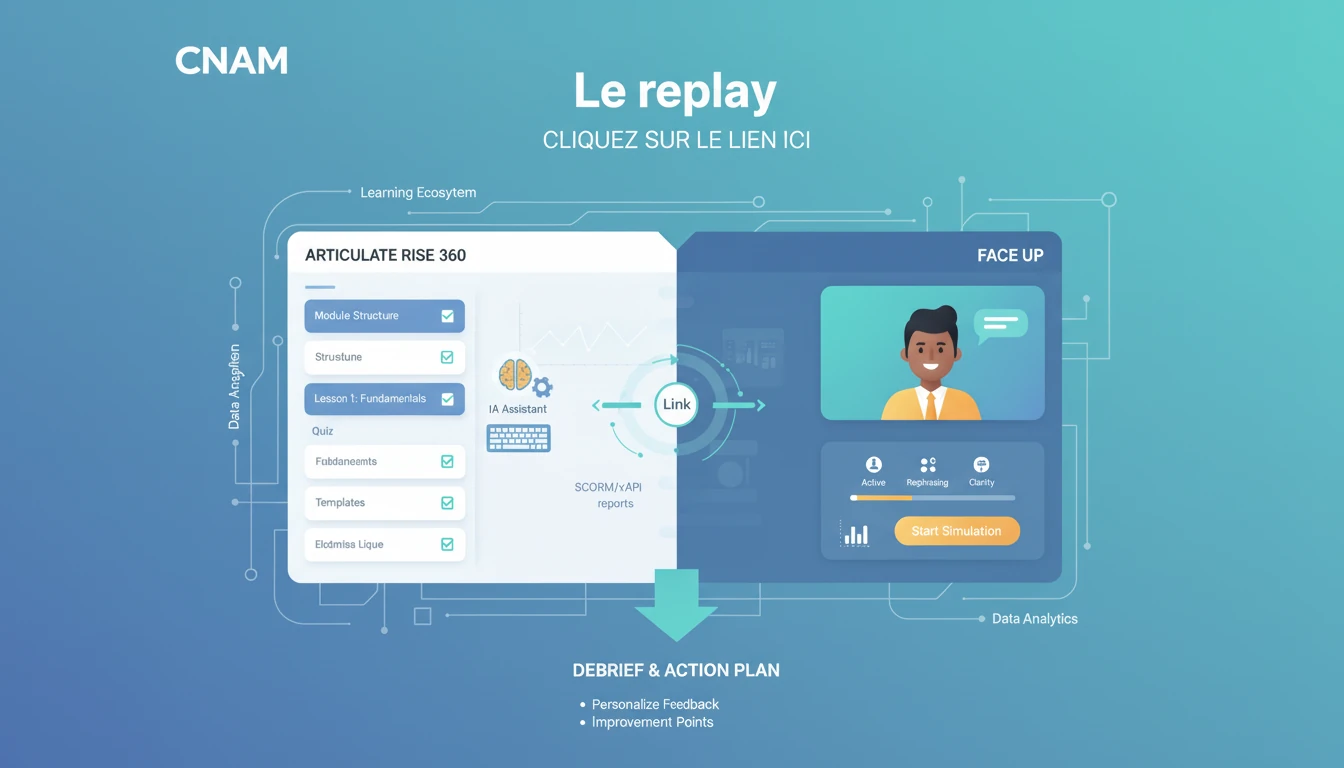
Twice-weekly simulation sessions on management scenarios of increasing difficulty: appraisals, conflict management, announcing change, corrective conversations, crisis handling. Face Up's AI avatars play team members with varied profiles — from the motivated junior to the senior resistant to change.
Application in real situations, supported by a management log. Individual coaching sessions to work through the specific situations that come up. Interim assessment with progress measurement.
Final assessment, comparison against the starting profile, and an ongoing development plan. Management rituals (one-to-ones, regular feedback) are put in place to hold the new practices in the routine.
Organisations that invest in soft skills training for their managers see measurable results.
Engagement: engagement scores rise by 20 to 30% in teams led by programme participants.
Retention: turnover falls by 15 to 25% in the teams concerned. Given what it costs to replace and re-train a departing employee, the financial impact is considerable.
Performance: team productivity improves by 10 to 20%, measured against role-specific KPIs.
Internal NPS: a significant rise in satisfaction with the direct line manager.
To structure that measurement, companies use the Kirkpatrick model alongside business-specific indicators. Our guide to the ROI of soft skills training sets out the methods in detail.
Management in 2026 faces genuinely new challenges. Leading hybrid teams (part on site, part remote) calls for new skills: holding cohesion at a distance, maintaining fairness between those in the office and those outside it, spotting overload without physical proximity.
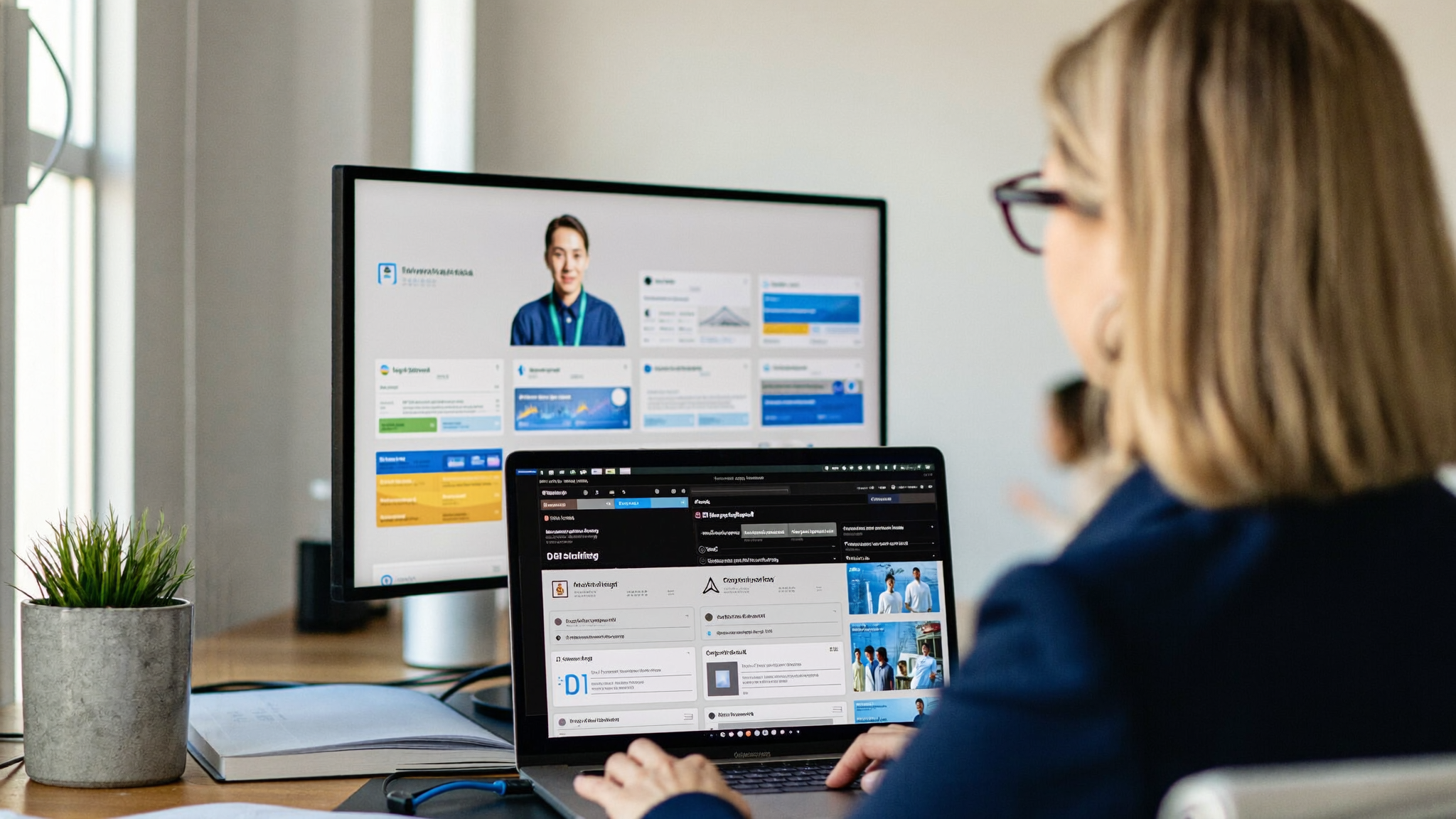
AI is also transforming how managers are trained. AI simulations let them rehearse complex management conversations in a safe environment, with objective, detailed feedback on both the substance and the delivery of each exchange.
To deploy these programmes at scale, companies combine in-person sessions, AI simulation and digital coaching. This blended approach maximises impact while keeping costs under control.
For the latest developments, see our article on soft skills training trends for 2026.