
A disagreement between colleagues that boils over. An unhappy customer raising their voice. A manager caught between two team members at loggerheads. Conflict at work is not the exception: CPP Global research puts it at an average of 2.8 hours a week per employee. The cost is substantial — but the good news is that conflict management can be learned.
This guide sets out the most effective methods for training your teams to defuse conflict, with particular attention to the practice-based approaches that produce lasting results. Whether you run a training provider or head up L&D in-house, you will find concrete ways to structure a soft skills training programme built around conflict management.
Unresolved conflict is expensive on every measure that matters: hours lost, turnover and absence. Beyond the financial side, it corrodes the working climate, slows collaboration and raises psychosocial risk across the organisation.
For training providers, that is a strong signal: organisations are actively looking for ways to equip their teams. Conflict management sits among the top three requests for interpersonal skills training, just behind interpersonal communication and leadership.
The core difficulty is emotional. Faced with conflict, the brain triggers stress responses that reduce the capacity to listen and to reason. Without prior practice, most professionals fall back on one of two ineffective strategies: avoidance, which lets the conflict fester, or blunt confrontation, which makes it worse.
This is precisely why purely theoretical approaches fail. Knowing that you are supposed to “listen actively” counts for little once the adrenaline rises. Training has to build reflexes, not simply transmit concepts.
The Thomas-Kilmann model identifies five conflict-handling styles: competing, collaborating, compromising, avoiding and accommodating. Each has its place depending on the context. The aim of training is not to impose one style, but to widen each participant's behavioural repertoire.
In practice, that means the trainer first helps learners identify their dominant style, which is often unconscious, then trains them to draw on the others as the situation demands. This takes repetition and individual feedback.
Marshall Rosenberg's non-violent communication (NVC) offers a four-step frame: observation, feeling, need, request. Transposed into a professional setting, it defuses escalation quickly by bringing the conversation back to facts and to what each side actually needs.
The effectiveness of NVC in organisations has been documented in several studies. Research published in the Journal of Organizational Behavior found a lasting reduction in conflict incidents among teams trained in NVC, measured six months after the training. The decisive factor: participants had practised the method in realistic scenarios rather than simply reading a manual.
Training managers in the mediator's posture is a powerful lever. A manager who can facilitate an exchange between two people in tension prevents escalation to HR or to legal. Mediation skills include restating what has been said, active neutrality, and the ability to draw out solutions the parties build together.
The strongest programmes combine input on the mediation process with practical scenarios in which the manager takes it in turns to play mediator, party to the dispute, and observer. Rotating through the roles is what makes each perspective land.
Learning research confirms what experienced trainers know intuitively: retention rises steeply as learners move from reading, to listening, to actually doing. For conflict management the point carries even more weight, because the skills involved are behavioural rather than informational.
Role-play creates a safe space where getting it wrong is allowed. A learner who “fails” a mediation in a role-play takes away more than one who scores full marks on a multiple-choice test about mediation techniques. The debrief that follows the exercise is the moment when the learning crystallises.
Peer role-play does have well-known limitations. Colleagues tend to go easy on each other, and self-consciousness in front of the group reduces realism. On top of that, a trainer can only observe one pair at a time in a group of twelve.
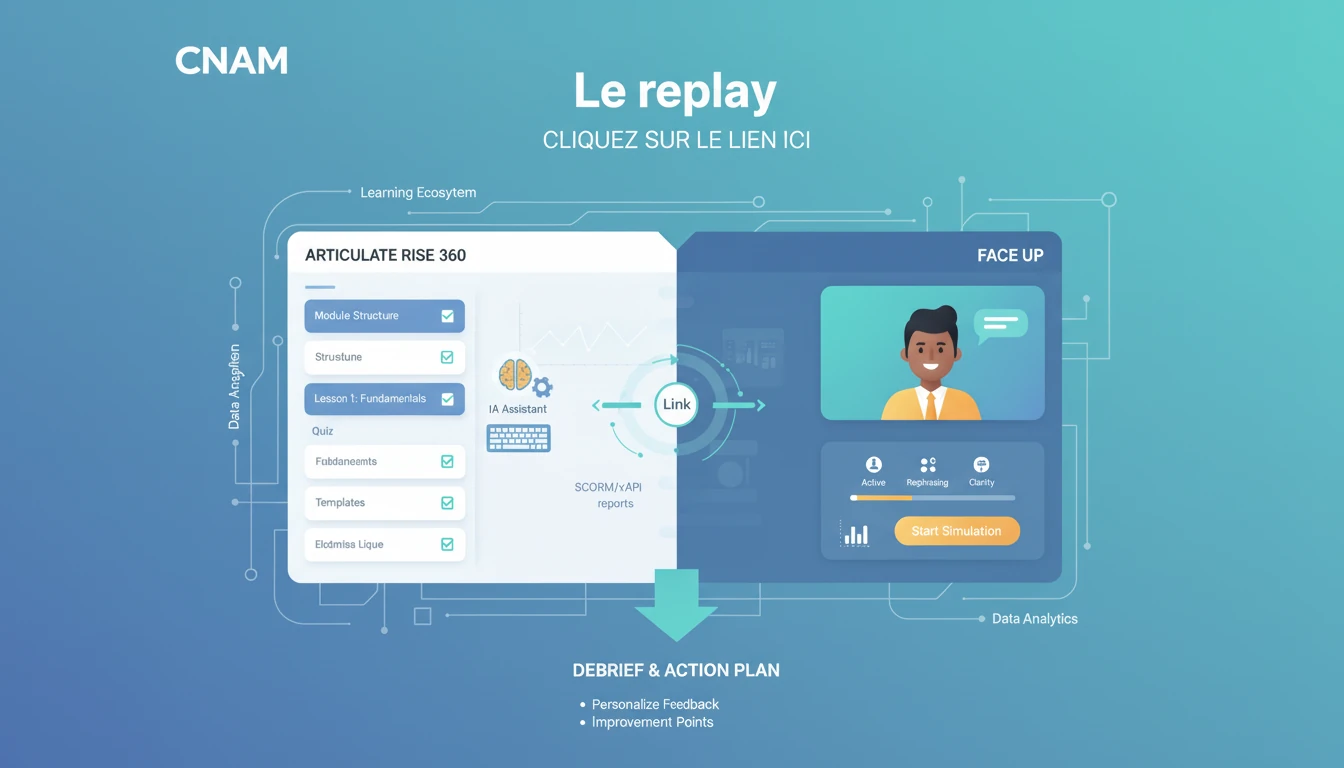
Conversational learning platforms address these limits. They let each learner train individually against a calibrated persona — an aggressive customer, a passive-aggressive colleague, an authoritarian manager — at a consistent level of difficulty, with a detailed debrief covering both the substance and the manner of the exchange. Face Up offers exactly this kind of interpersonal skills practice through scenarios with AI avatars.
An effective conflict management programme moves through three phases. The first, awareness, helps participants understand how conflict works and identify their own patterns. The second, acquisition, introduces the tools and methods through guided exercises. The third, embedding, multiplies practice scenarios to turn knowledge into reflex.
Recommended duration varies by audience: two days in the room for the fundamentals, followed by four to six weeks of spaced digital practice to embed them. This blended learning approach consistently outperforms classroom training on its own.
Managers are on the front line. They have to handle their own conflicts — with their own management, with peers — and their team's, whether between colleagues or with customers. Training needs to cover both dimensions: direct handling and mediation.
Typical manager scenarios include: resetting expectations with a difficult team member, mediating between two members of the team, handling a customer complaint passed on by an overstretched colleague, and negotiating with another department over shared resources.
For frontline and customer service teams, the priority is handling rudeness and aggression. Scenarios have to reflect the reality of the job: a furious passenger after a cancellation, a customer refusing to pay, a user contesting a decision.
Teams trained specifically on incivility escalate markedly fewer incidents up the management chain. The decisive factor is how regularly they train: short, frequent sessions of fifteen to twenty minutes a week produce better results than an intensive day every six months.
The most reliable measures of impact are: the number of incidents escalated to HR before and after, the working-climate score in internal surveys, absence linked to relational stress, and the average time taken to resolve a disagreement.
For training providers that want to demonstrate return on investment to their corporate clients, these indicators are essential. They move the conversation from immediate satisfaction scores to evidence of business impact.
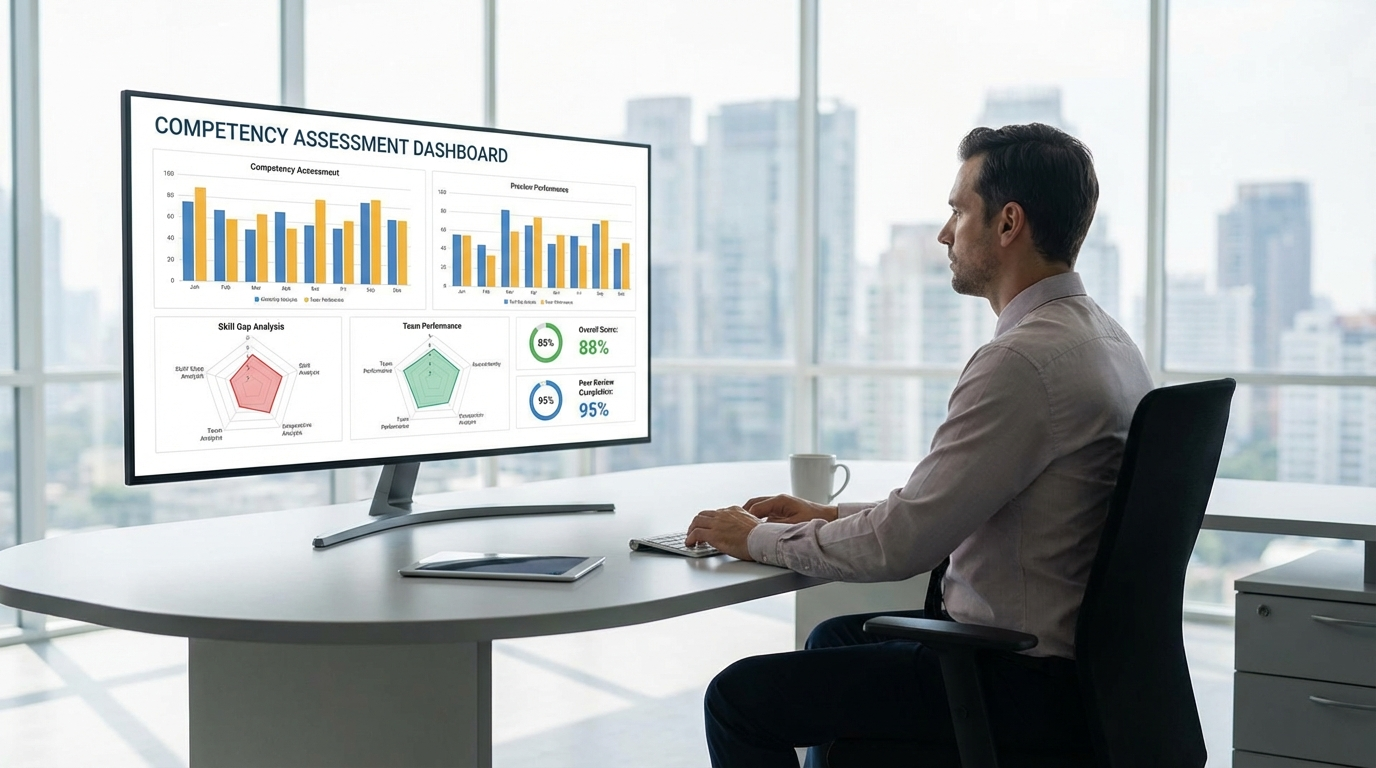
Beyond the numbers, observing individual progress is valuable in its own right. Behavioural assessment grids — listening, restating, emotional regulation, solution-seeking — make it possible to track how each learner develops across successive practice sessions.
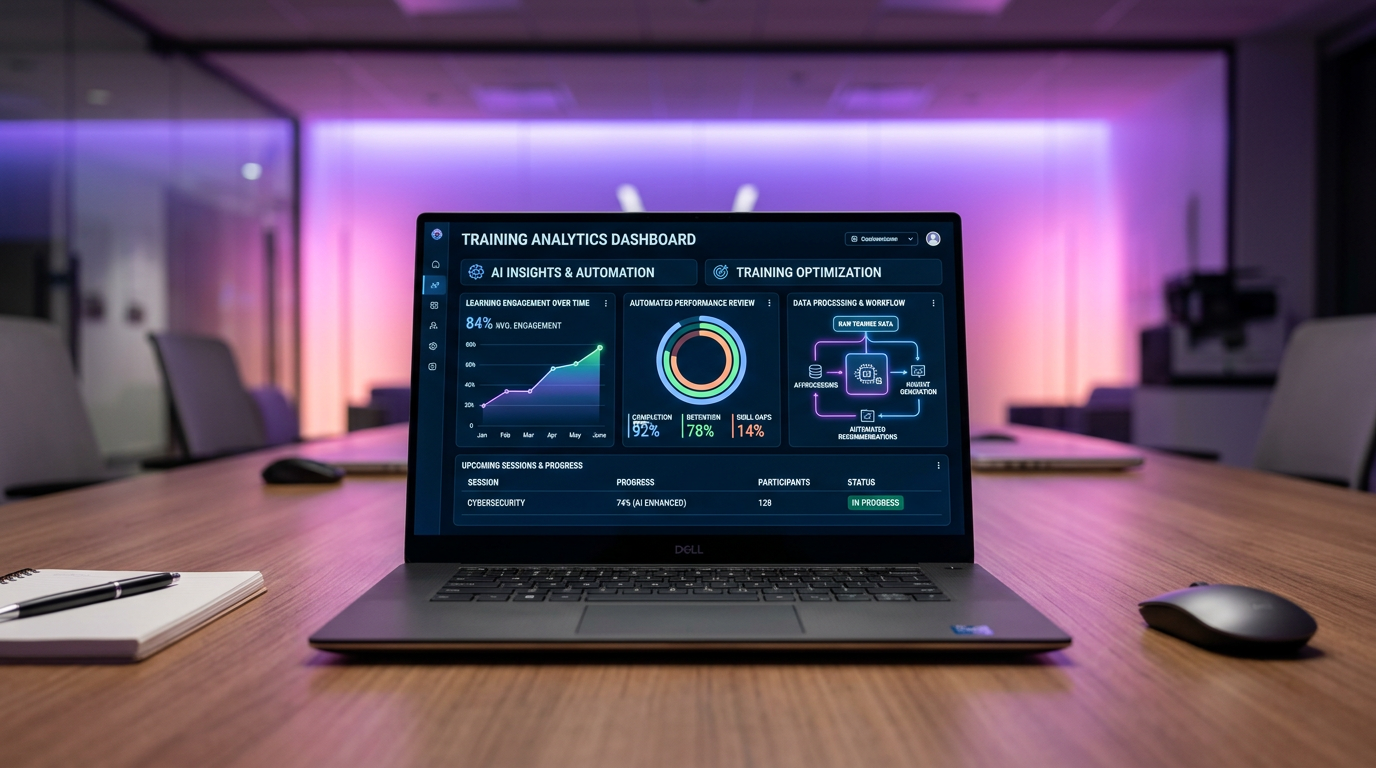
Conversational learning platforms offer a significant advantage here: every session generates detailed data on performance (tone used, words chosen, ability to de-escalate), producing an objective progress record you can actually work with for skills tracking.
Conflict management is not an innate talent reserved for natural diplomats. It is a skill acquired by understanding the mechanisms at work — the Thomas-Kilmann model, NVC, mediation — and above all through repeated practice in realistic conditions. Training providers that build their programmes around progressive scenarios, backed by a rigorous debrief, deliver measurable and lasting results for their clients.
To go further in designing soft skills programmes, see how to expand your training catalogue with modules matched to what your corporate clients actually need.