
Managerial posture is a core competency, and a complex one. It touches presence, authority, delegation, care and listening. Unlike technical skills, it cannot be measured with a quiz score. It is observed in how a manager behaves in a real or simulated situation.
For a quality audit, you cannot write: "The manager feels more confident." You have to show that they act differently. They make better decisions. They listen without interrupting. They delegate instead of doing everything themselves. They carry the room without raising their voice.
This resource breaks managerial posture down into four observable indicators and shows how to measure them before and after a training programme, with auditable evidence.
A manager can look confident — sharp suit, firm tone, fast decisions — and still be ineffective: demotivated team, high turnover, burnout. Another can look hesitant and still be listened to, because they ask questions, they genuinely delegate, and they are willing to reconsider.
An audit does not measure image. It measures impact. What concrete changes can you see in the manager after the programme?
Real posture rests on four visible mechanisms:
Without these four levers you have a theory course. With them, you have a genuine shift in behaviour.
If you do not document these four mechanisms, the auditor will ask: "How do you prove the posture has changed?" A vague answer means rejection. A quantified answer means validation.
Observe a management meeting. The manager announces a decision. How many times do they say "What do you think?" or "Any ideas?" before deciding?
Day 1 (before the programme): zero consultation. The manager says "Here is the decision" and leaves. No discussion.
Day 5 (after the programme): 60 to 80% of decisions are consultative. The manager frames the issue, listens to three or four views, then decides and explains the reasoning.
Keep the record simple: for each manager, log the number of decisions observed on Day 1 and on Day 5, and the share of those decisions that were consultative. A typical profile moves from around 5% to around 80%.
The mechanism? In training, the manager learns that consulting builds buy-in and reduces resistance. They watch simulations where the autocratic manager creates discomfort. They practise asking real questions ("What risks do you see?") instead of issuing instructions.
Observe the instructions a manager gives their team. Count how often they specify the task rather than the outcome.
Weak: "Do the activity report, put the quarterly figures in, send it Friday at 5pm." That is a prescribed task.
Strong: "We need an activity report for the committee. The aim is to show our progress against our objectives. Five pages, deadline Friday at 5pm. How do you see it? What do you need from me?" That is a defined outcome with autonomy.
Day 1: ten instances of delegation observed, none with outcome and autonomy. 100% prescriptive.
Day 5: ten instances observed, eight with outcome and autonomy. 80% instead of 0%.
Record the number of delegations observed per manager and the share that granted real autonomy on Day 1 and on Day 5.
The mechanism? The programme teaches that an autonomous colleague is more engaged and needs less micromanagement. The manager practises resisting the urge to control everything.
Listen to how the manager responds to criticism or to a mistake that has come to light.
Day 1: the manager defends. "It isn't my fault, it's the team." "You don't understand the context." "It was a bad decision, not bad management."
Day 5: the manager owns it. "I should have consulted the team first. That's on me. Here is what I'm changing."
Document through observation or recording:
This is a marker of maturity, and an auditor will see it immediately.
Analyse how the manager gives feedback. Constructive feedback follows a structure: observation, impact, suggestion, commitment to what happens next.
Day 1: feedback is absent, or pure criticism — "You got that wrong", and nothing else. Or it is generic — "You're doing good work."
Day 5: feedback is structured. "In the client meeting you spoke without leaving any silence. That created a sense of pressure. Try asking a question and waiting five seconds before you carry on. Do you think you can apply that in the next meeting?"
Document through recording or observation:
The mechanism? In training, the manager learns that regular, structured feedback develops people. They practise giving it without raising their voice and without inducing guilt — factually.
Design a scenario in which the manager has to handle two things at once:
This forces the manager to show whether they can delegate under pressure, give feedback while stressed, and stay considerate throughout.
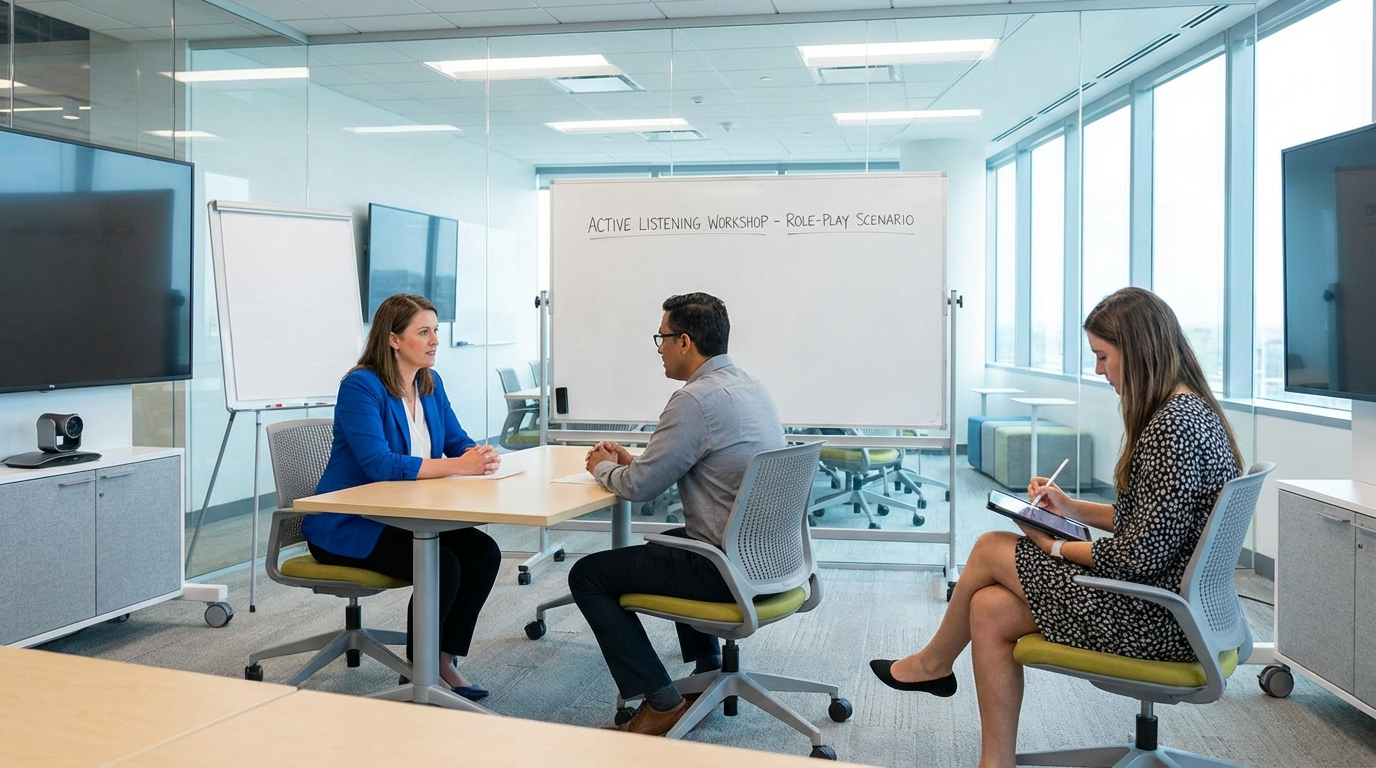
Length: 20 to 30 minutes. Audio or video recording. Observe all four indicators.
Example scenario:
"You are the manager. It is 2pm. An important client calls: they want an audit of their processes by 9am tomorrow. It is entirely unexpected. You have two people on your team: Alice (senior) and Bruno (junior). You call a team meeting to explain the situation. While you are doing that, you discover that the report Alice was due to send this morning never went out because of a formatting error. Alice apologises — some stray HTML had crept in. How do you handle it?"
This scenario tests:
Run the identical exercise on Day 1 (before the programme) and Day 5 (after). The differences will be striking.
Day 1: the manager raises their voice, issues orders, criticises Alice in front of the team. The simulated colleagues — played by the trainer — look deflated by the end.
Day 5: the manager listens to ideas, delegates clearly, gives Alice respectful feedback. The simulated colleagues look motivated by the end.
Evidence: observation grid, recording, learner reflection ("What I saw change").
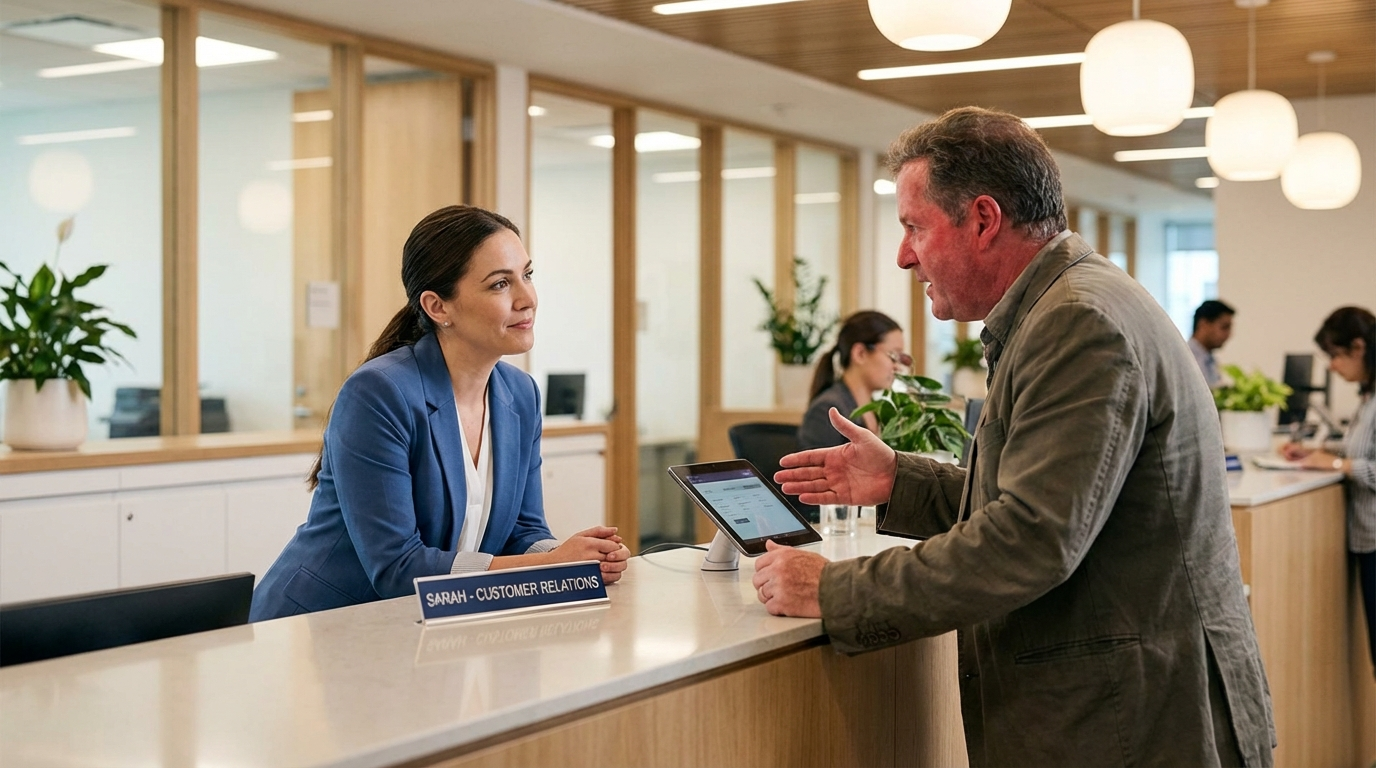
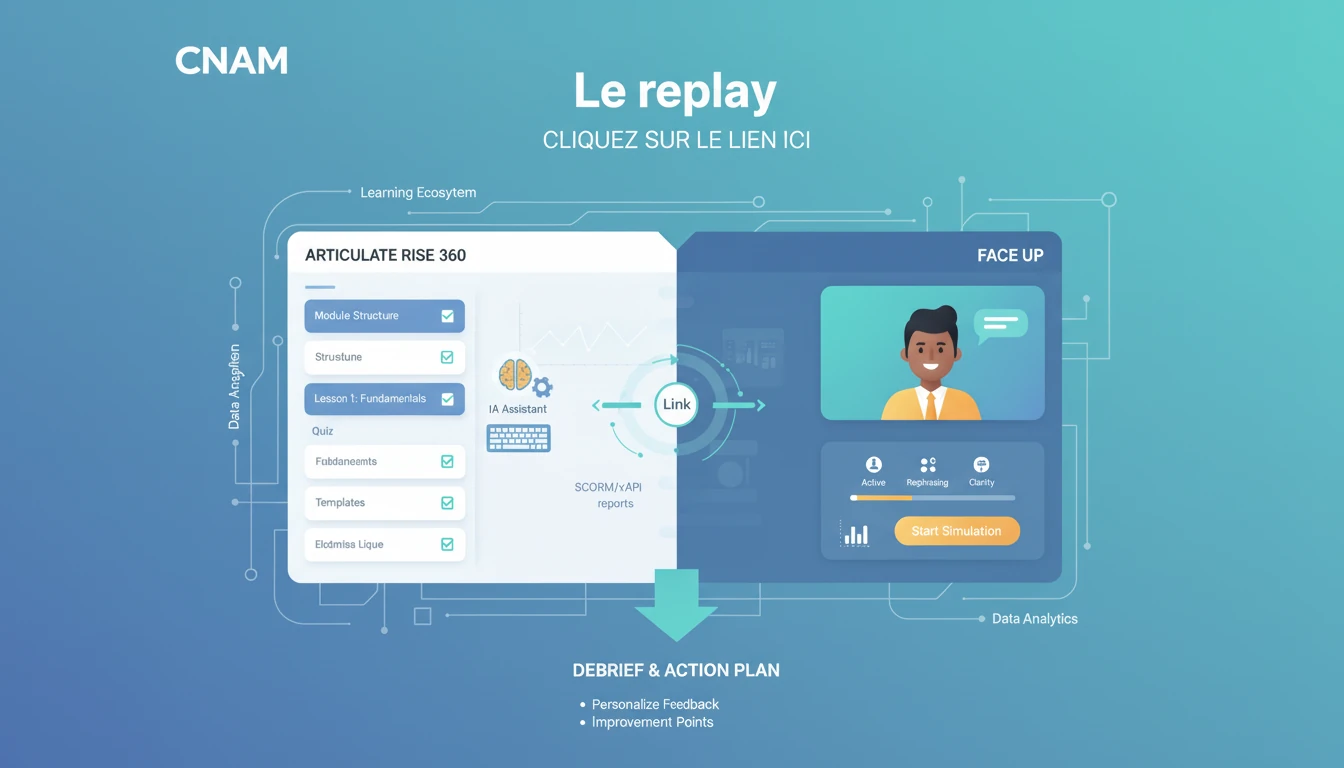
Conversational AI simulation tools let a manager practise realistic management scenarios with an avatar: a stressed colleague who comes to talk, an unhappy client, a peer who challenges them.
The manager has to respond. The AI analyses:
After ten AI scenarios, the manager gets a report: consultation is up sharply, ownership of mistakes has improved, listening without interrupting still needs work. That is what makes the next session useful.
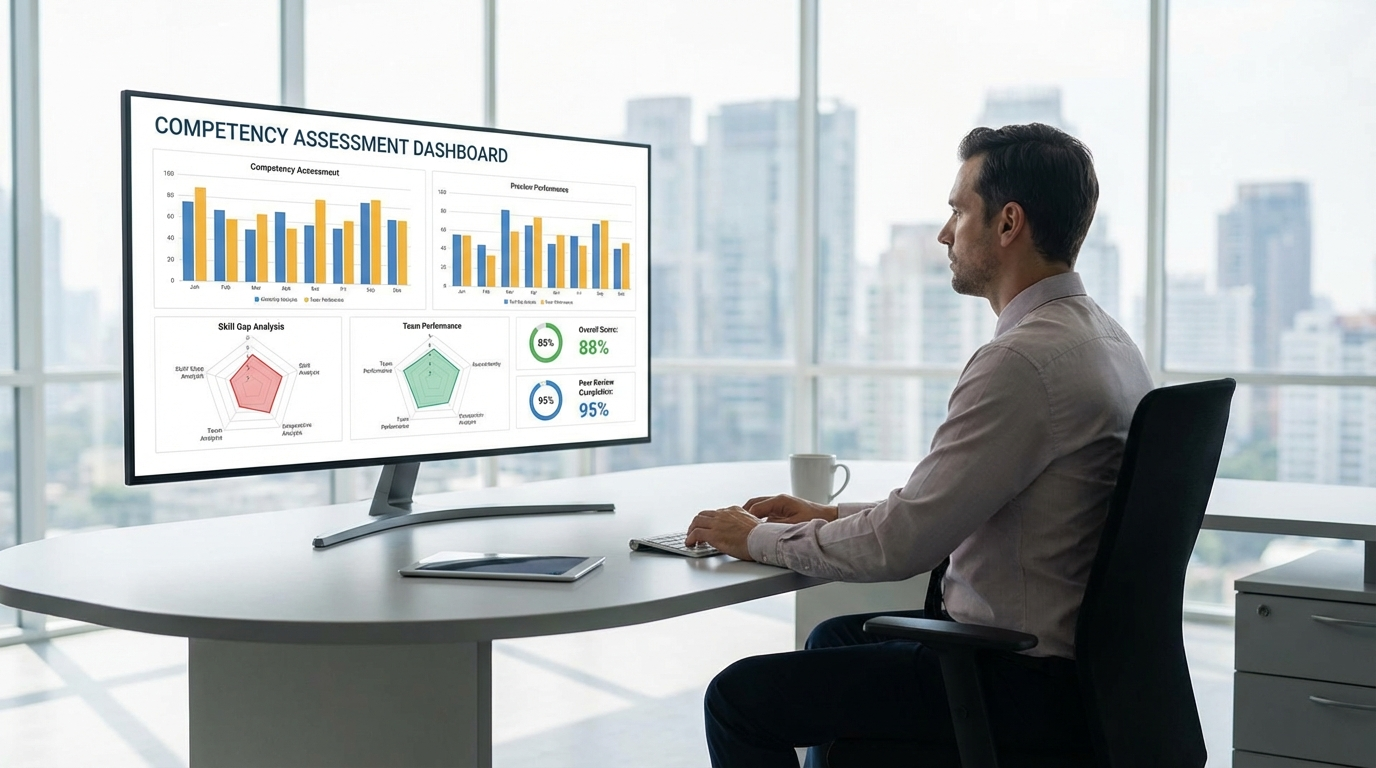
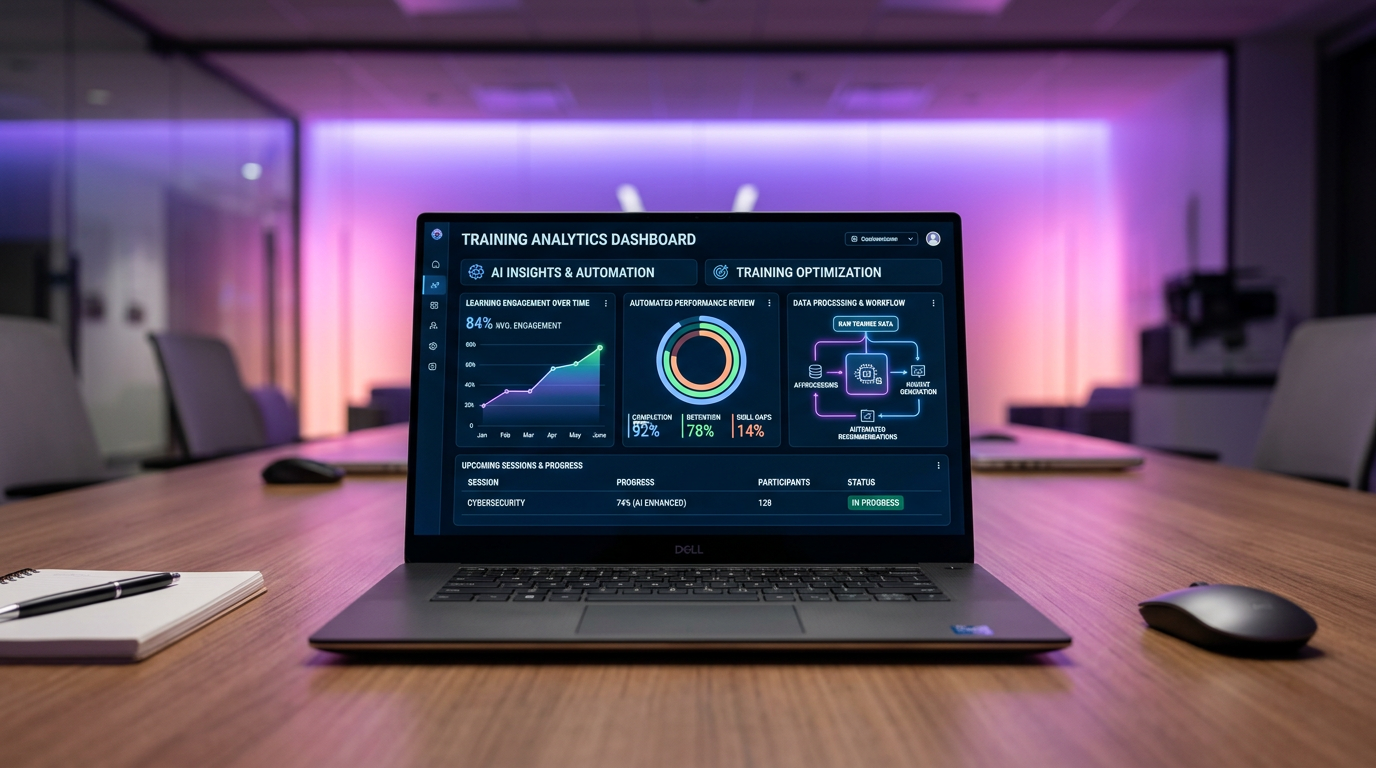
For your audit file, the platform generates assessment grids and progress charts automatically. No admin for the trainer, and no observer bias.
Write this into your file:
"Measuring managerial posture. Four criteria: share of consultative decisions (target: >60%), share of delegation with real autonomy (target: >75%), personal ownership of mistakes (target: 100%), structured feedback (target: >60% of feedback conversations). Method: management role play on Day 1 and Day 5 (20 to 30 minutes), recorded, scored against an observation grid. Average results: [figures]. Evidence: grids, recordings, and a real workplace application where available."
Then attach:
Tie your measurement back to what you actually teach:
"How the progress happens. The programme teaches that consulting builds buy-in, that autonomy raises engagement, that owning a mistake builds trust, and that regular feedback accelerates development. Each manager practises these four levers ten times during the programme, through role plays and AI simulations. That repetition is what turns them into reflexes. By Day 5, all four behaviours are visible in the final role play and measurable against the grid."
The auditor can see that you designed a progression rather than dropping in a random exercise.
Where you can, collect one or two cases where a manager applied their new posture on the job, a few weeks after the programme. For example:
"Case: Manager X, three weeks after the programme. Urgent team meeting on a critical new project. Before the programme, this manager would have issued direct orders. Instead, he set out the problem, listened to the team's ideas for twenty minutes, then decided and explained why. Result: the team mobilised, creative options surfaced, engagement was high. The manager's own comment: 'I wouldn't have arrived at that approach on my own. Actually listening changed the outcome.'"
A case like this takes fifteen lines. But it shows that the change in posture survives outside the training room, which is exactly what an auditor wants to see.
Measuring managerial posture does not require elaborate theory. Four simple indicators are enough: consultation before deciding, real autonomy in delegation, ownership of mistakes, and regular structured feedback. Documented before and after in a realistic role play, they produce evidence that is hard to argue with. That is precisely what an auditor is looking for: proof that the manager is not performing a role but genuinely operating differently. Strong managerial posture produces engaged teams, better retention and measurable impact — which is what wins an audit and what creates real value for the business.