
Training 30 people on one site is a pilot. Training 500 people across 100 sites is a different problem entirely. And it is precisely that ability to deploy at scale which determines the real impact of a customer relations training programme.
The reasons scale-ups fail are predictable: unmanageable logistics (scheduling classroom sessions for 500 people), uneven quality (not every trainer delivers the same standard), collapsing engagement ("another mandatory course"), and no central tracking (nobody knows who has done what).
This guide sets out a structured methodology for a successful large-scale rollout, drawing on our case studies in transport, banking and retail.
No large-scale rollout should go ahead without a successful pilot. The pilot is not a formality — it is the laboratory where you fix everything before you multiply it.
Target 30 to 50 learners across two or three representative sites. Choose sites that reflect the diversity of your network: a large urban site, a regional site, a recently opened site. That way the results will generalise.
Scenario relevance: are the situations realistic and aligned with what your frontline roles actually face? Learner engagement: is the completion rate above 80%? Measured progress: is there visible improvement on the core competencies you are targeting? Technical fit: does the platform run on the equipment people actually have (tablets, smartphones, desktops)?
Completion rate above 80%. Learner satisfaction above 4/5. Measurable progress on at least two key competencies. Fewer than 5% blocking technical issues.
Three models are available:
Centralised rollout. A single project team handles everything: learner enrolment, communications, support. Suited to organisations of fewer than 200 people.
Delegated rollout. Local champions (managers, internal trainers) drive the rollout on each site. The central team supplies the tools, trains the champions and tracks progress. Suited to networks of 200 to 1,000 people.
Self-service rollout. The training is embedded in the LMS and available on demand. Learners are invited in waves with automated reminders. Suited to large organisations (1,000+ people) with a mature LMS.
Scenarios validated in the pilot need adapting if your rollout spans several roles or sectors. A bank adviser and a retail sales assistant do not have the same needs. Plan a common core (cross-cutting skills: active listening, communication, conflict handling) plus role-specific modules.
Every site needs at least one trained champion: someone who can answer learners' questions, resolve first-line technical issues and chase those who drop off. It is a key success factor identified in our transport case study.
For an organisation of 500 people, three to four waves over 12 weeks works best. Wave 1 (weeks 1-4): 100-150 people on the most receptive sites. Wave 2 (weeks 5-8): 150-200 people, incorporating feedback from wave 1. Wave 3 (weeks 9-12): the remaining 150-200 people.
Each wave opens with an energising communication: testimonials from the previous wave, results observed so far, a personalised invitation. Change management is a continuous process, not a one-off event.
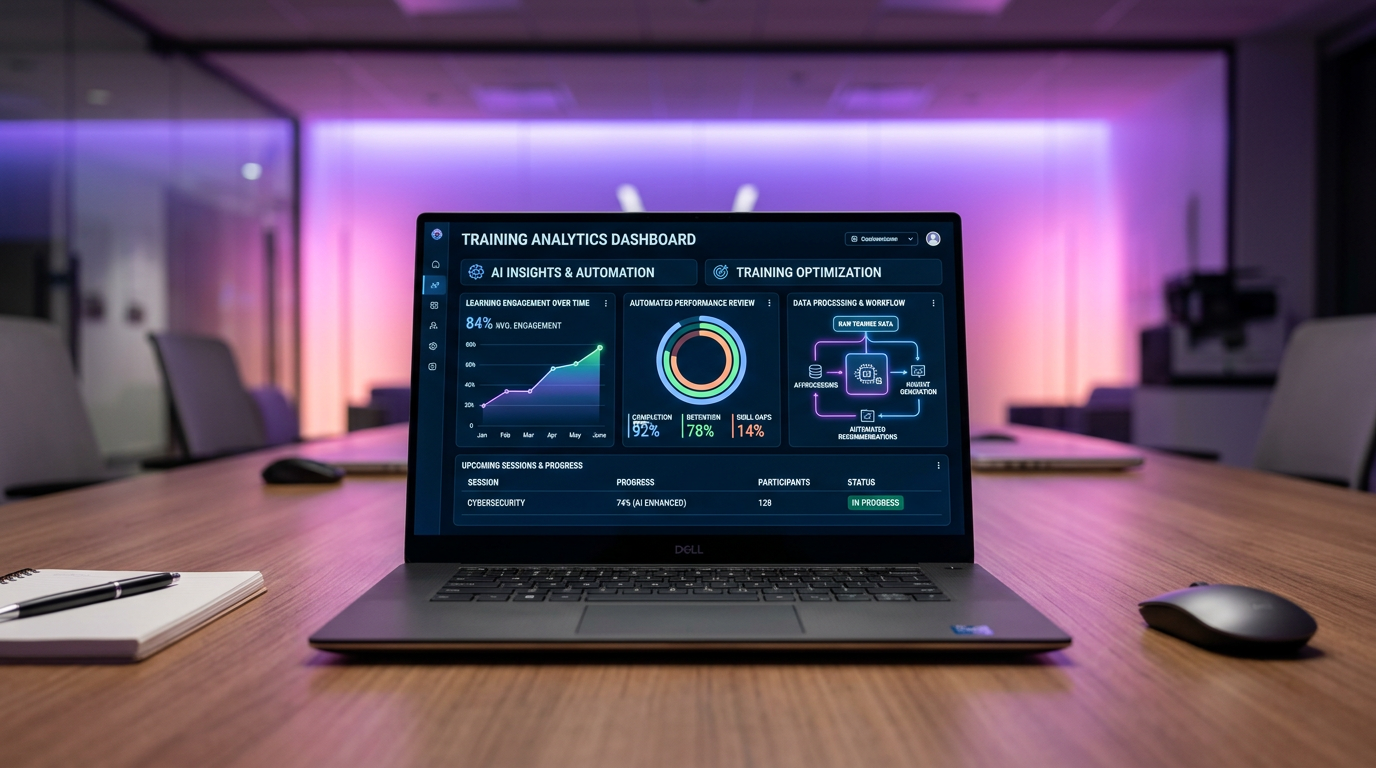
A central dashboard is essential. The indicators to watch live: activation rate (how many invited learners have started), completion rate by wave, average progress per competency, and satisfaction on a rolling basis.
Set alerts: if a site's activation rate is below 50% after a week, the local champion should step in. If satisfaction drops below 3.5/5, the scenarios need reviewing.
Level 1 (local champion): login problems, how-to questions, chasing drop-offs. Level 2 (project team): complex technical issues, scenario adjustments, reporting. Level 3 (vendor): technical bugs, platform enhancements.
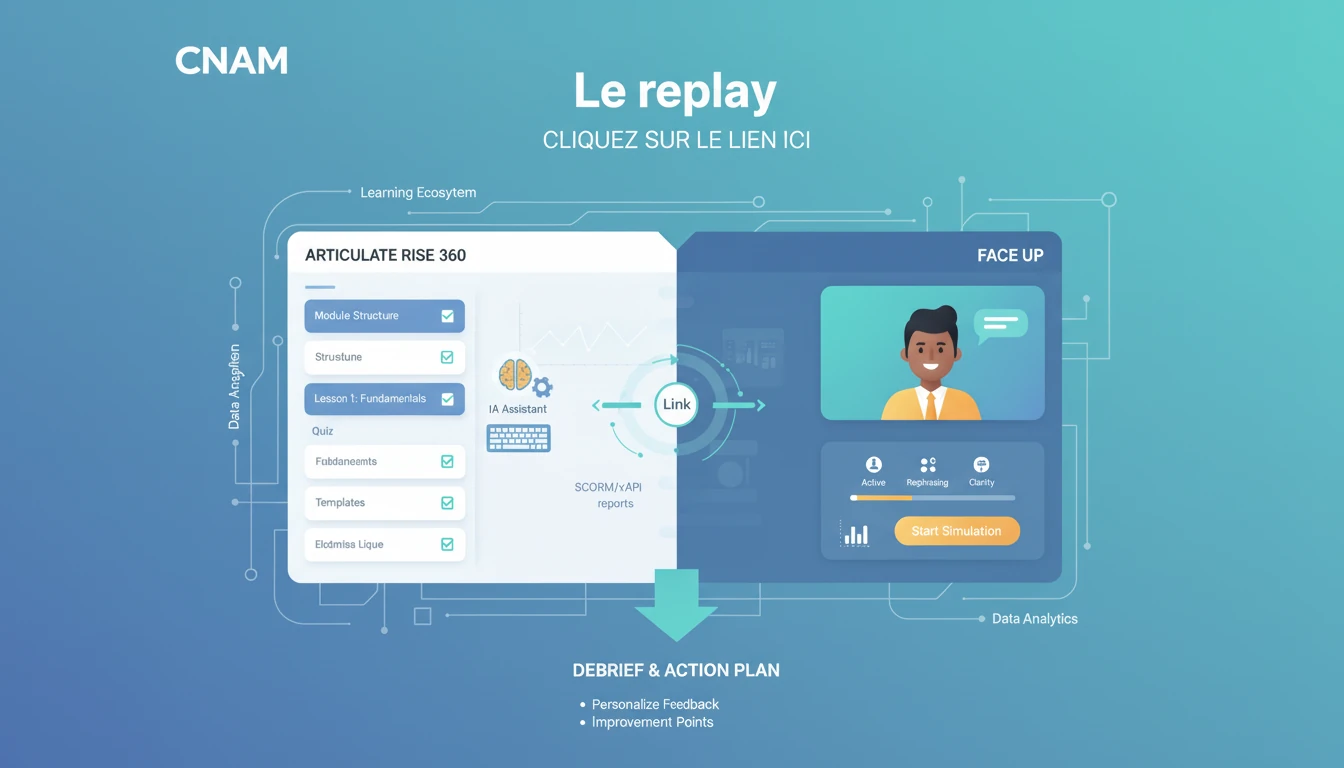
For training to last, it has to be reachable from the LMS people already use. Native integrations with the main platforms (360Learning, Moodle, Docebo, LearnUpon) allow deployment within 48 hours and centralised progress tracking. See our detailed guide to LMS integration.
Every new joiner should be enrolled on the learning path automatically from day one. That is the model that produced the strongest results in our retail case study: building simulation into the onboarding journey cut time to competence by 50%.
Beyond onboarding, regular microlearning sessions (two or three a week) keep skills sharp and prepare people for new situations. The scenario catalogue should be refreshed regularly in line with frontline feedback and changes in the job.
Scenarios that never change lose their pull. Plan a quarterly refresh cycle: new scenarios, new situations, new customer profiles. Frontline trainers are the best source of inspiration for new role plays.
A successful rollout is measured on four dimensions:
Coverage: what percentage of the target population has been trained? A realistic target is 85-90% (the remaining 10-15% covers long-term absence, leavers and so on).
Engagement: what is the programme completion rate? Aim for 80%+ on digital programmes. Best practice reaches 90%+ where local support is active.
Progress: have the measured competencies improved? Use your pilot benchmarks as the reference point.
Business impact: have the customer indicators (satisfaction, NPS, closing rate, compliance) moved? A 12-month ROI calculation validates — or invalidates — the investment.
Deploying at scale is not a linear extension of the pilot. It is a project in its own right, and it demands organisational discipline, solid local support and continuous communication.
The three fatal mistakes: going big bang with no waves, having no local champions, and going quiet after launch.
The three success factors: a pilot that worked and can prove it, a wave-based rollout with continuous adjustment, and LMS integration to make it stick.
Planning a large-scale training rollout? Get in touch with Face Up for a tailored feasibility review.