
The limits to the effectiveness of in-person role play are rarely discussed openly. The format has been around for decades, participants usually leave satisfied, and post-session surveys confirm it felt lively. Yet when you measure what each person actually practiced, repeated and retained, the picture is more nuanced. This article walks through seven documented limits of classroom role play, each with the mechanism behind it and a practical fix. The goal is not to dismiss in-person training: it keeps real strengths, covered at the end. The goal is to help trainers and L&D leaders use it where it excels — and complement it where it plateaus. For the big picture on practice-based formats, start with our complete guide to roleplay training.
The first two limits come from the raw material of classroom role play: colleagues performing in front of colleagues, with all the social stakes that implies.
The mechanism. Acting out a scene in front of peers puts your self-image on the line. Every participant quietly arbitrates between two conflicting goals: learning (which means trying, failing, trying again) and protecting their reputation (which means playing it safe). When the manager is in the room, the second goal almost always wins. The result: cautious answers, generic phrasing, and sometimes a polite refusal to play along. Yet interpersonal skills are built precisely by attempting what you do not master yet.
The fix. Set an explicit safety frame from the briefing onwards — we detail the method in how to run a role play in training — work in small groups, and offer a rehearsal space with no audience. Practicing a conversation with an AI persona, alone, lets you fail ten times with nobody watching before stepping in front of the group.
The mechanism. The colleague playing the unhappy customer is not an actor. They overact, or give in too quickly because they know the script and want to help. The quality of the simulation therefore varies from one pair to the next, one session to the next. There is no way to guarantee every learner a counterpart at the right level of difficulty — or to replay the exact same situation twice to compare progress.
The fix. Write precise role cards (context, goal, emotional state, typical objections), have the trainer play the key roles, or rely on calibrated personas whose behavior stays consistent across sessions. Difficulty then becomes a setting you adjust, not a lottery.
The mechanism. Run the numbers for a typical 7-hour day with 12 participants. Remove theory, instructions, breaks and group debriefings: roughly 3 hours of actual role play remain — 180 minutes. Divided by 12, that is 15 minutes of active practice per person; the rest of the time, everyone watches. Fifteen minutes per quarter is the volume with which we claim to rewire conversational habits built over years. No skill — music, sport, a foreign language — is acquired at that pace.
The fix. Move theory before the session (flipped classroom), run several sub-groups in parallel, and above all move repetition out of the room: short conversational practice sessions, 10 minutes each, before and after the training day, multiply individual practice time without adding a single hour to the program.
This math explains a common paradox: training days that get excellent hot reviews, yet behaviors that remain unchanged three months later. Satisfaction measures the quality of the moment; progression depends on repetition volume — and 15 minutes is not enough, however good the facilitation.
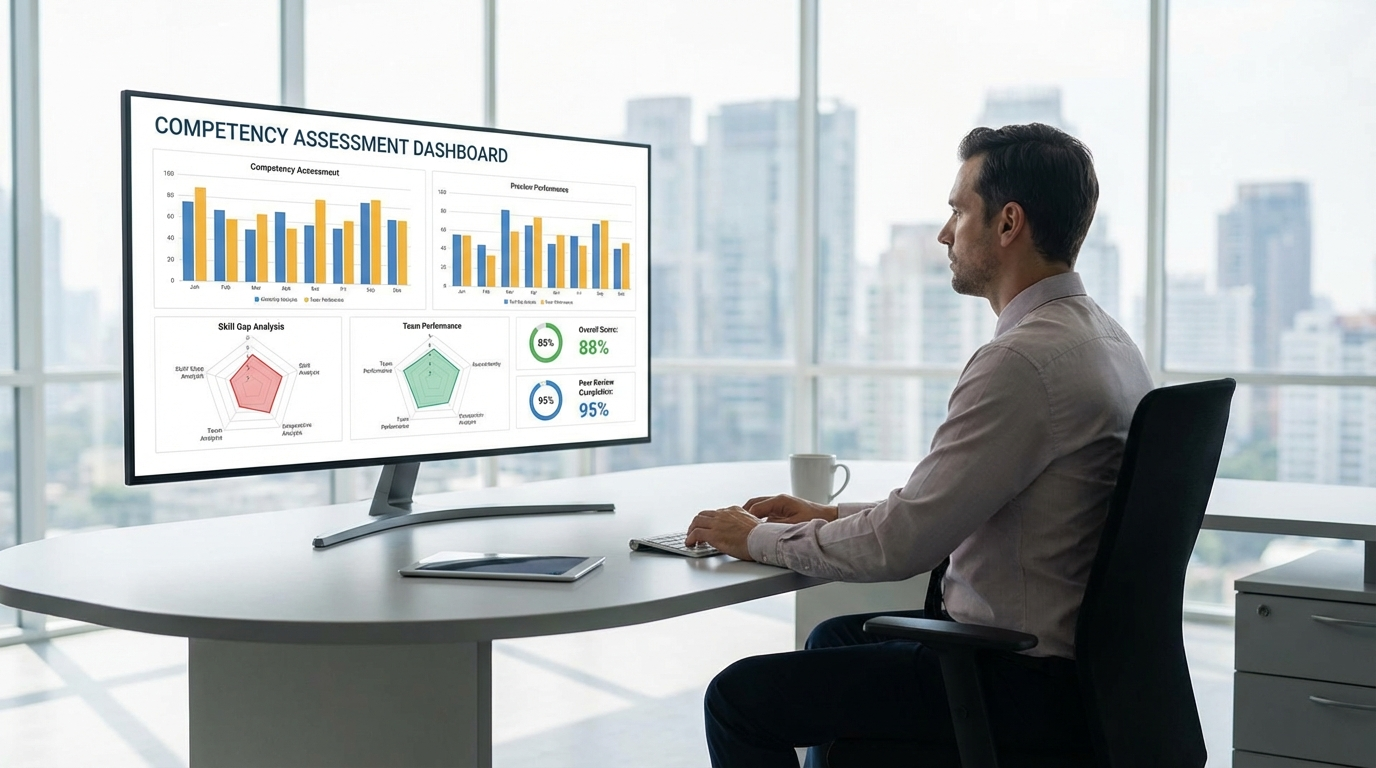
The mechanism. The debriefing rests on what the trainer saw, remembered and chose to mention. Two observers of the same scene notice different things; without a criteria grid, feedback becomes an impression (nice job, work on your listening). The consequence: no way to compare two run-throughs, two participants or two sessions — and no way to objectively demonstrate progression, a real problem when you have to prove training effectiveness.
The fix. Build an observation grid with observable criteria, as detailed in our article on role play feedback for customer relations training, and equip the debriefing so the same criteria are assessed on every run, whoever is observing.
The mechanism. The forgetting curve is unforgiving: without reactivation, most of what was learned fades within weeks. Classroom role play is a one-off event: redoing the exercise a month later would mean remobilizing a group, a trainer and a room. The behavior is sketched once and never repeated — the exact opposite of what building a reflex requires.
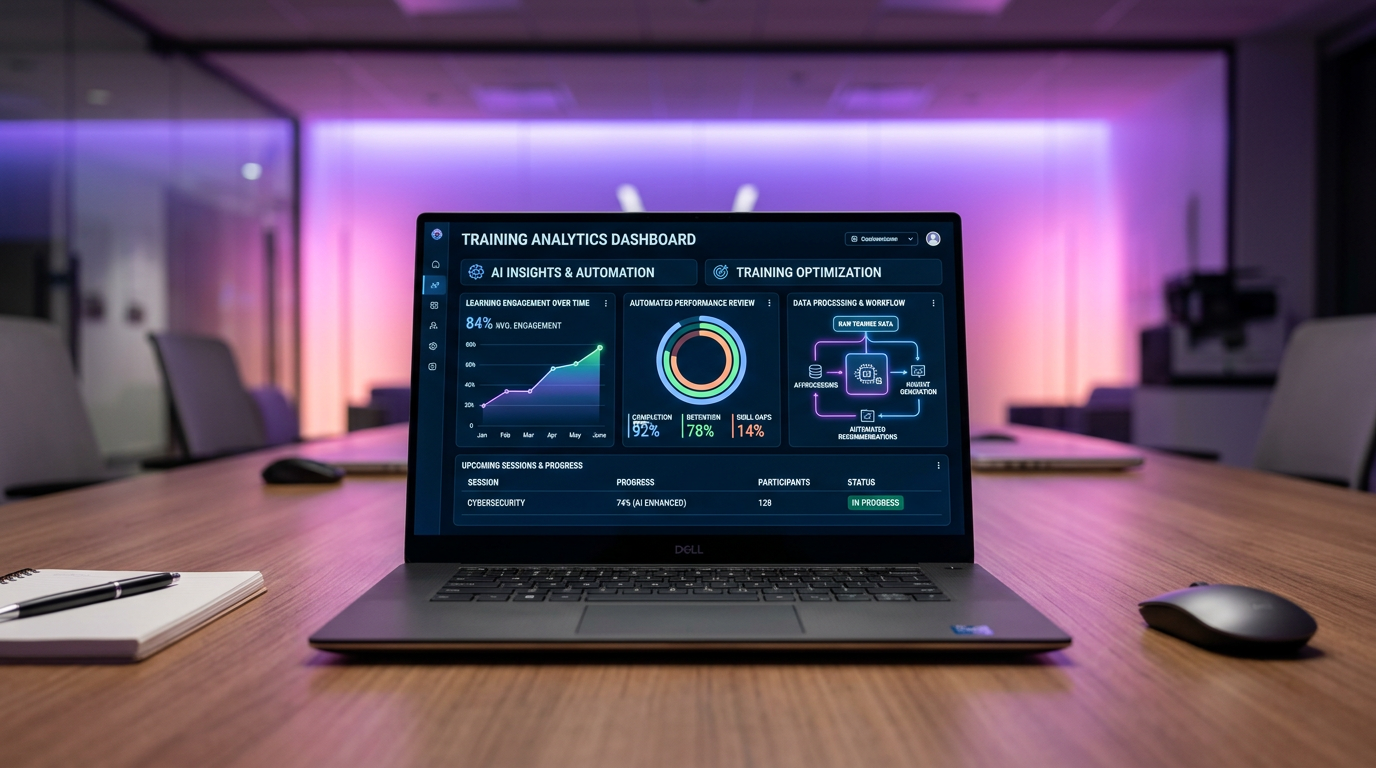
The fix. Schedule spaced repetition: micro-sessions at day 7 and day 30. This is where conversational AI practice complements classroom training best: the same simulation can be replayed as many times as needed, alone, in 10 minutes, with a systematic debriefing every time.
The mechanism. A day of role play requires a room, a trainer, and twelve days of operational absence. For field teams or shift workers, getting everyone together is a puzzle; postponing a session pushes the project back by weeks. The full cost far exceeds the day's face price. The direct consequence: training happens rarely — which mechanically worsens limits 3 and 5, since practice becomes an exceptional event.
The fix. Keep in-person time for high-value moments and shift repetition to short, remote formats. Our comparison of AI scenarios, VR and classroom training puts numbers on the trade-offs of each option.
The mechanism. As soon as there is an audience, the implicit goal shifts: it is no longer about experimenting, but about delivering a good performance. People replay their usual style because it works, play for the group's smile, and avoid the uncomfortable zones — precisely where progress happens. The exercise becomes a stage; observation becomes social judgment.
The fix. Explicitly reward risk-taking in the instructions (a run with no mistakes is a wasted run), give observers a grid rather than an opinion, and offer a parallel practice space with no audience at all, where mistakes cost nothing and learners can finally try something other than their usual register.
These seven limits do not condemn the format. In-person sessions remain unmatched for group dynamics, peer exchange, reading body language live, and final validation by a trainer who takes pedagogical responsibility. They are also a team moment nothing replaces. The right architecture gives in-person training the kick-off and the validation, and individual practice the repetition in between — the core argument of our comparison of AI roleplay versus traditional role play, which concludes in favor of combination rather than substitution.
The seven effectiveness limits of in-person role play come down to three causes: social exposure (embarrassment, the theater effect), practice volume (15 minutes per training day, no repetition afterwards) and lack of standardization (variable realism and feedback). None disappears through better facilitation alone; all can be offset by combining formats. Before choosing yours, start by clarifying the difference between simulation and role play. And if you want to give every learner real repetition volume, conversational learning solutions such as Face Up let them replay any simulation in 10 minutes with a standardized debriefing — the natural complement to in-person sessions refocused on what they do best.