
Sales negotiation is not a matter of a polished pitch and a price list. B2B buying decisions are shaped in large part by the quality of the relationship with the salesperson, well before price or product specification enter the picture. Put another way, it is the negotiator's behavioural skills — listening, empathy, objection handling, the ability to build trust — that decide whether a deal moves.
Yet most sales training remains focused on selling techniques (SPIN, BANT, MEDDIC) without devoting enough time to practising the behavioural skills that make those techniques work. This guide sets out how to train your sales teams in negotiation soft skills, using methods that produce measurable movement in closing rates.
Active listening is the foundation of every successful negotiation. It goes beyond staying politely silent while the prospect speaks. It involves reformulation, exploratory questioning and the ability to pick up weak signals — what the prospect does not say explicitly but lets show.
Research by Gong.io, based on the analysis of 25,000 sales calls, found that top performers speak for 43% of the time and listen for 57%, while average performers reverse that ratio. The difference is not the volume of speech but the quality of the questions asked and the ability to build on the answers.
Sales negotiation is an emotionally loaded exercise. The salesperson has to manage their own emotions (fear of rejection, target pressure, frustration at objections) and their counterpart's at the same time (mistrust, budget anxiety, resistance to change).
Emotional intelligence in a commercial context shows up as the ability to stay calm in the face of an aggressive objection, to read the prospect's emotional state and adjust the approach accordingly, and to create the climate of trust that makes a decision easier to take. Salespeople with strong emotional intelligence consistently outperform their peers.
Objections are not obstacles to be worked around; they are opportunities to understand what is really worrying the prospect. The key skill here is not answering the objection but turning it into a constructive exchange.
The effective process runs in four steps: acknowledge the objection ("I understand your concern"), explore it ("Can you tell me more about what worries you there?"), reframe it (connect the concern to a concrete benefit) and validate ("Does that answer your question?"). Each step draws on specific behavioural skills that need repeated practice.
Most companies invest heavily in product knowledge and selling technique while underestimating the behavioural side. A salesperson can know the offer inside out and recite SPIN from memory, and still fail with an emotionally closed prospect if they cannot adapt their stance.
The evidence is clear: CSO Insights research found that 57% of salespeople miss their targets despite regular technical training. The missing link is almost always relational — the ability to build a genuine connection with the prospect and navigate the emotional complexity of a negotiation.
The learning science is unambiguous: behavioural skills are only acquired through repeated practice with feedback. A salesperson can read ten books on active listening without improving in the slightest. Ten role-play scenarios with a structured debriefing, by contrast, change their reflexes for good.
The challenge for training providers is creating practice conditions that are realistic enough and frequent enough. In-person role-play remains effective but expensive in trainer time. Conversational learning platforms make it possible to multiply individual practice sessions between group sessions, using calibrated personas that reproduce the behaviour of a real prospect faithfully — hesitations, objections and buying signals included.
Before you train, diagnose. Salespeople often have behavioural blind spots they are unaware of. Recording and analysing their real calls or meetings (with their agreement) pinpoints exactly what needs work. Do they interrupt the prospect? Do they ask enough open questions? How do they react to a silence?
This diagnostic phase lets you personalise the learning path and establish a measurable baseline. It also makes salespeople active participants in their own progress by showing them concretely what is working and what could be better in their current practice.
The second phase combines methodological input with guided exercises. The priority topics are active listening and strategic questioning, reading non-verbal signals (face to face and on video calls), managing emotion under pressure, interpersonal communication adapted to a selling context, and building value propositions co-created with the prospect.
Every piece of theory should be followed immediately by a practical exercise. The recommended ratio is 30% theory to 70% practice. The exercises must use scenarios drawn from participants' actual working reality, not generic cases disconnected from their day-to-day.
The third phase is the most critical and the most frequently skipped. It is a spaced practice programme over four to eight weeks, with short sessions of 15 to 20 minutes two or three times a week. The aim is to turn the techniques learned into automatic reflexes.
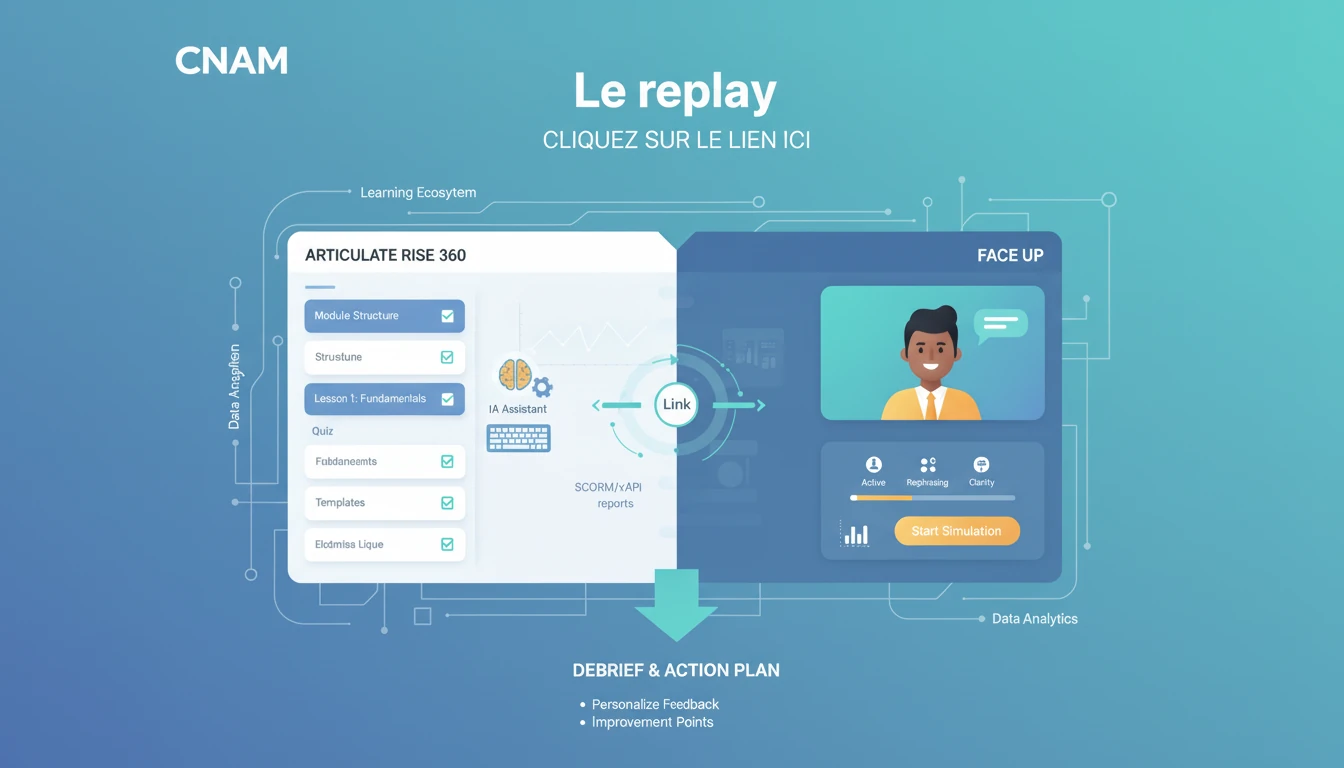
Conversational learning platforms such as Face Up make it possible to deliver this phase at scale without adding trainers. Each salesperson practises at their own pace against progressively harder negotiation scenarios: first contact, needs discovery, presenting the offer, handling objections, negotiating price, closing.
The return on investment of soft skills training for salespeople is measured on concrete business indicators: conversion rate at each stage of the funnel, average deal size, length of the sales cycle, customer retention rate and post-purchase Net Promoter Score.
Case studies show meaningful results. One banking organisation that trained its advisers in active listening and emotional management saw its closing rate rise and its sales cycle shorten within six months. The deciding factor was the consistency of practice after the formal training ended.
Beyond the business results, tracking behavioural progress identifies where to keep improving. Assessment frameworks typically cover the quality of questioning, the ability to reformulate, the handling of silences, the relevance of arguments in the face of objections, and the ability to close without pushing.
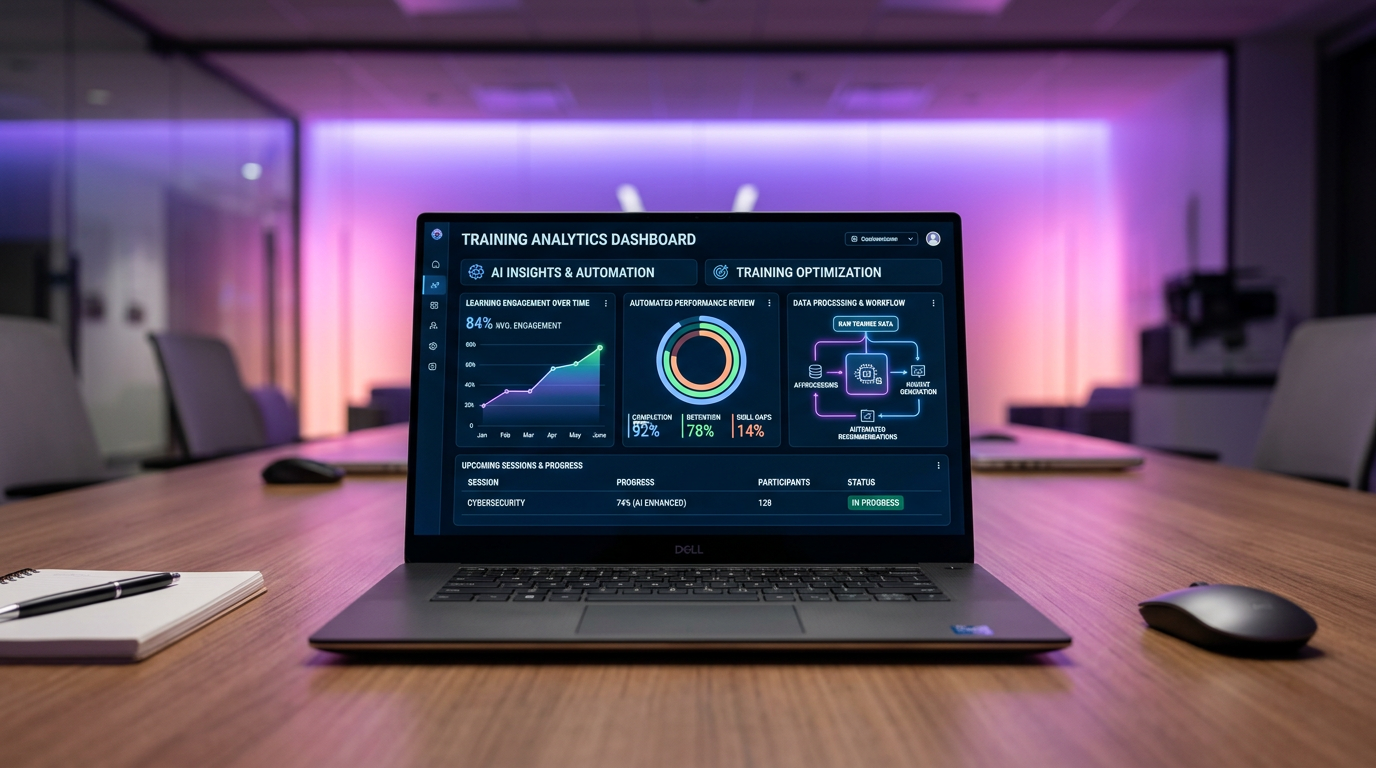
Conversation analysis tools bring valuable objectivity here. They measure the listen-to-talk ratio, the range of vocabulary used, the tone adopted and the structure of the exchange. That data builds a progress history you can use to assess the skills of each salesperson individually.
Negotiation soft skills training should not sit in a silo. It has to slot into the company's existing sales process. Every stage of the funnel — prospecting, qualification, discovery, proposal, negotiation, closing — draws on specific behavioural skills that can be practised in a targeted way.
Sales professionals benefit particularly from a programme that maps soft skills onto each stage of their daily process. It makes the training directly applicable and avoids the familiar "that was interesting, but I don't know how to use it" reaction.
The sales manager is the essential link between the training room and the field. Their role afterwards is threefold: observe practice in real situations (call listening, field accompaniment), debrief regularly with each salesperson on where they are progressing, and recognise behavioural progress as much as the numbers.
Training sales managers to take a coaching stance, rather than acting purely as results controllers, is an investment that multiplies the impact of the initial programme. Teams whose manager gives regular feedback on relational skills progress considerably faster than those who receive the training alone.
Sales negotiation is a craft built on precise, trainable behavioural skills: active listening, emotional intelligence, objection handling, communication adapted to the person in front of you. Training providers that build their programmes around intensive practice — initial diagnosis, guided acquisition, then spaced practice with feedback — see measurable improvement in participants' closing rates.
To build a complete training offer around commercial skills, see how to present your soft skills programmes to company leadership and convince decision-makers of the business impact.