
In 2026, technical ability is no longer enough. According to the World Economic Forum, six of the ten skills most sought after by employers are soft skills: analytical thinking, creativity, leadership, emotional intelligence, resilience and flexibility. Organisations that invest in behavioural skills training see measurable improvements in overall performance.
The pattern is a familiar one: people are hired for technical skills and let go for behavioural ones. An employee can be excellent at the technical side of the job and still struggle in their interactions with customers, colleagues or managers. That gap is exactly what soft skills training exists to close.
This guide takes you step by step through understanding, designing and rolling out a soft skills programme suited to your organisation.
Soft skills — or behavioural skills — cover the interpersonal, emotional and social abilities that determine the quality of human interaction at work. Unlike hard skills, which are technical and directly measurable, soft skills are about how someone behaves rather than what they know.
Soft skills in the workplace generally fall into five broad families.
Interpersonal communication, active listening, empathy and the ability to collaborate form the foundation of professional interaction. These skills are especially critical for teams in direct contact with customers, as our guide to the core competencies of customer relations sets out.
Being able to identify, understand and regulate your own emotions — and read those of others — is a decisive advantage under stress or in conflict. Emotional intelligence can be trained and developed throughout a working life.
Inspiring, aligning, delegating and giving constructive feedback are skills every manager needs. Our article on leadership and management soft skills sets out the programmes that suit them.
With pressure rising across most workplaces, knowing how to manage stress and build resilience has become a professional survival skill.
In a constantly shifting environment, the ability to adapt quickly and work through complex problems is what sets high-performing teams apart. For a full picture, see our complete list of soft skills with concrete examples.
Training people in soft skills cannot be improvised. Classic lecture-style approaches quickly hit their ceiling: you do not build empathy with a slide deck. The most effective soft skills training methods are built on practice.
Deliberate practice in realistic contexts remains the most effective way to embed behavioural skills. Role plays and practice scenarios let people rehearse without real-world consequences, get immediate feedback and correct their reflexes.
At Face Up, we have seen learners who practise through simulations with AI avatars improve two to three times faster than with passive methods. Conversational learning with realistic virtual characters creates a practice space that is safe and endlessly repeatable.
For individual development, coaching and mentoring offer tailored support. Both work particularly well for managers and high-potential profiles.
Combining in-person and remote delivery reaches the largest number of people without diluting the learning. E-learning carries the theory; the classroom — or AI simulation — embeds the practice.
Every population has its own soft skills needs. An effective programme starts by identifying the priority skills for each group.
Soft skills training for managers focuses on leadership, communicating both up and down the line, handling conflict and giving constructive feedback. Managers who are strong in these areas generate markedly higher engagement in their teams.
The soft skills of salespeople — active listening, negotiation, empathetic persuasion — have a direct effect on revenue. Our clients report closing rates improving by 20 to 45% after a structured practice programme.
For frontline and customer service teams, soft skills are the job itself. Handling difficult customers, communicating across channels, staying empathetic under pressure: these are skills worked on daily, as our guide to customer relations training explains.
Building soft skills into the onboarding of new employees significantly shortens their ramp-up time. It is an investment that pays for itself within weeks.
One long-standing barrier to investing in soft skills training is the difficulty of measuring the return. Reliable methods do exist.
Kirkpatrick's four-level model (reaction, learning, behaviour, results) remains the reference. Combined with concrete business indicators — customer retention, NPS, turnover, productivity — it makes it possible to calculate the ROI of soft skills training with precision.
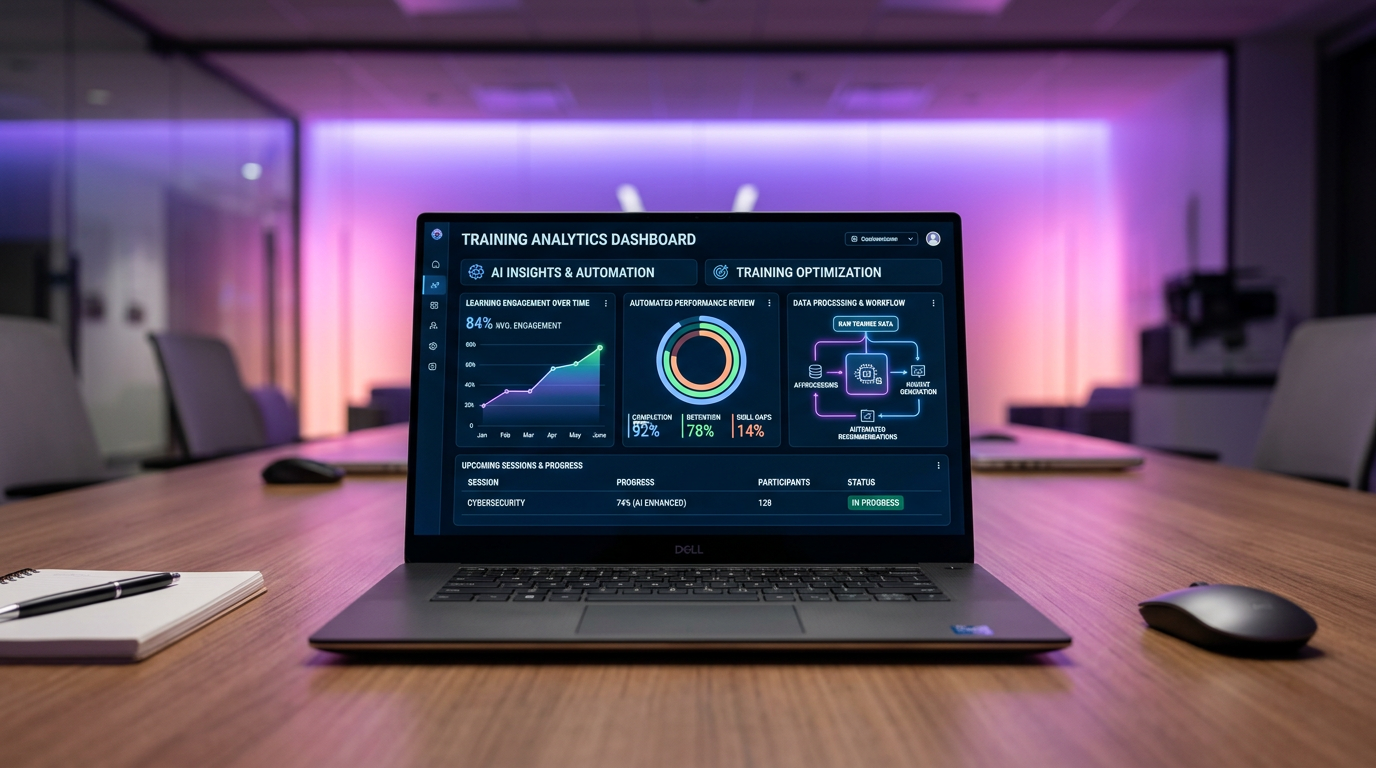
The most advanced organisations use conversation analysis (transcripts, tone, posture) to make learner progress objective. That is exactly what Face Up's multimodal analysis provides: tracking how both substance (relevance of responses) and delivery (tone, empathy, assertiveness) evolve session after session.
A range of mechanisms exist to fund soft skills training: dedicated training budgets, sector funding schemes, and government-backed skills development programmes. Cost should never be the obstacle when support is available.
Soft skills training is going through a technological shift. Artificial intelligence now makes it possible to create realistic practice scenarios on demand, with avatars able to play any customer, colleague or manager profile.
The trends for 2026 confirm the acceleration: AI-personalised learning paths, real-time emotional analysis, native LMS integration and the rise of microlearning. To deploy at scale, digital tools are now unavoidable.
When choosing a training programme, favour solutions that combine rigorous instructional content with technology for practice. That combination is what separates a programme that informs from one that actually changes behaviour.
A successful soft skills programme follows a five-step progression.
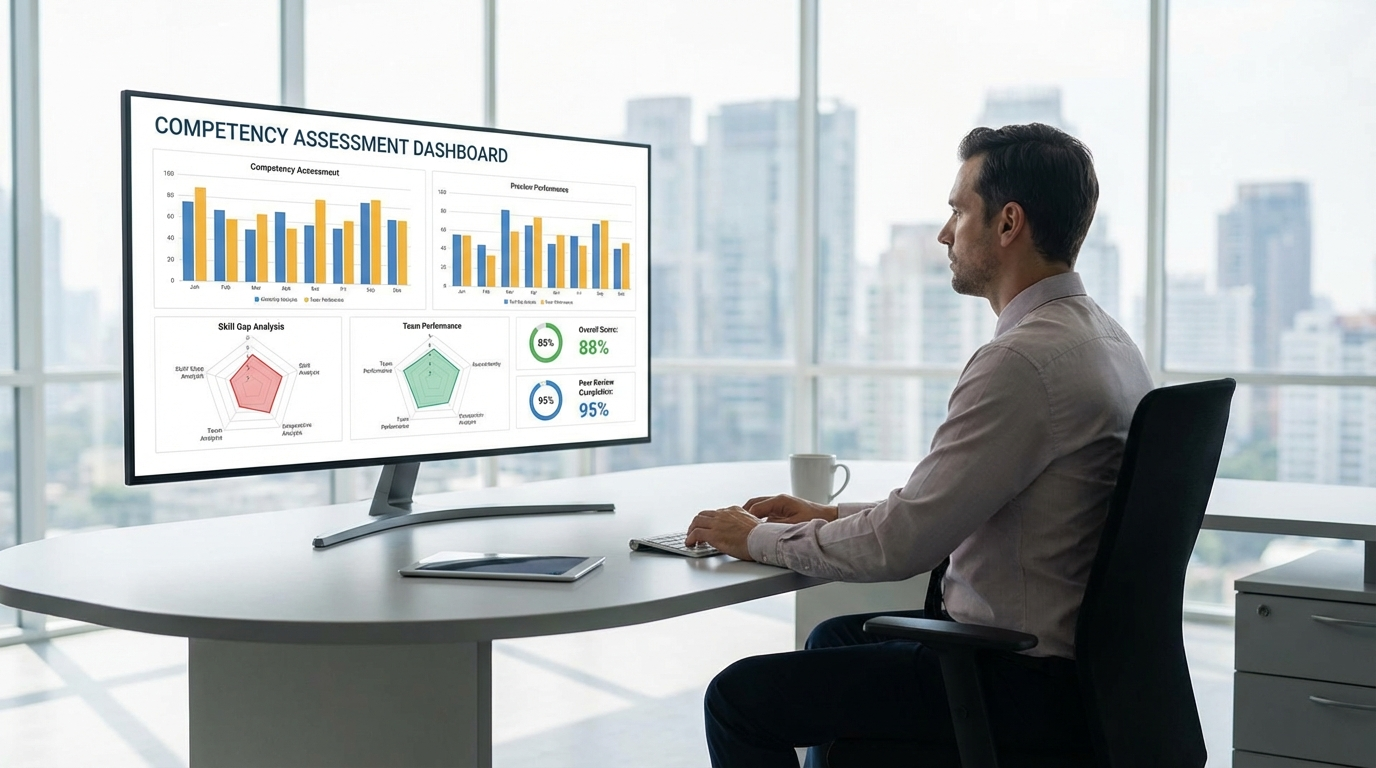
Before training anyone, you need to assess existing soft skills. Assessment tools identify the strengths and development areas of each individual or team.
Every programme should target observable, measurable behaviours. Not "improve communication" but "cut customer escalations by 30% in three months".
Alternate theory (e-learning, short modules) with practice (scenarios, AI role plays, coaching). Practice should account for at least 60% of training time.
A phased rollout lets you adjust the programme as you go. Per-learner analytics — number of sessions, progress, strengths and weaknesses — guide trainers in how they support each person.
Measure results at 30, 60 and 90 days after training. Correlate them with business indicators. Iterate on content and methods. It is this continuous improvement loop that maximises ROI.
Face Up is a conversational learning platform built by training professionals, for trainers with high standards. Our approach rests on three pillars.
Practice first: our AI avatars let learners rehearse realistic situations as many times as they need, without pressure.
Multimodal analysis: every session is analysed on substance (relevance, argument) and delivery (tone, posture, emotion), producing an actionable debrief.
The trainer at the centre: our no-code authoring tools let trainers build their own scenarios, observe sessions live and steer each learner's progress.
With 95% learner satisfaction and a 50% reduction in onboarding time among our clients, Face Up delivers lasting change in your teams' behavioural skills. See our case study for the concrete results.