
Workplace learning is changing faster than at any point in the last two decades. For trainers and L&D leaders, 2026 is a turning point. Technologies that looked experimental two years ago are becoming standard practice. Learner expectations have shifted. The economics of training are being rewritten. Here are the trends reshaping soft skills training this year, and what each one means in practice for learning professionals.
Traditional e-learning — videos to watch, quizzes to click through, documents to read — has clear limits when it comes to behavioural skills. Completion rates for classic asynchronous modules sit stubbornly around 15 to 20%. The reason is simple: nobody learns to hold a difficult conversation by watching a video, any more than they learn to swim by reading a book.
Conversational learning — where the learner talks to an AI counterpart in realistic role-play scenarios — works on a different principle. Engagement rates exceed 80%. Progress is measurable session after session. Learner satisfaction reaches levels rarely seen in digital training, because people can feel themselves improving.
Trainers are no longer the only source of practice. AI simulators absorb the repetition, freeing the trainer for the work they do best: coaching, debriefing, contextualising and personal guidance. The role does not disappear, it shifts. The trainer becomes a learning architect, a supervisor of AI practice and an expert in debriefing. If anything, the job becomes more valuable.
For decades, corporate training ran on instinct. Decisions were driven by qualitative requests, market trends or whatever management theory was in fashion. Evaluation stopped at the end-of-course happiness sheet. In 2026 that era is closing.
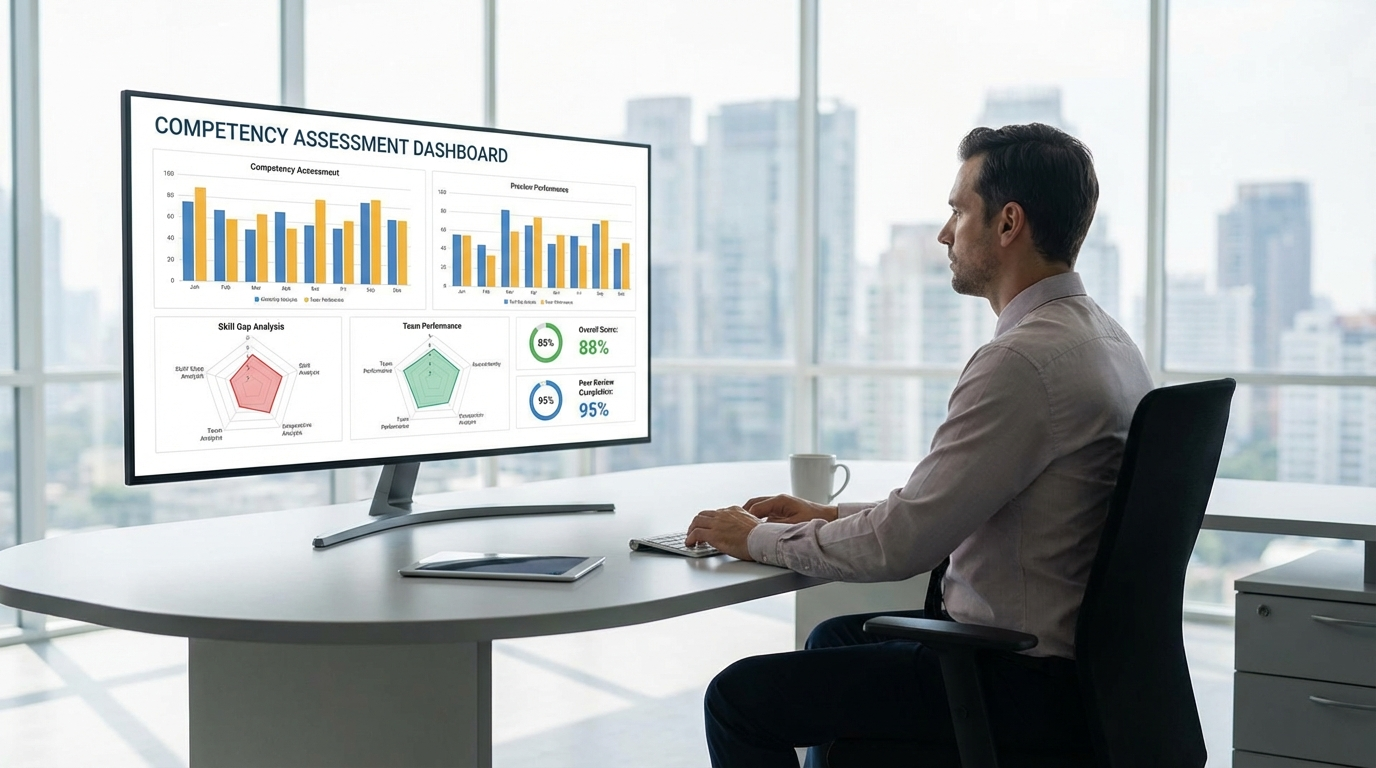
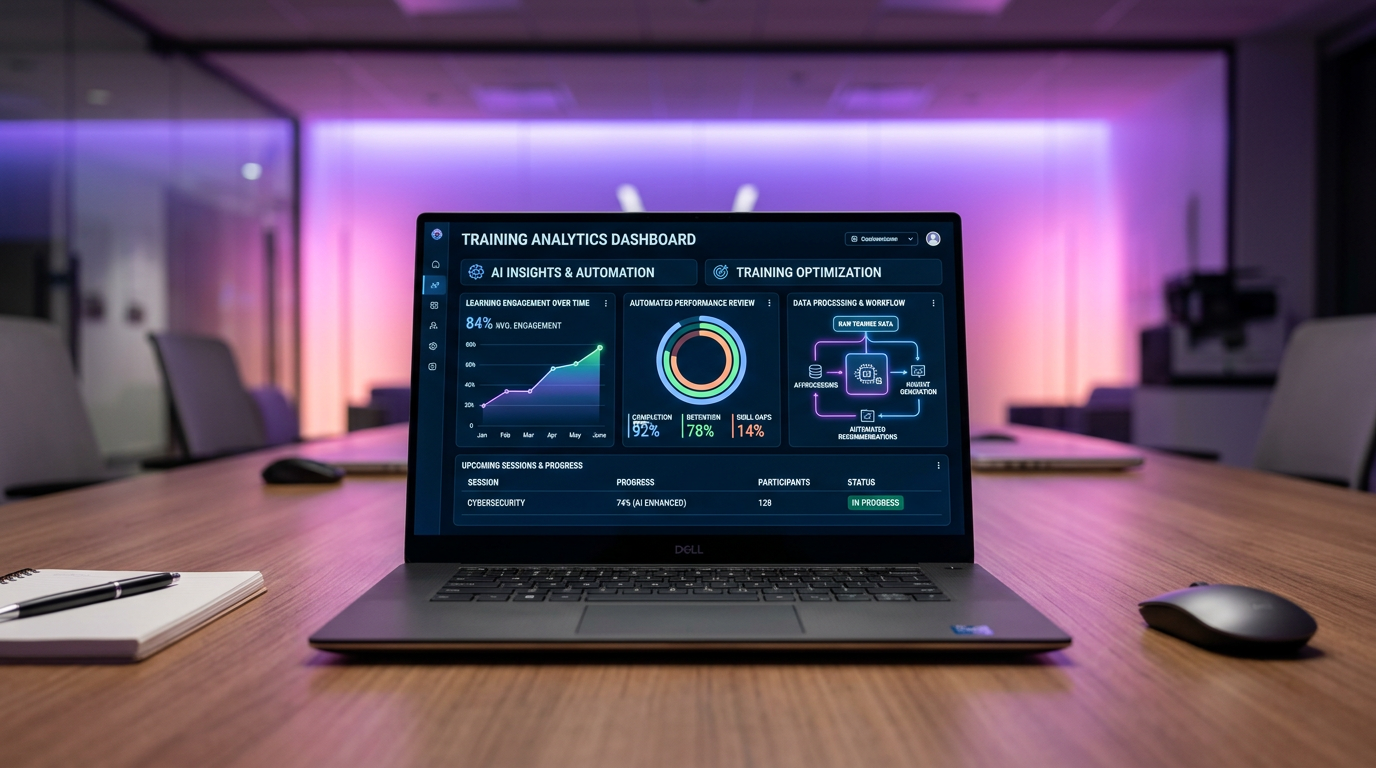
Artificial intelligence tools generate precise data on every dimension of learning. An initial diagnostic identifies each employee's strengths and gaps objectively. Continuous tracking measures real progress rather than self-reported confidence. Impact evaluation connects skills development to business indicators.
That measurement capability changes the relationship between L&D and the board. Calculating the ROI of soft skills training is no longer a theoretical exercise. Learning teams can now show, with evidence, that interpersonal skills development has a measurable effect on sales performance, customer satisfaction and talent retention.
Catalogue courses, where every participant follows the same programme regardless of their level or needs, are losing ground to individual learning paths. Adaptive learning, long confined to technical knowledge, is now extending to behavioural skills thanks to advances in AI.
Each learner gets a path matched to their strengths, their gaps and their pace. A salesperson who listens well but struggles to close should not follow the same route as one who closes confidently but rushes discovery. This kind of personalisation is particularly effective for sales teams and managers, where skill profiles vary enormously from one person to the next.
For training providers, this trend forces the offer to evolve. Catalogue programmes do not disappear, but they become the foundation onto which personalised modules are grafted. Providers offering genuine technology-assisted personalisation are pulling away from those still delivering standardised courses.
Analysis tools are moving past verbal content alone. In 2026, the most advanced platforms assess simultaneously what the learner says (substance, structure, relevance), how they say it (pace, intonation, volume, hesitation) and what their body communicates (facial expression, posture, gesture).
For soft skills where delivery matters as much as content — interpersonal communication, emotional intelligence, leadership — multimodal analysis is a significant step forward. Trainers now get objective feedback on dimensions they could previously only judge subjectively.
This analytical capability raises legitimate questions about data protection and privacy. Organisations must ensure such analysis is used strictly for learning purposes, that employees are informed and have consented, and that data is stored and processed in line with GDPR. Transparency is essential to maintaining learner trust.
The classic format — one or two intensive days — is steadily giving way to shorter, more frequent sessions. Neuroscience research confirms that spaced repetition (practising a little, often, over a long period) embeds skills far more durably than a single intensive immersion.
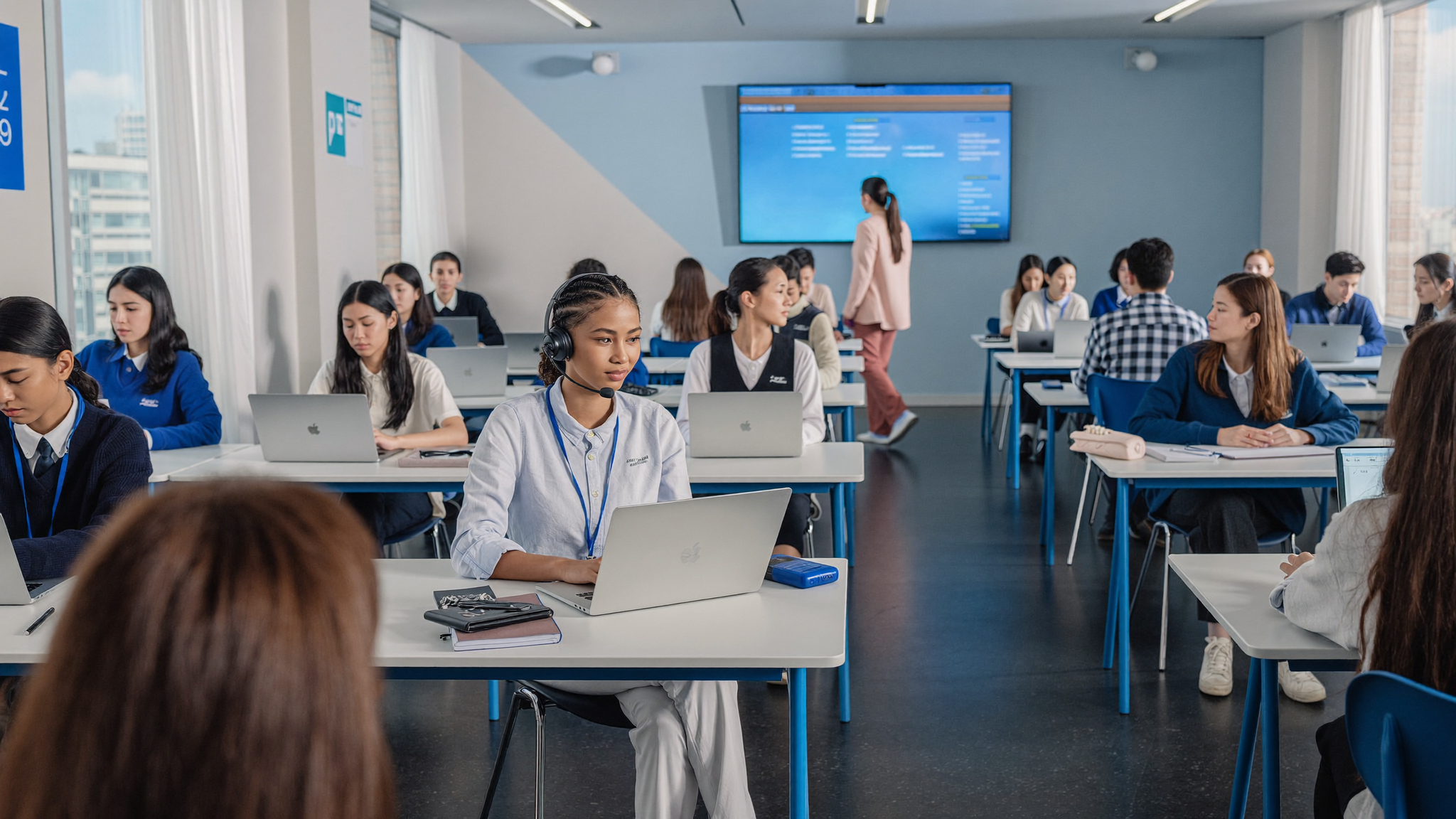
Conversational micro-learning combines that principle with active practice: simulation sessions of five to ten minutes, two or three times a week, on one targeted scenario. Frontline teams particularly appreciate a format that slots into their schedule without disrupting operations.
The trend goes beyond isolated micro-learning: training is moving directly into the flow of work. Before an important client meeting, the salesperson runs a quick simulation. After a difficult conversation, the manager practises handling it another way. Training stops being an event separate from the job and becomes part of it.
Blended learning is not new, but optimising it is a defining trend of 2026. The organisations getting the most out of it are those that have found the right balance between modalities. Digital (AI simulation, e-learning, video) covers preparation and repetition. Face-to-face time is reserved exclusively for high-value activities: group exercises, collective debriefing, complex case work.
This rebalancing cuts classroom time by 40 to 60% while improving outcomes. The explanation is straightforward: when learners arrive having already practised individually on a simulator, the group starts at a consistent and higher level. The trainer can go straight to advanced situations instead of spending time on fundamentals.
The typical 2026 learning sequence combines an initial diagnostic (AI simulation), individual micro-practice sessions (simulator), targeted group sessions (in person or live online), individual coaching on sticking points, and continuous follow-up with regular challenges. This multimodal approach maximises effective learning time while respecting operational constraints.
In a tight labour market, companies that visibly invest in developing their people stand out. Stress management, emotional intelligence and communication skills are themes that resonate strongly with younger employees in particular.
For HR teams, soft skills training has become a recruitment and retention argument. Onboarding programmes with a serious soft skills component accelerate integration and strengthen engagement in a new joiner's first few weeks.
The landscape for funding soft skills training continues to move in 2026. Public and sector-level funding schemes are adapting their criteria to accommodate innovative, AI-enabled programmes. Companies, for their part, are increasing their training budgets for behavioural skills, persuaded by the ROI data now available to them.
In return, funders expect more robust evidence of results. Satisfaction questionnaires no longer suffice. Providers that measure impact objectively — on skills and on performance — find it easier to secure funding. That requirement is raising the standard of the market and gradually squeezing out superficial offers.
Fluency with AI tools applied to learning is no longer optional. The trainers most in demand will be those who understand how conversational simulators work, who can design effective scenarios and who know how to interpret the data these tools generate. Invest time in getting hands-on with them now.
Tomorrow's trainer is not the person who delivers content — AI does that at scale. Their value lies in learning design, in-depth debriefing, emotional support and the ability to anchor learning in a specific context. These human capabilities are becoming the core of the profession.
Build impact measurement into every programme. Define success indicators up front, collect the data and share the results with your clients. That discipline sets you apart in a market where far too many programmes are still judged on feeling alone.
The 2026 trends are neither a threat to trainers nor technological gimmicks. They are a rare opportunity to make soft skills training more effective, more measurable and more accessible. The trainers and providers who embrace them now will lead a market in the middle of a genuine transformation.
Technology does not replace pedagogical expertise — it amplifies it. AI conversational learning multiplies the amount of practice available. Multimodal analysis enriches feedback. Data makes evaluation objective. For learning professionals, this is the moment to act. Organisations that invest in behavioural skills with the right tools and the right methods are building a durable competitive advantage. Our next article shows in detail how that transformation translates into measurable business results.