
Emotional intelligence (EI) is the ability to perceive, understand, manage and use emotions — your own and other people's — constructively in professional interactions. Popularised by the psychologist Daniel Goleman in the 1990s, the concept has only grown in importance in the workplace.
Research now converges on the same conclusion: emotional intelligence is the strongest predictor of managerial performance, ahead of IQ and technical skill. Managers with high EI build more engaged teams and lose fewer people to avoidable turnover.
That is why emotional intelligence sits at the heart of any serious soft skills training programme.
The first pillar, and the foundation for all the others: the ability to recognise your own emotions in real time. A self-aware manager notices that they are feeling frustrated during a meeting and adjusts their behaviour before reacting impulsively.
In practice, self-awareness shows up as:
Emotional labelling: naming precisely what you feel — not simply "I'm stressed" but "I feel anxious about this deadline because I have doubts about the quality of what we're delivering".
Identifying triggers: knowing which situations, people or contexts provoke strong emotional reactions. A salesperson who knows that price objections put them on the defensive can prepare specifically for them.
Realistic self-assessment: knowing your strengths and your limits, without either complacency or excessive harshness.
The ability to regulate your emotions and maintain professional behaviour even under pressure. This is not about suppressing emotion — which would be counterproductive — but about choosing how to respond to it.
Self-management is particularly critical in conflict. A customer service agent facing a difficult customer has to stay calm, avoid taking the attack personally and remain solution-focused.
The core techniques include conscious breathing, to create a gap between stimulus and response; cognitive reframing, to interpret a stressful situation differently; and grounding, to return to the present moment when emotions take over.
The ability to perceive and understand other people's emotions. Professional empathy does not mean absorbing someone else's feelings or agreeing with everything they say. It means understanding their point of view, their motivations and their emotional state well enough to adapt how you communicate.
Empathy operates at three levels:
Cognitive empathy: understanding the other person's perspective intellectually. "I can see why this situation is frustrating for you."
Emotional empathy: feeling what the other person feels. This form creates a strong bond but has to be regulated to avoid burnout.
Compassionate empathy: understanding, feeling and being motivated to act. This is the form the best customer-facing professionals develop, as set out in our guide to active listening and empathy in customer relations.
The ability to inspire, influence, develop others and handle conflict. It is the most visible pillar of emotional intelligence — and the one with the most direct effect on collective performance.
Relationship management covers inspiring leadership, persuasive communication, the ability to give constructive feedback, conflict handling and the capacity to drive change.
Managers with high emotional intelligence create a climate of trust that unlocks collective performance. Their teams take initiative, raise problems earlier and collaborate more effectively.
In concrete terms, a manager with high EI knows how to adapt their management style to each person (more directive with a junior, more hands-off with an expert), spot the early signals of disengagement before it is too late, turn conflict into an improvement opportunity, and give feedback that motivates rather than discourages.
In customer-facing work, emotional intelligence translates into a better grasp of what the customer actually needs, smoother complaint handling and the ability to build trust even in tense situations. Field teams trained in EI typically see a marked improvement in their NPS.
People with high EI handle stress better, maintain healthier working relationships and cope better with periods of heavy workload. Stress management and resilience correlate directly with the level of emotional intelligence.
EI is not developed by reading a book or working through an online course. It is built by repeated practice in emotionally charged situations, with precise, supportive feedback.
This three-stage approach is used by the most effective training programmes:
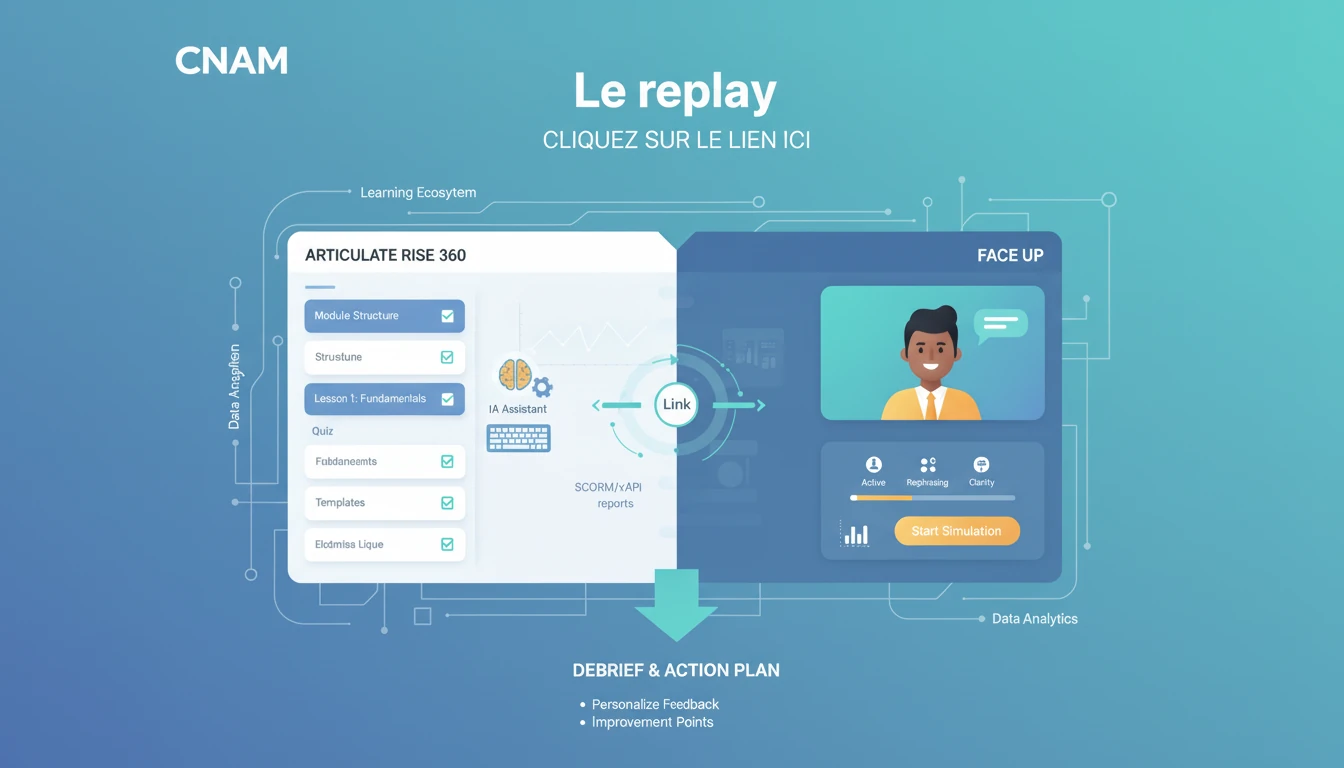
Experience: put the learner in an emotionally realistic situation. Role play with AI avatars works particularly well here, because it reproduces the emotional pressure without the real-world risk. A learner can practise ten times with a furious customer without any consequence for the commercial relationship.
Debrief: analyse the experience precisely. What did you feel? At what point did you lose control? What could you have done differently? Face Up's multimodal analysis makes that debrief objective by measuring tone, emotion and the content of the conversation.
Anchoring: turn awareness into reflex through repetition. Each new session reinforces the desired behaviours until they become automatic.
The emotion journal: recording daily the emotional situations you encountered, what you felt and how you reacted. This exercise builds self-awareness within a few weeks.
AI simulation: practising emotionally complex conversations with realistic avatars. New-generation simulators reproduce natural emotions and reactions, creating a realistic training ground.
360-degree feedback: gathering input from peers, direct reports and managers to get a complete picture of your emotional intelligence.
One-to-one coaching: personalised support to work in depth on the weakest pillars.
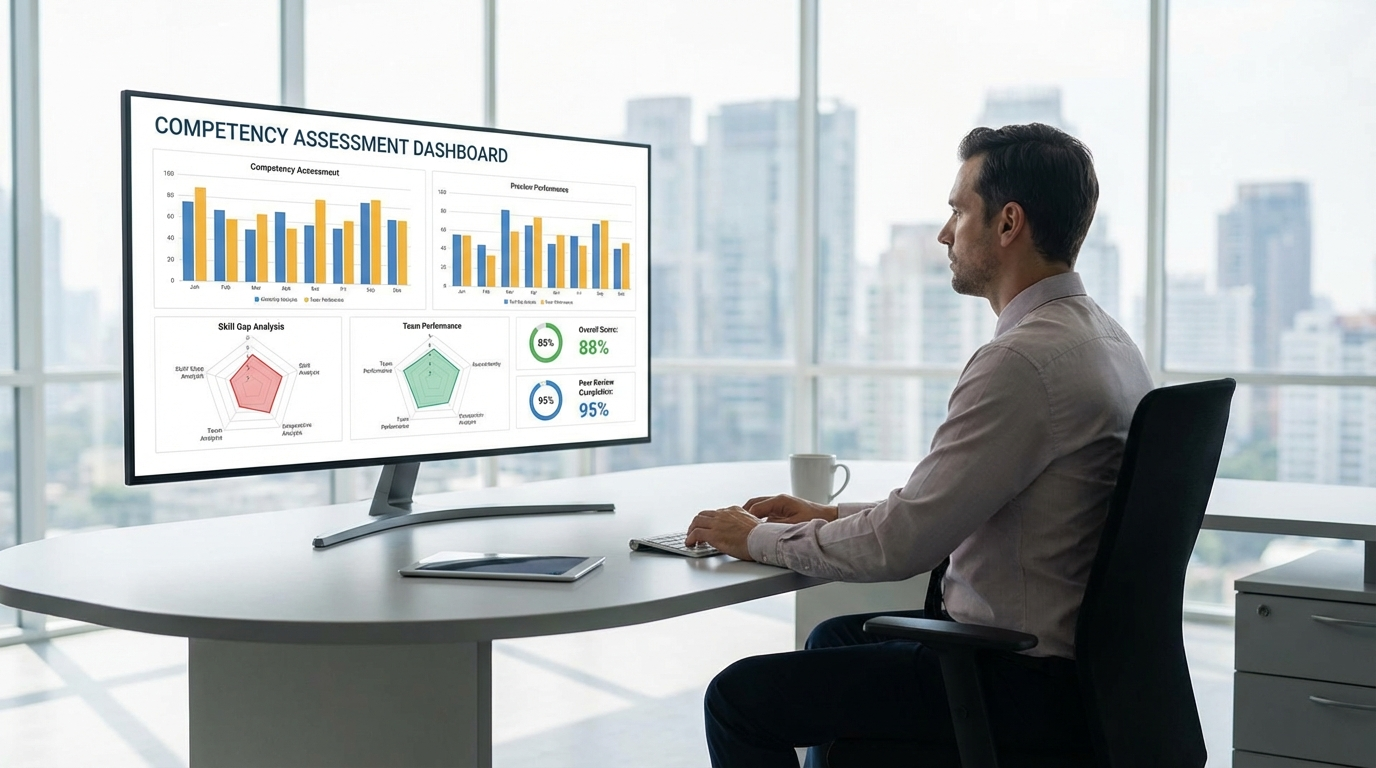
Several scientifically validated tools exist to assess soft skills, EI included:
The MSCEIT (Mayer-Salovey-Caruso Emotional Intelligence Test): a performance test measuring the four branches of EI.
The EQ-i 2.0 (Emotional Quotient Inventory): a 133-item self-assessment covering five dimensions of EI.
AI conversation analysis: in live practice, multimodal analysis tools measure how EI actually shows up — appropriate tone, expressed empathy, visible emotional regulation.
The most complete approach combines an initial assessment, regular practice and continuous measurement of progress. That is what the best training methods build in from the start.
Initial assessment (EQ-i or MSCEIT), introduction to the concepts, start of the emotion journal. The aim is to give each participant a clear picture of their own EI profile.
Twice-weekly simulation sessions on progressively more complex scenarios, with a debrief after each one. Focus on the priority pillars identified during the diagnosis.
Application in real situations, supported by a practice log. Coaching sessions to work through the difficulties encountered. An interim assessment to measure progress.
Final assessment, comparison with the initial profile, and an independent development plan. Results are usually clear after around eight weeks of regular practice.
Organisations that invest systematically in their teams' emotional intelligence gain a durable advantage: a better customer experience, more effective management, more resilient teams and a healthier culture.
To measure the ROI of that investment, the most relevant indicators are NPS (both customer and employee), staff turnover, the number of escalations and the speed at which internal conflicts are resolved. Our clients see a positive return within the first quarter after rollout.