
Training teams in customer relations has never been more strategic. With customers better informed, more demanding and active across multiple channels, organisations need training programmes that turn theory into operational reflexes. This guide brings together everything you need to design, deploy and steer customer relations training that produces measurable results.
A satisfied customer comes back, recommends you and forgives the occasional slip. A customer who is badly received, badly directed or simply not listened to is expensive: complaints, negative reviews, churn. Yet many organisations still train their people with static material — PDFs, generic videos, quizzes — that transfers knowledge without developing behaviour.
Customer relations training has to go beyond knowing and reach doing: listening actively, reformulating, adapting your language, defusing tension, closing an exchange well. That takes practice, feedback and repetition — exactly what modern training methods now make possible at scale.
Every effective programme starts by identifying the skills that matter. In customer relations, five pillars appear consistently in the frameworks of high-performing organisations:
The core customer relations competencies form the foundation: greeting, listening, reformulating, directing and closing. That is the minimum expected in any sector.
Active listening and empathy reveal the customer's real need, beyond what they explicitly ask for. This is the skill that separates someone processing a case from a professional solving a problem.
Verbal and non-verbal communication shapes the customer's perception within seconds. Tone of voice, posture, choice of words: every signal counts.
Handling difficult customers and defusing conflict is the most requested topic in training. It is acquired through regular practice on realistic scenarios.
Finally, handling customer relations across every channel (phone, face to face, chat, email) has become essential in an omnichannel world.
Identifying the competencies is not enough: you also need the right teaching approaches to build them. Several methods complement one another.
Methods and pedagogies for customer relations training range from the traditional classroom to conversational learning with AI. Each approach has its strengths depending on the context.
Simulated situations are the most effective way to embed behaviour. Whether run in person, in virtual reality or with AI, they let people practise without risk.
Role play and structured feedback turn theory into reflexes. Feedback has to be specific, supportive and actionable to produce lasting change.
To measure what has been learnt, you need to know how to assess and certify competencies objectively and continuously.
Microlearning and blended learning make training sustainable, with short sequences that fit into the working day.
Relational skills play out differently depending on the job. An information agent in a station does not face the same situations as a bank adviser or a shop assistant.
The sectors and roles in customer relations each carry specific challenges that need to be reflected in the training content.
Training public transport staff means working on crowd management, announcing disruption and maintaining the relationship in an often tense context. We support Eurotunnel on exactly these challenges.
Training bank advisers requires combining relational skill, product expertise and regulatory compliance. Our experience in bancassurance shows how much advisory selling matters.
Training retail sales staff focuses on the welcome, fast needs discovery and active loyalty building.
Contact centres need quality scripts and consistent service standards.
Our case studies show the practical impact of customer relations training:
In transport: reducing incidents and raising customer satisfaction by training frontline teams.
In banking: improving the compliance rate while strengthening the quality of the relationship.
In retail: increasing sign-up rates to a loyalty programme by building team capability.
We have also achieved notable results with IAE Lille and the French Tech programmes.
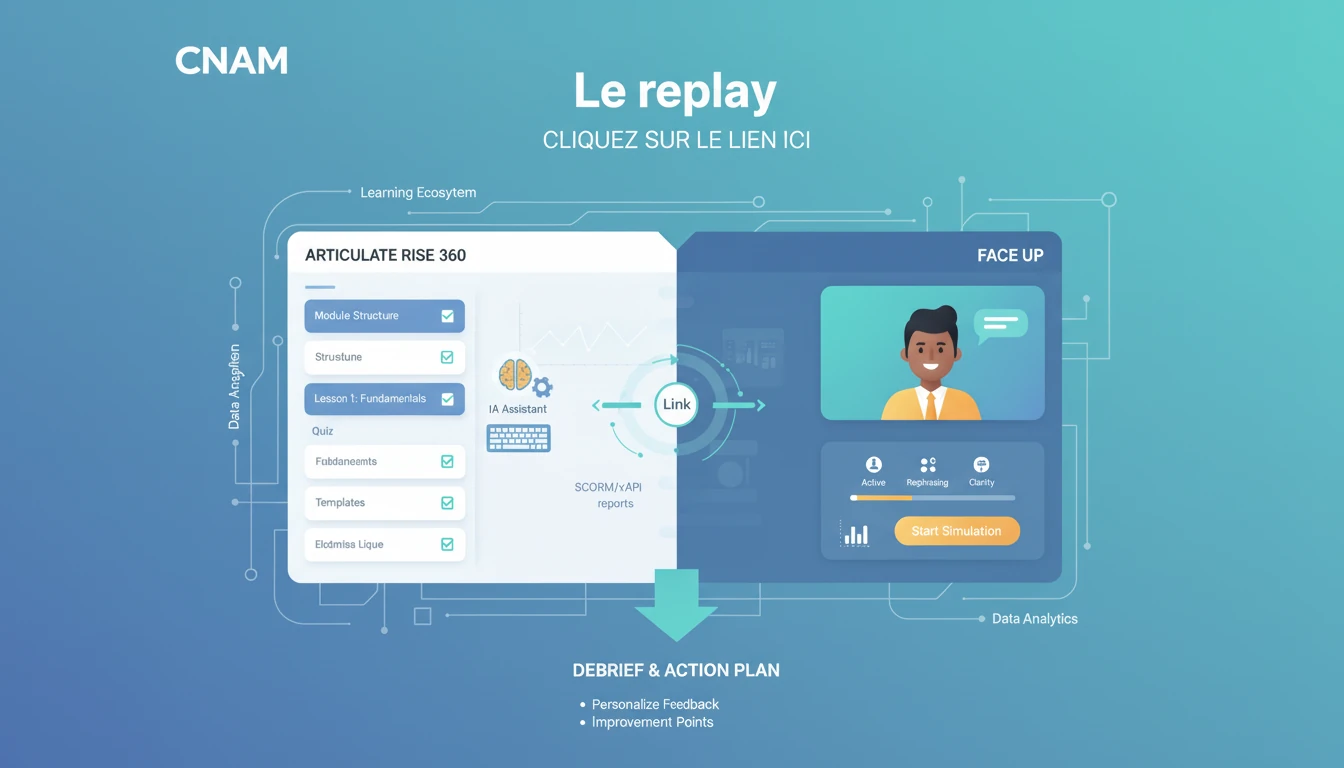
The AI avatar interview simulator lets people practise realistic conversations with credible characters. LMS integration ensures traceability and tracking. You can also build an Articulate 360 module with Face Up. To steer effectiveness, see our method for measuring impact.
Calculating ROI lets you justify the investment. Change management around AI is a major issue in its own right. To scale up, see how to roll out your training programme.
See our pricing FAQ and find out how to fund your training through training budgets and the funding schemes available to employers.
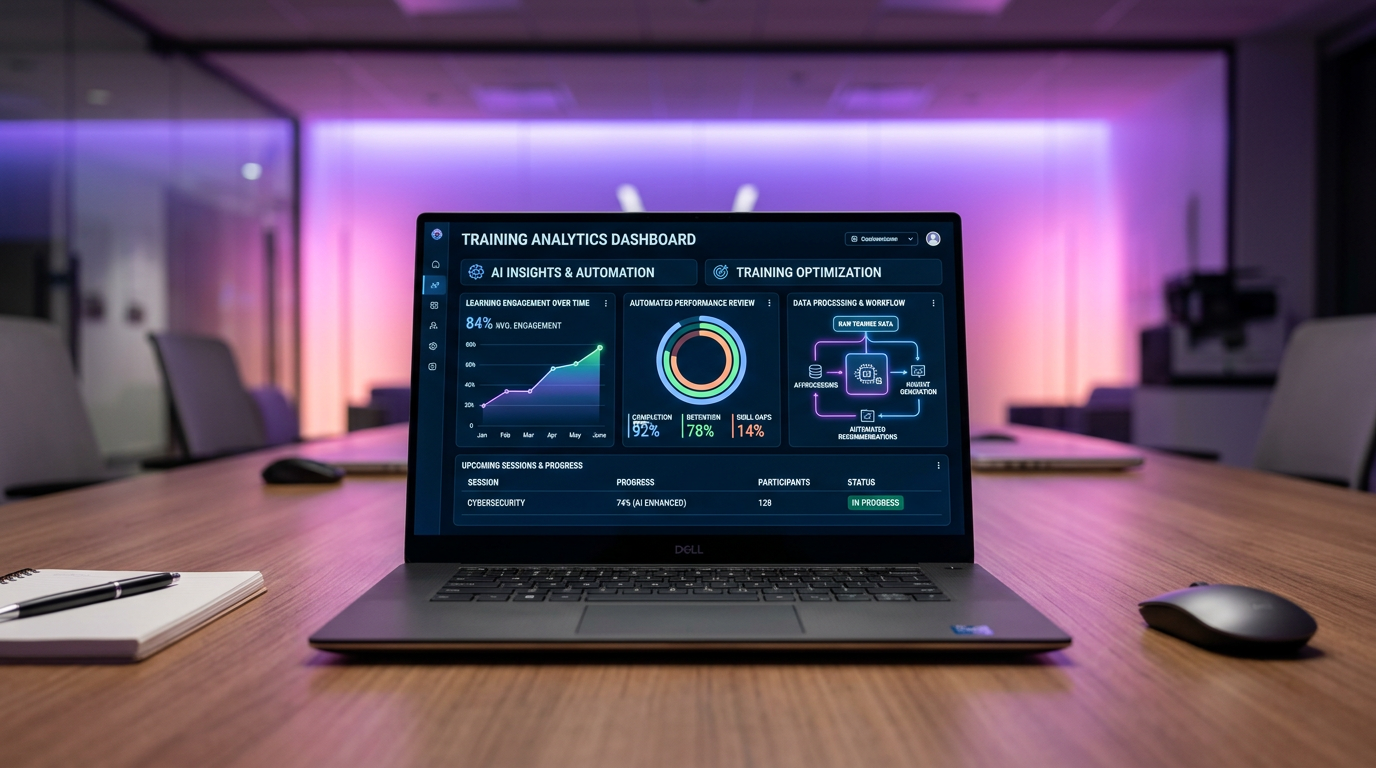
At Face Up we build a conversational AI learning platform designed to develop relational skills. Our trainer-first approach equips trainers and managers with realistic scenarios, actionable debriefs and progress data.
Our clients (Cegos, Getlink, Liebherr, SKEMA) report 95% learner satisfaction, a 50% reduction in onboarding time and a 20 to 45% improvement in closing rates.
Want to know more? Write to us at contact@face-up.fr