
Qualiopi certification has become the entry ticket for training providers in France, and comparable quality frameworks are spreading across Europe. But when it comes to behavioural skills training, meeting the indicators of a national quality standard raises specific difficulties. How do you evidence a learner's progress in emotional intelligence with the same rigour as a technical course? Here is a practical guide for training providers.
Technical skills are easy to measure: a learner either can or cannot use a piece of software, apply a procedure or complete a calculation. Behavioural skills — active listening, empathy, assertiveness, stress management — are by nature harder to pin down objectively. Yet the standard demands tangible evidence of progression, not subjective impressions.
Among the 32 indicators in the standard, several are especially demanding for behavioural programmes. Indicator 5 calls for operational, assessable objectives. Indicator 11 requires evidence that those objectives were met. Indicator 17 mandates an assessment of what learners have actually acquired. Indicator 30 requires the collection of stakeholder feedback. Each one needs a tailored approach.
The classic mistake is to write objectives that are too broad: improve your communication or develop your leadership. To satisfy the standard, restate them as observable behaviours. For example: by the end of the programme, the participant will be able to reformulate a customer objection, identify the underlying emotion and offer a suitable response in under 30 seconds. That level of precision satisfies the auditor and gives the teaching a clear target.
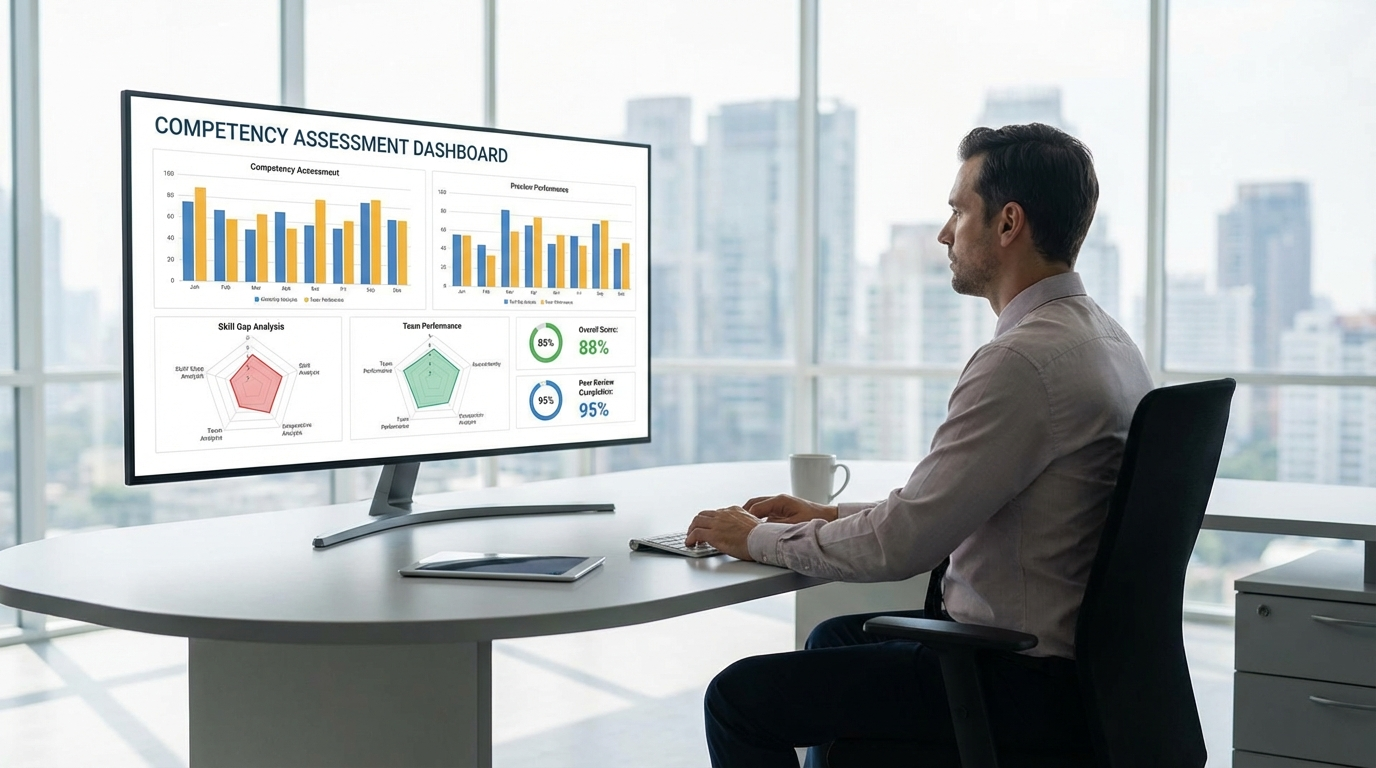
Build a grid setting out four to six target competencies, each broken down into three levels of mastery (beginner, intermediate, advanced) with concrete behavioural indicators. The grid acts as a reference throughout the learning journey and makes assessment far easier. It also shows the auditor that your objectives are structured and measurable.
A multiple-choice test can check theoretical knowledge of communication techniques, but it says nothing about a learner's ability to apply them under pressure. For soft skills, assessment has to run through practice: simulations, assessed role-plays, and observation of behaviour in conditions close to the real thing.
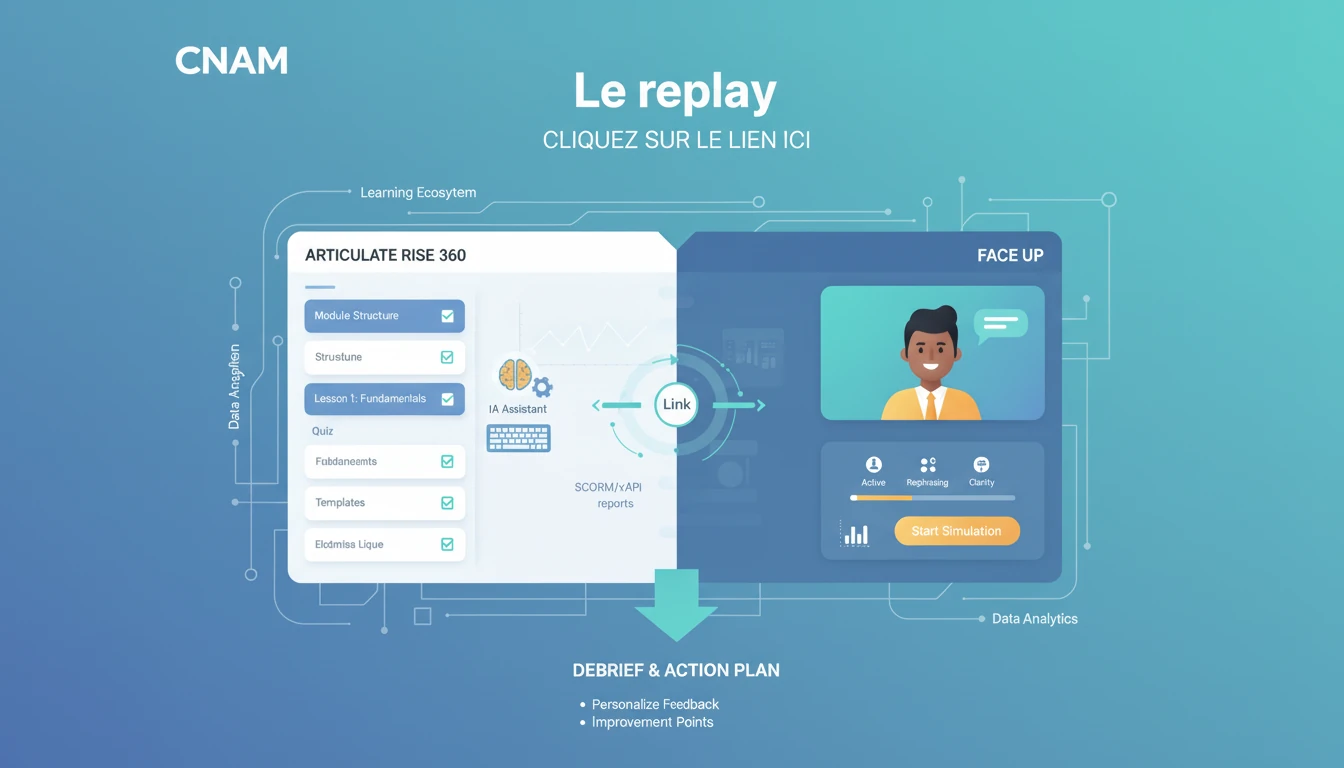
Conversational learning platforms offer an elegant answer here. Every practice session with an AI avatar automatically produces usable data: a full transcript of the exchange, an analysis of the content of the learner's responses, and an assessment of tone and delivery. Face Up, for instance, generates a multimodal performance score that turns progression on each target competency into something observable.
Run a diagnostic assessment before the programme and a summative one afterwards. For soft skills, use the same simulation scenario at both points. Comparing transcripts and scores between the pre-test and the post-test gives you evidence of progression that is documented, time-stamped and hard to argue with.
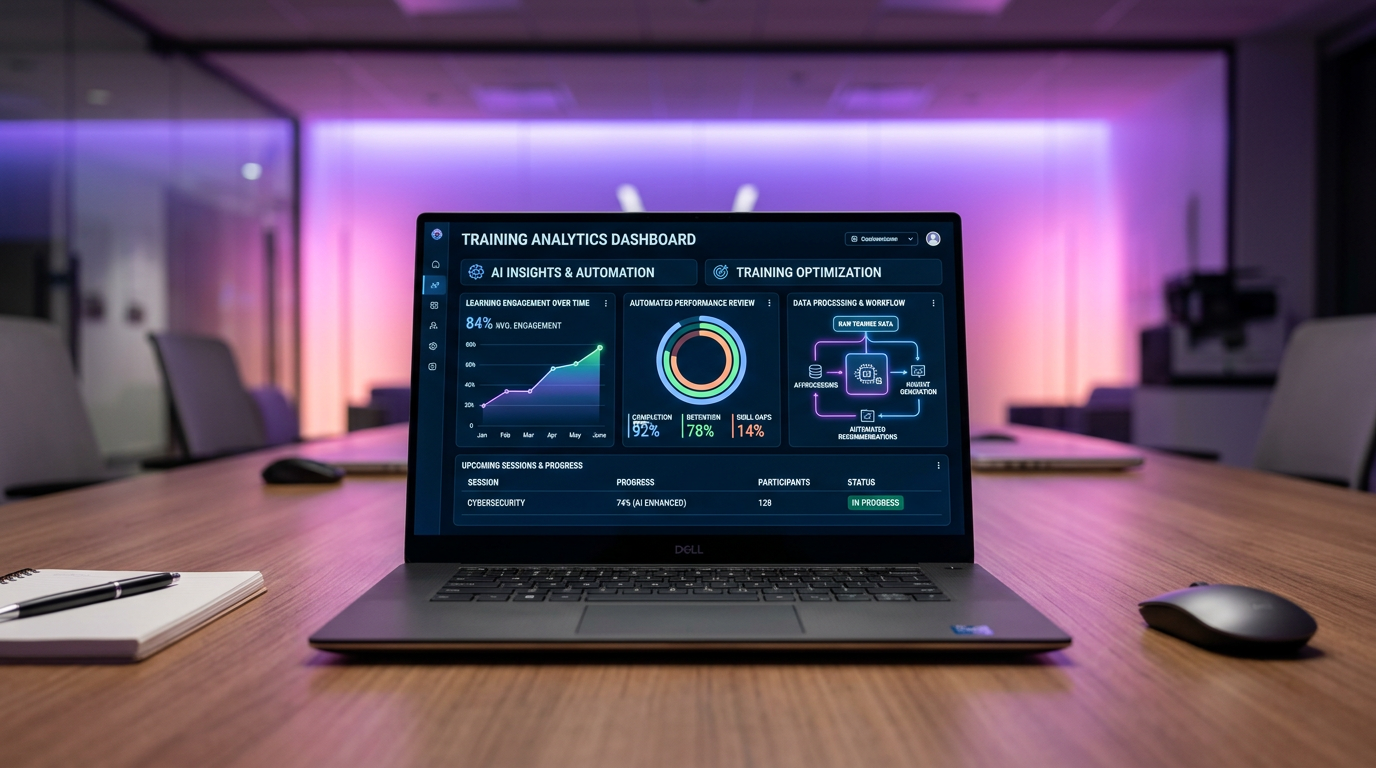
For each learner, document the number of sessions completed, cumulative practice time, score progression per competency, and the completion rate for the programme. Exported as individual reports, this data becomes supporting evidence for the audit. Digital tools generate those reports automatically, with no extra administrative load.
The standard requires feedback from stakeholders. For soft skills programmes, go further than the usual end-of-course happy sheet. Collect delayed feedback as well, one to three months later, to measure the real impact on working practices. A manager confirming an observable change in behaviour carries far more weight with an auditor than a satisfaction score collected on the last afternoon.
Involve learners' managers in the assessment design. Ask them to complete a behavioural observation grid before and after the programme. This 360° view gives your results credibility and satisfies the requirement to take account of stakeholder feedback, not just learner feedback.
Compliance generates a heavy administrative load. Modern digital tools automate the production of evidence: digital attendance records, automatic progress reports, time-stamped session histories, and completion certificates generated on the fly. Choose solutions that fit into your existing rollout process.
Create an evidence file structured indicator by indicator. For every soft skills session, archive the detailed programme with its operational objectives, the pre- and post-assessments, individual progress reports, completion certificates, satisfaction questionnaires and manager feedback.
Quality certification is not only an administrative constraint. It is a strong commercial argument with organisations looking to fund their training through external schemes. A provider that can demonstrate rigorous traceability reassures buyers and makes funding approval easier. Turn the requirement into a client promise: results that are measurable, documented and auditable.
Meeting a quality standard on soft skills training is not an insurmountable obstacle. It requires rethinking assessment: moving from the declared to the observable, from the subjective to the measured. Conversational learning tools turn that constraint into a point of differentiation. To complete the picture, see how to structure a soft skills catalogue that builds these requirements in from the start.