
For decades, soft skills training has meant a day in a classroom, a deck of slides and a trainer explaining the principles of communication or leadership. The result? Research by Beer, Finnström and Schrader, published in Harvard Business Review, found that only 10% of training spend produces tangible results. For behavioural skills, the figure is lower still.
The reason is straightforward: soft skills are not learned the way you learn an Excel formula or a compliance procedure. They are embodied skills, built through repeated practice, immediate feedback and exposure to a wide range of situations. Reading a chapter on conflict management does not prepare you to handle a furious customer face to face. Closing that gap between theory and practice is precisely what modern methods set out to do.
So which approaches actually work? What follows is a full survey of the most effective methods, assessed against the different types of soft skills they suit and the operational constraints organisations face.
Role-play and practical simulations remain the single most powerful way to develop soft skills. The principle is direct: put the learner in a realistic situation that forces them to use the target skill — negotiating with a difficult customer, delivering bad news, running a performance conversation that has gone wrong.
Three pedagogical mechanisms explain why this works. First, cognitive engagement: when you play a role, your brain processes information differently than when you are simply watching. Second, immediate feedback: a trainer or a peer can correct a behaviour in real time. Third, memory through experience: neuroscience research shows that learning tied to an emotional experience is retained far longer.
Historically, role-play was hard to run at scale: you needed an experienced facilitator, willing participants and enough time in the room. Today, AI simulators and conversational avatars allow organisations to multiply practice sessions without those logistics, with personalised feedback and round-the-clock availability.
Coaching and mentoring provide a level of individual attention group training cannot match. Coaching focuses on specific objectives — developing leadership, improving interpersonal communication, building confidence when speaking in public — with a professional who adapts their approach to each individual.
Mentoring works differently, passing on experience from a more senior peer. It is particularly effective for relational skills in context: a mentor can explain how they handle tense customer situations, how they keep a team motivated through a difficult period, how they navigate the politics of the organisation.
The evidence is consistent: according to the International Coaching Federation, 80% of people who have been coached report improved self-confidence, and 70% report improved work performance. Coaching is especially well suited to managers and high-potential employees.
The main constraint is cost. One-to-one coaching is a significant investment, which is why it is usually reserved for senior and leadership populations. Many organisations therefore combine individual coaching for strategic profiles with group training formats for frontline teams.
Action learning — known in French-speaking practice as co-development — was formalised in Quebec in the 1990s by Adrien Payette and Claude Champagne. The principle is simple: a small group of peers (six to eight people) meets regularly to work through real problems drawn from their own professional practice.
Each session follows a structured protocol. One participant presents a real situation — a conflict with a team member, difficulty convincing an executive committee — and the group explores possible ways forward together. The facilitator's job is not to supply answers but to frame the discussion and ensure every participant takes something away.
The value of this method for soft skills is considerable. It combines several drivers of effectiveness: grounding in reality (these are lived situations, not fictional case studies), diversity of perspective (each peer brings their own experience), and regularity (monthly sessions create continuous learning momentum). Peer learning works particularly well for skills such as stress management, decision-making and emotional intelligence.
Blended learning is not a method in itself but a combination strategy: it exploits the strengths of each approach while offsetting their respective limits. A typical blended pathway for soft skills might look like this:
Phase 1 — Awareness (e-learning, 2 hours): short modules covering the theoretical fundamentals, an initial self-assessment, a positioning quiz. The learner discovers the concepts at their own pace.
Phase 2 — Practice (in person or AI simulator, 4 hours): intensive practice scenarios, role-play, group debrief. This is the heart of the learning, where the skills start to take hold.
Phase 3 — Embedding (micro-learning and coaching, 4 weeks): five-minute daily prompts, practical exercises to apply in real situations, coaching or peer sessions to work through the difficulties encountered in the field.
This three-phase architecture works because it respects what learning science tells us: spacing between sessions (the spacing effect), active recall (the testing effect) and application in real context (transfer of learning). At Face Up, we have found that pathways combining in-person work with practice sessions with AI avatars cut onboarding time by 50%.
Micro-learning breaks learning into very short units (three to seven minutes), accessible on mobile and consumed at the moment of need. For soft skills, that might mean short videos illustrating a model behaviour, situational quizzes, reminders of good practice before a client meeting, or brief reflective exercises.
On its own, this approach is not enough to develop complex behavioural skills — nobody learns to manage conflict by watching five-minute videos. As a complement to immersive formats, though, micro-learning is excellent. It maintains momentum between practice sessions, reinforces what has been learned through spaced repetition, and delivers contextual reminders exactly when the learner needs them.
Modern LMS platforms make it possible to schedule these micro-contents intelligently: a reminder about active listening techniques before a customer meeting, a breathing exercise before a presentation, a non-verbal communication checklist before an important meeting. This is just-in-time learning applied to soft skills.
Immersive technologies represent a genuine step change in soft skills training. Two approaches stand out.
Virtual reality (VR) places the learner in a 3D environment where they interact with virtual characters. It is particularly effective for emotionally demanding situations — crisis management, speaking to a large audience, safety-critical scenarios — because it generates stress comparable to the real thing. According to PwC, VR learners are four times more focused and complete their training four times faster than with classic e-learning.
Simulators built on artificial intelligence use conversational avatars capable of playing realistic roles — an unhappy customer, a struggling team member, a hesitant prospect. Unlike VR, which requires a headset, these simulators run in an ordinary web browser. The AI adapts its responses in real time to the learner's behaviour, delivering personalised training that can be repeated at scale.
The decisive advantage of these technologies is that they solve the historic problem of soft skills training: a lack of practice. A learner can run ten scenarios in an hour, receive detailed feedback on every exchange, and start again until the right reflexes are in place. That is precisely the approach we are building at Face Up with our conversational learning platform.
The choice of method depends on four main factors: the type of skill you are targeting, the audience, your logistical constraints and your budget.
For relational skills (communication, negotiation, conflict management), practical scenarios and AI simulators are the most effective. These skills are learned by doing, not by listening. Frontline and customer service teams benefit particularly from this hands-on approach.
For leadership and management skills, combine one-to-one coaching with peer learning. Managers need individual support that takes their specific context into account, while peer groups allow experience to be pooled.
For emotional skills (emotional intelligence, stress management, resilience), favour formats with a reflective dimension — journalling, debriefs, video feedback. These skills demand a level of self-awareness that only structured feedback can develop.
For large-scale deployment, blended learning combining e-learning, AI simulators and targeted in-person sessions offers the best balance between pedagogical impact and operational feasibility. This is the configuration we recommend to organisations training hundreds of employees in behavioural skills.
First mistake: relying entirely on passive e-learning. Watching videos and answering quizzes does not develop soft skills. These formats are useful for awareness and reinforcement, but inadequate as a primary method.
Second mistake: neglecting feedback. Practice without structured feedback is ineffective and can be counterproductive, since it risks reinforcing the wrong habits. Whatever method you choose must include a feedback mechanism — trainer, peer, AI or guided self-assessment.
Third mistake: ignoring transfer to the real world. Training that stops at the classroom door or the simulation screen does not produce lasting results. You need embedding mechanisms — on-the-job assignments, behavioural objectives, manager follow-up — so that what has been learned becomes a professional reflex.
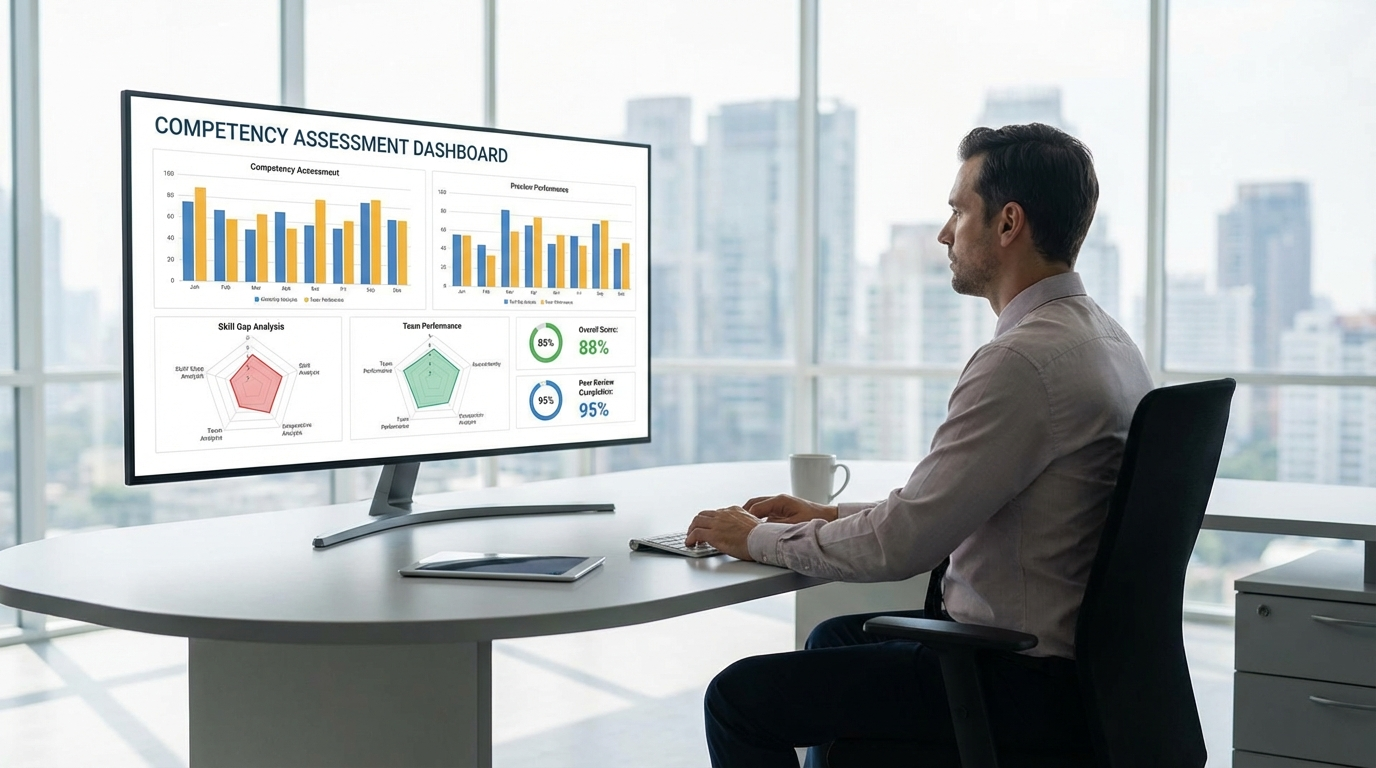
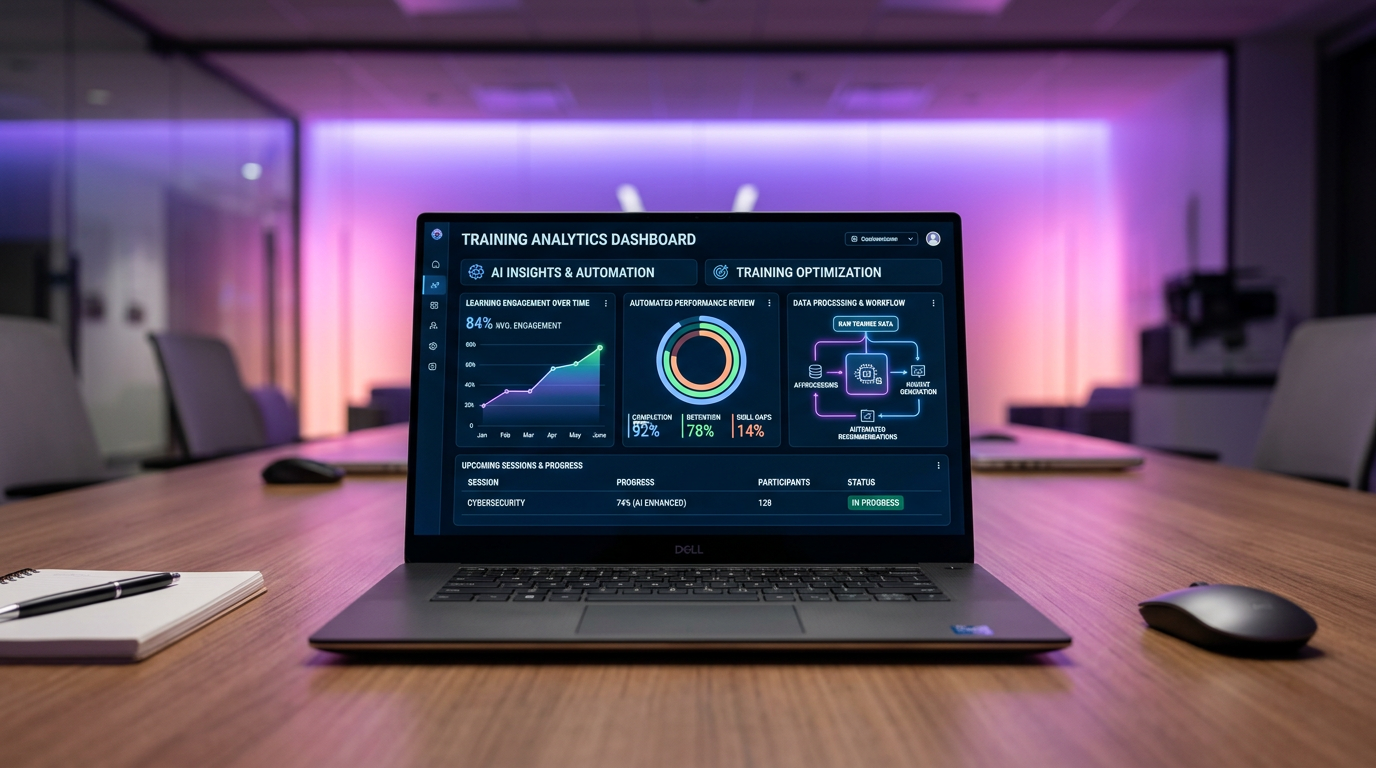
Fourth mistake: underestimating evaluation. How do you know whether your method works if you never measure the results? Define clear indicators before you launch the programme, and put in place a measurement approach that covers every level — satisfaction, learning, transfer and business impact.
The most effective soft skills training is not the kind that relies on a single method, but the kind that combines several approaches intelligently according to objectives, audience and constraints. The organisations that get the best results are those that have understood that developing behavioural skills requires a complete ecosystem: intensive practice time, personalised feedback, embedding in day-to-day work, and rigorous measurement of progress.
Today's technologies — and artificial intelligence applied to training in particular — finally make it possible to build that ecosystem at scale. That is the promise of conversational learning: giving every learner personalised, repeatable and measurable practice, without the logistical constraints of traditional formats.