
A soft skills audit file that is poorly structured will be rejected quickly, however good the teaching behind it actually is. The auditor has three to four hours to assess your programme. If they waste that time hunting for evidence, the conclusion writes itself: "disorganised provider, criticism justified". You lose the certification.
This resource sets out the exact structure a Qualiopi auditor expects for a soft skills programme, where to place each piece of evidence, how to write justifications that are understood immediately, and a checklist to confirm nothing is missing before the audit.
Your file should contain, in this order:
The structure is simple. But every section has to be precise and traceable.
Every claim you make in the file needs a supporting document in the appendices. For example:
You write: "We measure active listening using a before/after observation grid."
Evidence expected in the appendix: the grid itself, completed for at least three learners, showing progression.
You write: "Learners are trained in constructive feedback."
Evidence: the programme outline, the module slides, a role-play brief, and learner feedback confirming they were coached on giving feedback.
No orphans. No claim without support. That is what makes the file credible.
Title, duration, format (in person, remote, hybrid), group size, dates, locations, cost, audience. Then one paragraph per soft skill covered:
"Active listening. The learner practises listening without interrupting, reformulating, and asking clarifying questions. Duration: one day. Method: progressive role-play with immediate feedback. Context: salespeople and managers who need this skill to improve relationships with clients and team members."
Short. Factual. No marketing filler.
This one matters. The auditor looks first at whether your objectives are clear and measurable. Write them like this:
"Overall objective: by the end of this programme, the learner will be able to use active listening in real situations: a client meeting, a conversation with a team member, a management meeting."
Then the operational objectives: "The learner will be able to:"
Numbers. Behaviours. Observable outcomes. That makes the rest of the file far easier to write.
Who are you training? Numbers, role, level, context. For example:
"Managers with 20 or more direct reports, in organisations of 50 to 500 employees, in retail and services. Level: intermediate, with three or more years of experience in formal or informal management. Identified problem: high turnover driven by poor communication."
Short. Contextual. It prepares the reader for your teaching methods.
What impact do you expect? Be careful here. Do not promise the impossible. Write:
"After this programme, 80% of learners meet at least two of the three criteria below [list]. Impact is measured through role-play on day one and day five."
80% is realistic. Three criteria out of three is not. You are protecting yourself in the event of an audit.
Describe them briefly: rooms, equipment, materials. For example:
"A 30 m² room, tables in a U shape for interaction, projector, audio and video recording of role-plays with learner consent, access to an AI practice platform for independent work [Face Up, for instance]."
Then the trainer's credentials:
"Trainer: [name], [coaching or HR qualification], [five years' experience in soft skills]. Continuing professional development in 2024: [courses]."
This is your proof that the resources exist.
Critical. Auditors pay close attention to this indicator. Write:
"Teaching approach: we use progressive role-play because it activates experiential learning (Kolb). The learner tries, receives feedback, reflects, then applies again."
Then set out the four stages of your progression:
"Day 1: baseline role-play. The learner interacts with the trainer playing a frustrated client. Simple observation: number of interruptions, number of questions asked. Duration: 15 minutes. No coaching beforehand, observation only. This establishes the baseline."
"Days 2-3: guided role-play plus feedback. The trainer runs progressively harder scenarios, from a calm client to an angry one. After each five-minute run, the learner receives targeted feedback on listening. For example: 'You interrupted three times. Try counting to ten before you answer.' The learner takes that feedback into the next scenario."
"Day 4: open role-play. An unannounced scenario. The learner does not know it in advance. This tests whether listening has become a reflex rather than a performance."
"Day 5: final role-play plus measurement. The same scenario as day one, observed with the same grid. The result is shown to the learner: 'You had five interruptions, now you have one.'"
This narrative shows a logical teaching progression. The auditor can see the progression was designed, not improvised.
Show that you do not only assess at the end. Write:
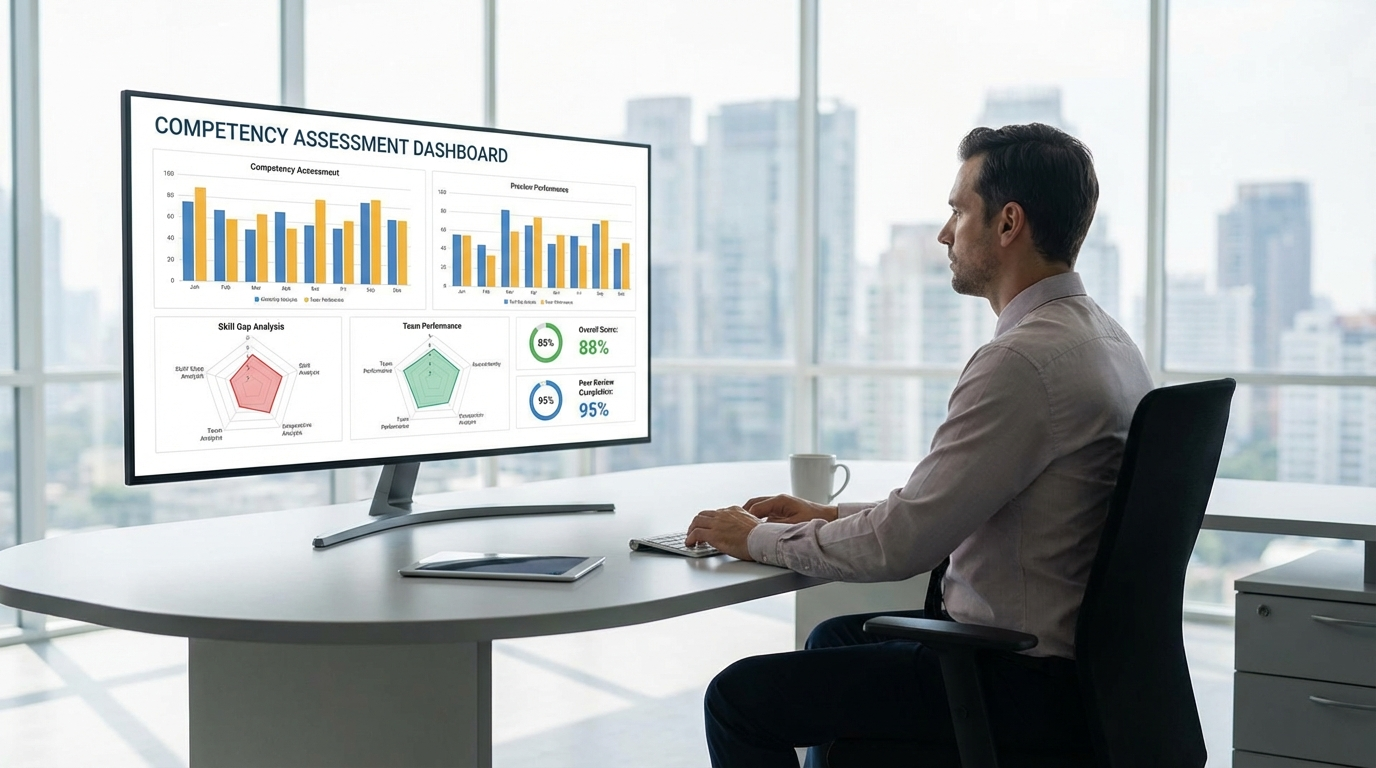
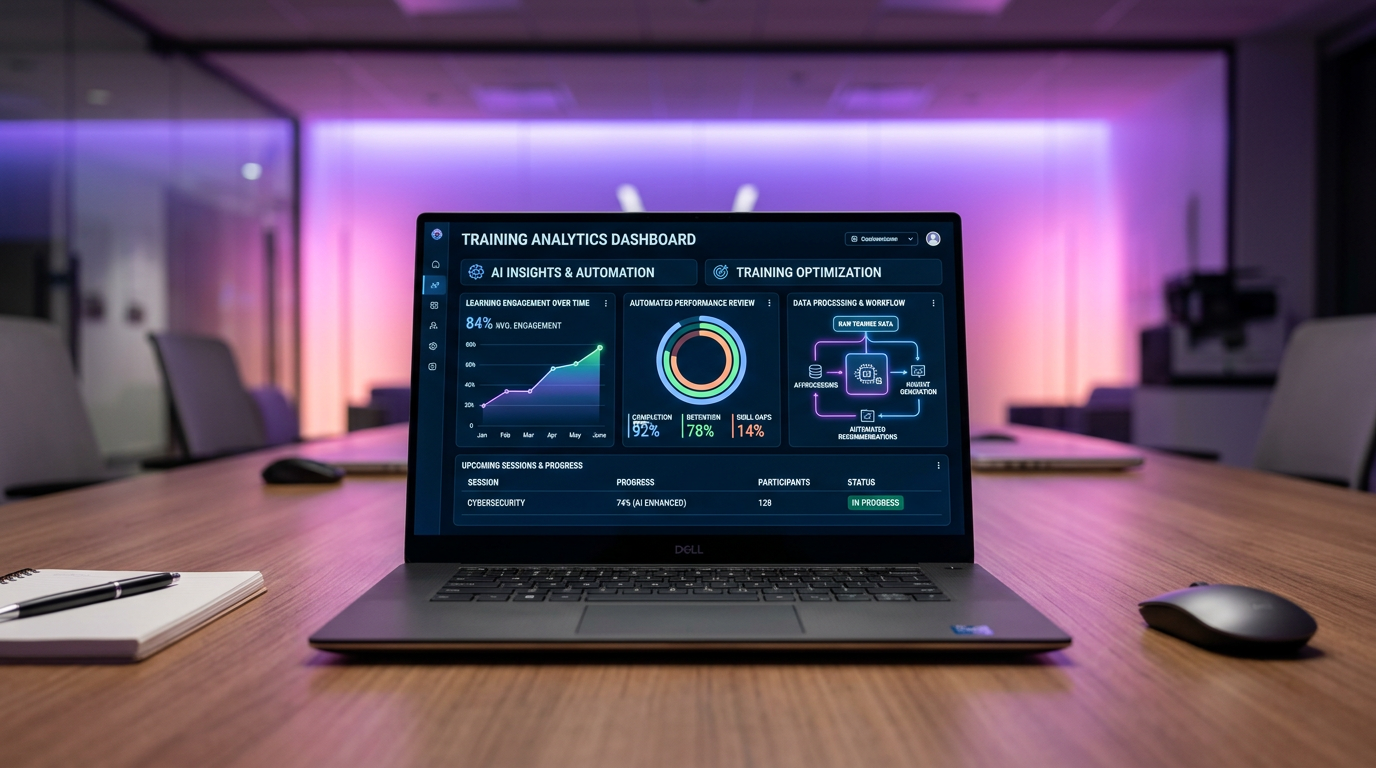
"Continuous assessment: every day, the learner completes a practice exercise, whether a role-play, an AI interaction, or a guided dialogue. Each one is observed against the same criteria: interruptions, reformulations, questions. That produces five data points from day one to day five rather than two. The progression curve becomes visible and hard to dispute."
Appendix: a sample daily assessment grid, with the trainer completing the same grid five times.
You identified why the programme was necessary. Write:
"Initial diagnosis: interviews with three target managers. Question: 'What is your biggest communication challenge?' Recurring answers: 'I cut people off', 'I don't ask enough questions', 'I react too fast'. This programme addresses those three points directly."
Attach the interview minutes or notes.
Keep these brief. Describe the materials (slides, handouts, videos) and how you adapt for learners who are struggling: slower pacing, simplified scenarios, more frequent feedback.
Indicator 11 is the heart of any soft skills file. Write:
"Measuring progression: [soft skill], among [audience], progresses against [three to five objective criteria]. We measure on day one and day five using the observation grid [appendix]. Average results: [figures]."
A worked example:
"Active listening among managers. Three criteria: number of interruptions (target: fewer than 2), reformulations (target: more than 2), questions (target: more than 2). Measurement: observation grid on day one and day five during a 15-minute role-play. Results across 12 learners: average interruptions day 1 = 4.5, day 5 = 1.2 (-73%). Average reformulations day 1 = 0.3, day 5 = 2.8. Average questions day 1 = 0.7, day 5 = 2.9. Progression: 83% of objectives met or exceeded. Evidence in the appendices: individual grids, day 1 and day 5 video recordings for three learners, and a summary of the figures."
It is precise. It is quantified. It is auditable. The auditor signs it off.
Contains:
Contains:
Contains:
Contains:
Poor: "We use progressive role-play exercises that mobilise experiential learning in line with Kolb's theory, which supports memory anchoring and transfer into real contexts, particularly because it creates a cognitive tension that forces the learner to mentally reformulate what they are learning."
Better: "We use progressive role-play. The learner tries, receives feedback, then applies again. That loop builds an automatic response."
The auditor reads fast. Be clear, not clever.
Poor: "Learners made significant progress in active listening."
Better: "Learners reduced interruptions from an average of 4.5 to 1.2, a 73% reduction."
Numbers create credibility. Empty assertions create doubt.
Every figure, every claim, every example: "See appendix B, observation grid." Or "See appendix D, day 1 vs day 5 video for learner X."
The auditor should be able to verify any claim in ten seconds. Make that easy and approval comes quickly.
A credible soft skills audit file is not mysterious. It follows a logical structure: clear objectives, progressive methods, daily measurement, final figures. Every claim has evidence in an appendix. Every piece of evidence points back to a claim. The auditor reads the file in three to four hours and approves it. This does not take months of preparation, only organisation from the outset. If you design your programme around these principles from the start, the audit file writes itself.