
The soft skills training market is saturated. Hundreds of providers offer programmes in communication, leadership or stress management, often with similar content and interchangeable methods. So how do you stand out? Bringing artificial intelligence into behavioural skills training offers a powerful lever for differentiation — provided you use it well. This article explains how training providers can build a distinctive position with AI, without falling into the trap of hollow technology talk.
Soft skills training is a multi-billion market, yet most players offer barely differentiated propositions. The same topics, the same formats (one or two days in a classroom), the same promises ("develop your interpersonal skills"). For a corporate L&D manager, telling one provider from another is genuinely hard. Price then becomes the deciding criterion — a corrosive dynamic for providers' margins.
The arrival of AI in training changes the rules. Corporate buyers are increasingly drawn to solutions built on artificial intelligence, not as a fashion statement but because AI answers concrete problems: scalability, personalisation, measurement of results. A provider offering AI-augmented soft skills training moves into a premium segment, with a differentiated story and tangible proof of results.
The core problem with traditional soft skills training is the shortage of practice. In a one-day course, each participant gets through two or three role-plays at best. That is not enough to build reflexes. Conversational learning platforms with AI avatars multiply practice sessions with no logistical constraint. A learner can practise a scenario ten, fifteen, twenty times until they have mastered the situation. It is that repetition which turns knowledge into competence.
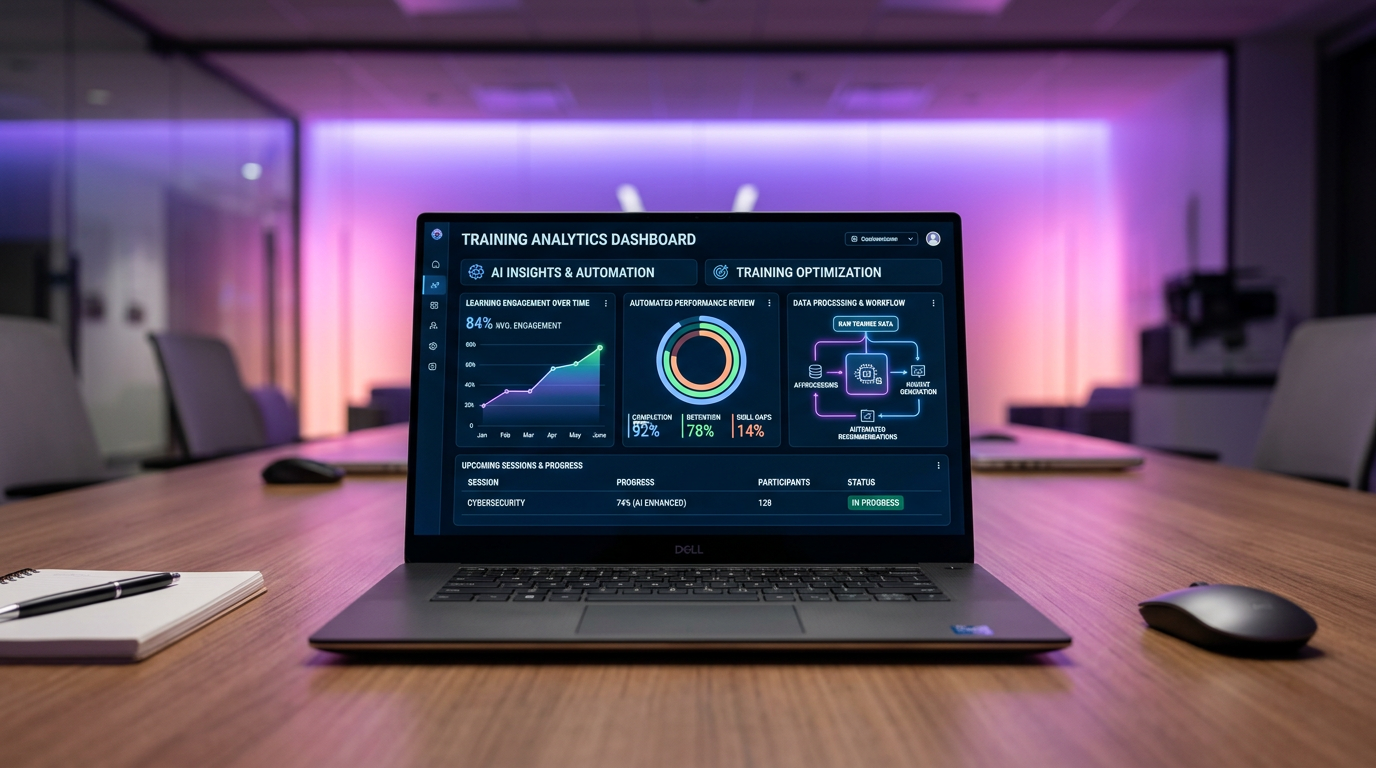
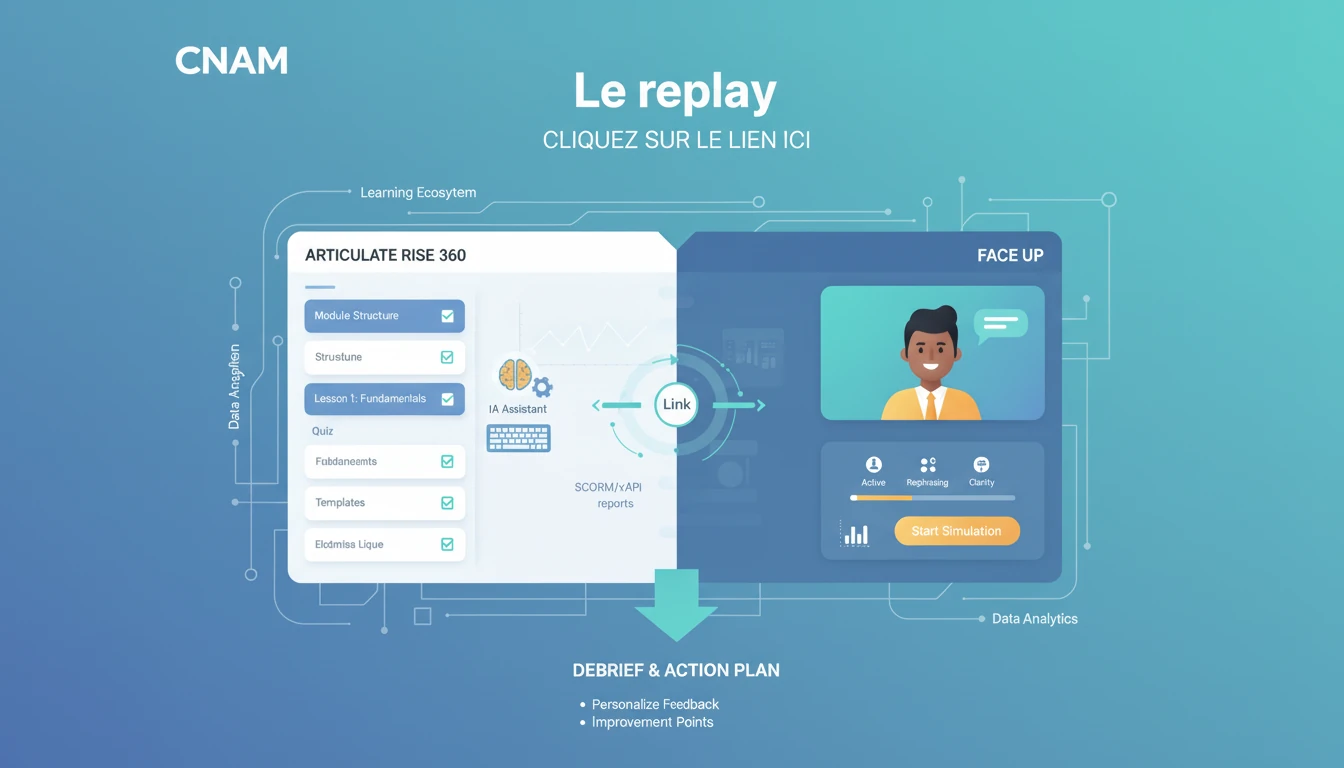
A trainer's eye catches a great deal, but it cannot observe everything at once across a group of twelve. AI analyses in parallel the content of answers, tone of voice, posture, facial expression and speech pace. That multimodal analysis produces a debrief of a precision no one could reach manually. The learner gets factual, detailed feedback on their performance, with specific points to work on.
Every learner has different strengths and weaknesses. One excels at communication but struggles with conflict management. Another is comfortable under pressure but lacks subtlety when listening. AI makes it possible to adapt the path in real time: adjusting scenario difficulty, offering exercises targeted at identified gaps, recommending additional modules. Personalisation at that scale is out of reach for traditional methods.
The most common trap is to centre the sales conversation on the technology: "we use AI", "our avatars are realistic", "our platform is innovative". That message does not land with training buyers. What interests them is the outcome: shorter onboarding, better close rates, fewer complaints, measurable skills progression. AI is the means, not the end. The commercial argument should read: "through the intensive practice AI makes possible, your teams reach this result within this timeframe".
The most powerful combination is sector expertise plus AI. A provider who knows the realities of banking and insurance, passenger transport or retail, and who builds AI into its programmes, holds a value proposition that is hard to copy. The scenarios ring true because they reflect the reality of the sector, and AI amplifies that expertise by making practice possible at scale.
Differentiation is not declared, it is demonstrated. Providers adopting AI need to collect and publish evidence of effectiveness: case studies, before-and-after metrics, client testimonials, comparisons with traditional methods. The numbers speak: 95% learner satisfaction, 50% reduction in onboarding time, 20-45% improvement in close rates. Evidence of that kind turns a sales pitch into an argument buyers cannot easily dismiss.
Rather than layering AI across the whole catalogue, start with one sector where you already have expertise and a client base. Sell a pilot to an existing client: "we have enriched this programme with AI role-plays — let's test it together with your next cohort". The pilot generates data, testimonials and a reference case.
The pilot results feed the commercial story for the rest of the market. Create content — articles, webinars, case studies — around the results achieved. Offer the augmented programme to other clients in the same sector, then extend gradually to other sectors.
The medium-term goal is to become the reference provider for AI-augmented soft skills training in one or several sectors. That position is built through accumulated evidence, visibility (conferences, publications, partnerships) and consistent delivery quality. Trainers who are fluent with AI tools become the ambassadors of that difference.
Adding the word "AI" to a brochure without fundamentally changing the delivery is a strategy that fails. Training buyers are increasingly well informed and can tell genuine use of AI from a chatbot rebadged as an "intelligent assistant". Integrating AI has to deliver real, measurable educational value.
AI does not replace the trainer, it makes the trainer more effective. A provider that presents AI as a substitute for trainers is sending the wrong message and unsettling its own teams. The winning position is trainer-first: AI is a tool in the trainer's hands, and the trainer remains the guarantor of teaching quality, debriefing and human support.
Conversational AI gives training providers a rare opportunity to stand out in a commoditised market. By enabling intensive practice, multimodal analysis and personalised pathways, it turns soft skills training from a one-off experience into a genuine skills development programme. The key to success: sell proven results rather than technology, delivered by trainers who are skilled and properly equipped. It is that combination — expertise, AI and evidence — that builds a durable competitive advantage for ambitious training providers.