
Every training provider facing a Qualiopi audit meets the same question: "Where is the evidence that your learners actually improve?" It sounds simple. Answering it properly — with figures, structured observations and documented accounts — is what separates a compliant organisation from an anxious one. The problem is rarely that progress does not happen. It happens, but it is scattered. Individual summary notes stay confidential, trainers' observations are fragmented, and post-course feedback arrives too late to prove anything. The auditor wants evidence that is systematic, repeatable and measurable. And measuring soft skills demands a different protocol from measuring technical ones. This guide shows how to build a progression record step by step, from the first day of the programme to post-module validation, with the rigour an audit expects.
Indicator 11 of the Qualiopi framework deals explicitly with the provider's ability to identify the results of its training activity. For soft skills, that translates into a set of hard questions: how do you know interpersonal communication has improved, that stress is better managed, that assertiveness has developed? Auditors are no longer satisfied with learner satisfaction scores or an end-of-course questionnaire. They look for evidence of behavioural change. That is a significant shift. A good trainer used to be enough; today, a method is what counts.
Measuring before the programme starts establishes an objective baseline. It answers a simple question: what level of mastery exists before any learning takes place? Without a baseline, any claim of progress is an assertion with nothing underneath it. With one, progress becomes measurable, comparable and defensible in front of an auditor. A conflict management programme that shows a learner moving from 3/10 to 7/10 on assertiveness in a role-play tells a precise story. That story is exactly what the audit is looking for.
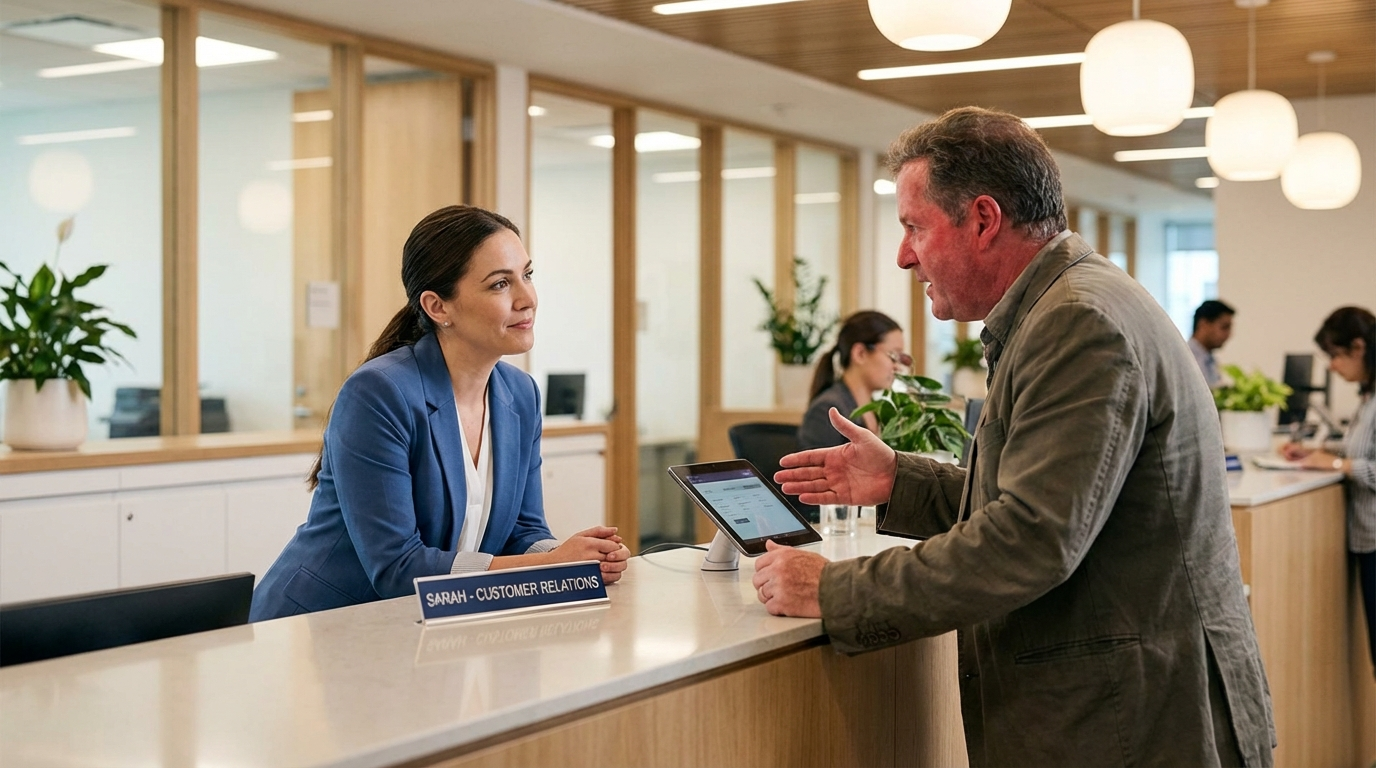
A self-assessment questionnaire? Learners consistently overrate their own ability, particularly on skills they have never had to demonstrate under pressure. A written test on stress management? It measures knowledge, not actual resilience. A reliable baseline rests on direct observation in a simulated situation. The trainer sets a scenario: "You need to negotiate a shorter deadline with a difficult client. You have three minutes. Go." The learner plays the scene. You observe: do they listen? Do they reformulate? Do they offer solutions or excuses? That observation produces data. Not impressions — data: five simple indicators, each scored from 1 to 4, give you a rigorous starting point.
For each soft skill, identify five measurable behaviours — but first, understand what is actually at stake. For interpersonal communication, assess (1) active listening, (2) clarity of message, (3) emotional control, (4) adaptation to the other person, and (5) the ability to summarise. For emotional regulation, assess (1) recognition of emotional signals, (2) self-regulation, (3) empathy, (4) motivation under pressure, and (5) resilience in the face of obstacles. That level of granularity lets an auditor see exactly what is being tracked. It also makes progression unambiguous: 2/4 before, 3/4 after, is a clear line.
After every role-play, a debrief captures progression. Not an informal chat: a protocol. For example, "When you said X to the client, were you afraid they would refuse?" The learner explains. The trainer records: recognises the underlying emotion (yes/no), names it, factors it into their thinking. A structured debrief generates two or three observations per learner per hour of training. Accumulated, they form a trajectory. An auditor will see it plainly: week one, the learner is highly defensive in conversation; week two, more open to listening; week three, asking clarifying questions. That is progression you can document.
Many trainers fear that documentation will slow the session down. It does slow things down — usefully. It forces the trainer to notice rather than assume. Here is the workable compromise: a one-page form, five lines of text per learner, one entry at the end of each day. Across a week that is five pages for twelve learners. Not superhuman. By the end you have a collective narrative: where the group stood on day one, where it stands on day five. It is accurate and it is defensible.
For the final measurement to be credible, it has to be comparable to the baseline. If you assessed assertiveness through a role-play about saying no, run that role-play again at the end of the programme. The conditions can shift slightly — a new context, a different fictional client — but the structure stays identical. That repeatability produces something an auditor can read at a glance: before and after are genuinely comparable. It shows you designed measurement as a closed loop rather than improvising it.
Observation alone is not enough: the learner also has to speak to their own progress. A post-course questionnaire asks the question directly: "Describe a moment when you applied the skill you learned. What did you notice in yourself?" The answer is not a biased self-rating but a concrete account. "I felt calmer during a difficult call, I listened before responding, and that was different from before." That statement becomes qualitative evidence. Combined with your own observations — a move from 4/10 to 7/10 — it creates a body of proof that is very hard to argue with.
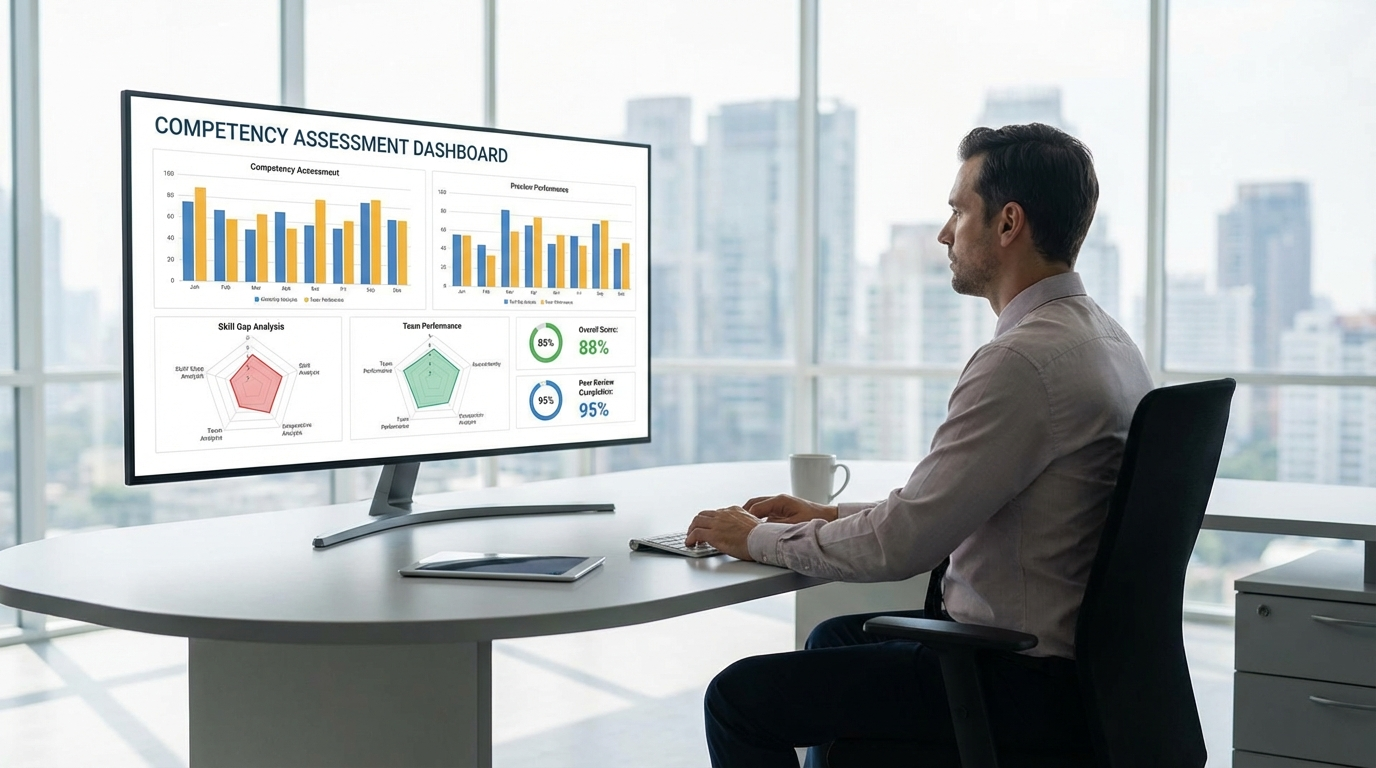
Auditors expect files they can open and read. Each one should contain the initial assessment (date, results), at least two intermediate observations (dates, context, what was seen), and the final assessment in the same format as the first. Add the learner's own post-course account. That comes to four or five pages per learner. For a cohort of twelve, you have a fifty-page file: substantial, but transparent. An auditor who pulls three files at random will see the rigour immediately, and no doubt will remain.
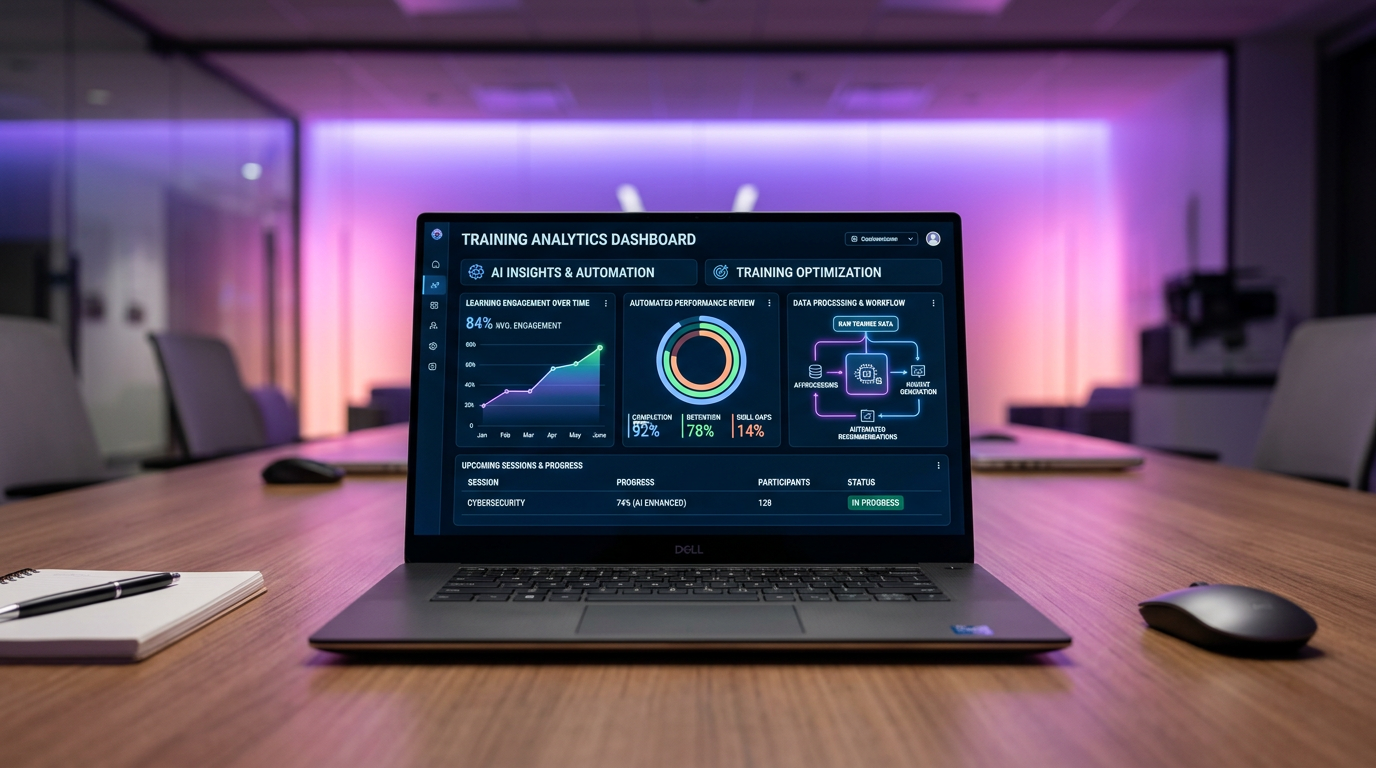
Manual documentation works for a few cohorts. Then it runs out of steam. Automating the collection of observations and results — through a post-course form, a dedicated platform, or even a simple integration — is what makes it sustainable. The trainer enters their notes once; the system structures, aggregates and archives them. After ten cohorts you have usable data: which module produces the most progression, which learner profiles improve fastest, and where the teaching needs refining. That is the essence of impact measurement: what you measure, you improve.
Proving progression for an audit does not require a pedagogical revolution. It requires a clear toolkit: an initial assessment based on a real situation, documented debriefs, a comparable final assessment, the learner's own account, and structured archiving. Those five steps form a loop no auditor can pick apart. They also demonstrate that you know precisely where each learner starts and where they finish, which turns a training course into a demonstration of learning. The tools to document that progression rigorously already exist, and they work best when they are built into your teaching process from the outset — letting the trainer concentrate on training while the evidence accumulates on its own. That is the foundation of compliance that lasts.