
Coaching and mentoring are often used interchangeably, but they are distinct practices, each suited to different objectives in developing soft skills. Understanding what separates them is essential if you want to pick the right approach for your context.
Coaching is a structured process led by a certified professional who helps the coachee reach specific goals. The coach does not supply answers — they ask powerful questions that lead the coachee to find their own solutions. The process is time-bound (typically six to twelve months, with sessions every two to three weeks) and outcome-driven.
Mentoring is a learning relationship between a mentor (an experienced professional) and a mentee. The mentor shares their experience, their networks and their advice. The relationship is more informal, usually longer, and covers a broader spectrum than coaching. A mentor passes on contextual know-how — how to navigate the organisation, how to handle a politically complex situation, how to develop presence as a leader.
One-to-one coaching works particularly well in three situations:
Developing leadership. Leadership capabilities — influence, decision-making under uncertainty, team management — are deeply personal. A coach helps a manager identify their strengths and their blind spots, experiment with new behaviours, and gradually settle into an authentic leadership posture. According to the International Coaching Federation, 80% of leaders who have been coached report improved self-confidence and 70% report better overall performance.
Career transitions. Stepping into a management role, being promoted into a strategic position, taking on a wider remit — these transitions demand that new behavioural skills be built quickly. Coaching accelerates that adjustment by providing a safe space for reflection and tailored support.
Handling complex situations. A persistent team conflict, a difficult relationship with a line manager, a recurring sticking point in negotiations — some situations call for depth of work that group training simply cannot deliver. Coaching offers that individual, confidential and personalised space.
An effective coaching programme generally follows five stages:
Stage 1 — Diagnosis and framing (session 1). Coach and coachee agree the objectives of the engagement, the skills to develop and the measures of success. A soft skills assessment tool (360-degree feedback, self-assessment, manager input) gives a factual basis for setting priorities.
Stage 2 — Exploration and awareness (sessions 2-4). The coach helps the coachee understand their behavioural patterns, their limiting beliefs and their emotional triggers. This is the most delicate phase: it demands absolute trust and an exceptional quality of listening from the coach.
Stage 3 — Experimentation (sessions 5-8). The coachee tries out new behaviours in real situations, guided by the coach. Each session opens with a debrief of what happened in the field and closes with fresh challenges to take on. This is the phase where role-play scenarios run with AI simulators become a genuinely useful complement: they give the coachee a safe space to practise between coaching sessions.
Stage 4 — Consolidation (sessions 9-10). Gains are stabilised, progress is measured, and strategies for embedding new habits are agreed. The coachee builds a self-directed development plan to sustain progress once the engagement ends.
Stage 5 — Close and review (final session). A final assessment compares results against the original objectives. A 360-degree review can be run to capture how colleagues perceive the change. The coachee leaves with a concrete action plan for what comes next.
Mentoring is particularly effective for contextual soft skills — the ones you cannot learn from a book, but that are passed on through experience. How to navigate organisational politics, how to manage stakeholder relationships, how to make decisions in ambiguity: these are acquired by observing and talking to someone who already does them well.
To work, a mentoring programme needs to respect a few principles:
Matching mentor and mentee. The pairing decides everything. The mentor should be chosen for their experience in the target skills, but also for their ability to pass knowledge on (which does not come automatically with expertise). Ideally the mentor sits outside the mentee's reporting line, so that conversation stays genuinely open.
Structuring the conversations. Even though mentoring is more informal than coaching, it benefits from a frame: a set frequency (monthly is a good rhythm), a set duration (one hour to ninety minutes), and topics prepared in advance by the mentee. Without structure, mentoring drifts and loses its effect.
Reciprocity. The best mentoring programmes recognise that the mentor learns from the mentee too — different perspectives, new digital skills, a fresh reading of the organisation. That reciprocity enriches the relationship and keeps mentors invested over the long run.
One-to-one coaching and mentoring carry a cost that often restricts them to a handful of key people. Group formats make these approaches available far more widely while retaining much of their effect.
Group coaching brings four to eight people together with a professional coach to work collectively on shared skills. Each participant gets feedback from the group as well as from the coach. It suits cohorts of managers facing similar challenges particularly well.
Peer co-development is a structured form of peer mentoring. A group of six to eight professionals meets regularly to solve each member's real problems collectively. It is one of the most effective methods for building emotional intelligence, communication and leadership at a sensible cost.
Cross-functional mentoring pairs mentors and mentees from different departments or disciplines. The benefit runs both ways: the mentee gains a perspective from outside their professional bubble, and the organisation builds connections across silos.
Coaching plus simulation is one of the most powerful configurations for soft skills development. Here is how the two fit together.
Coaching sets the priorities and identifies the skills to work on. The coach helps the coachee understand their behavioural patterns and turn them into clear development objectives.
AI simulation sessions supply the practice. Between coaching sessions, the coachee trains on scenarios the coach has selected. They rehearse the new behaviours in a safe environment, build up repetitions, and get immediate feedback.
Coaching debriefs the experience. At the next session, coach and coachee analyse the simulation runs: what worked? Which patterns keep resurfacing? What progress is visible? This reflective loop speeds up learning considerably.
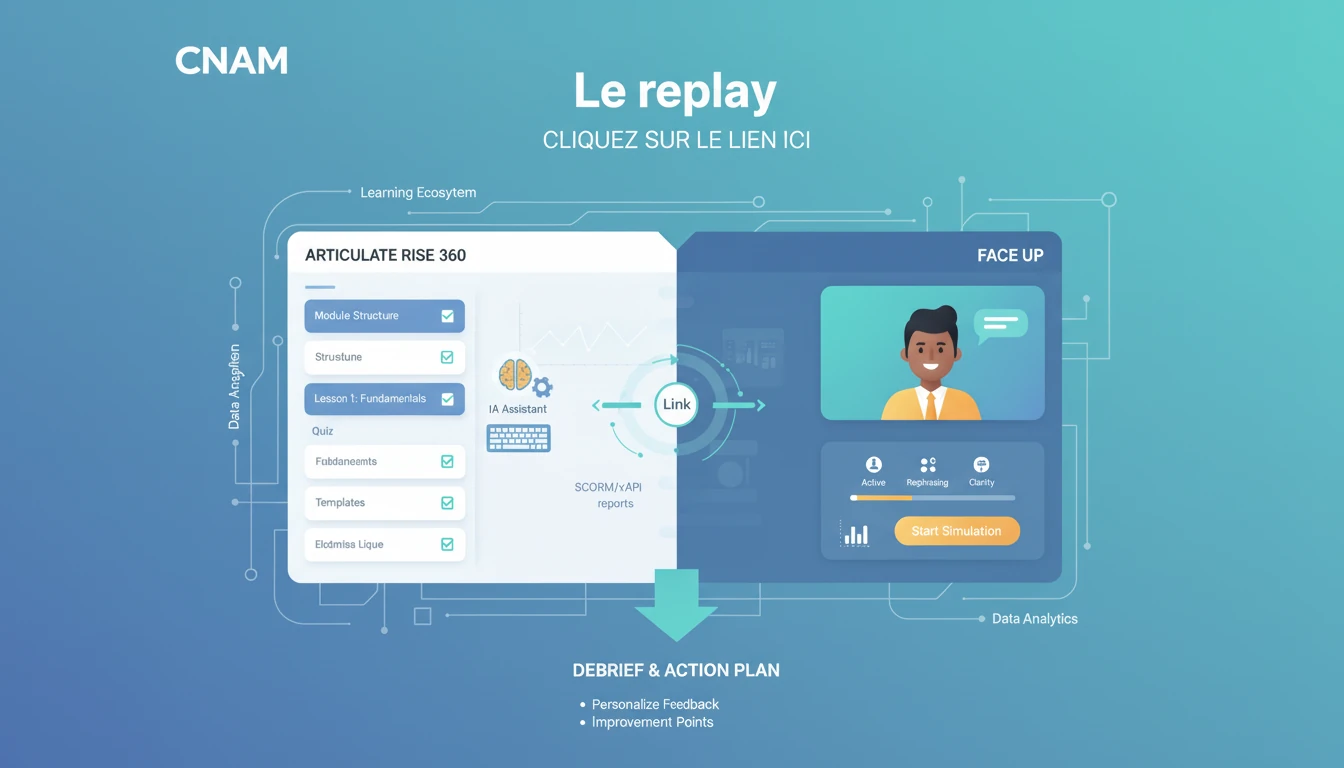
At Face Up, we designed our platform to slot into exactly this kind of one-to-one support. The trainer or coach can assign specific scenarios to each learner, follow their progress, and use session replays as debriefing material. That is the trainer-first principle: technology in the service of human support, not as a substitute for it.
A criticism regularly levelled at coaching and mentoring is how hard they are to tie to a return on investment. These are the indicators we recommend.
Personal progress indicators: before-and-after self-assessment, 360-degree feedback, achievement of the objectives set at the outset. These measure perceived skill development.
Behavioural indicators: manager observation, scores from simulated sessions where those are part of the programme, relational performance measures such as customer satisfaction and team climate. These measure transfer into real situations.
Business indicators: retention of coached employees, internal promotions, team performance measures, customer satisfaction. These connect coaching to organisational impact.
The PwC study conducted for the ICF found that organisations investing in coaching report an average return of seven times the amount invested. That figure covers a range of gains: higher productivity, lower turnover, better customer satisfaction and stronger team relationships.
Artificial intelligence is reshaping coaching and mentoring practice too.
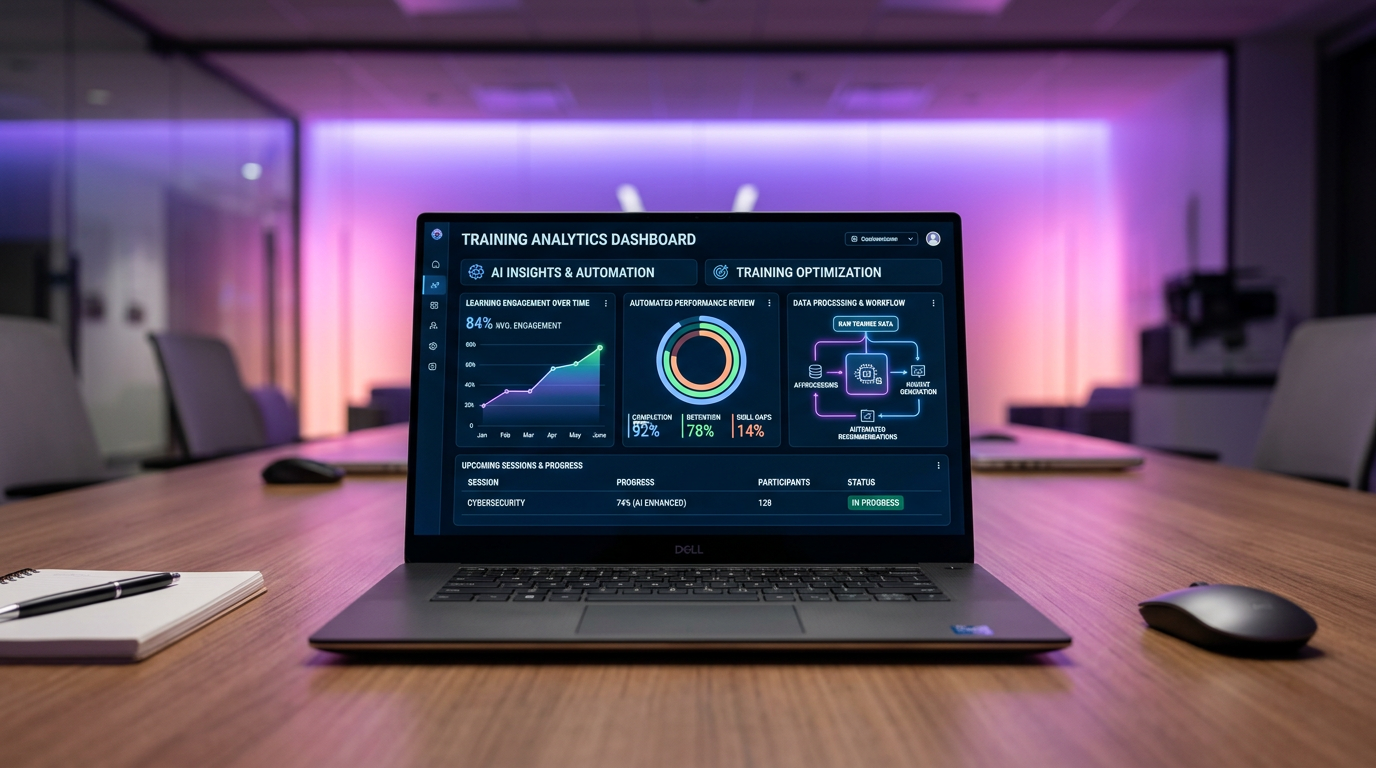
Behavioural analytics tools give the coach objective data on the coachee's interactions — simulated sessions, or recorded calls where consent has been given. The debrief then rests on evidence, not only on impressions.
Coaching chatbots provide a first level of support between sessions. They do not replace the human coach, but they deliver prompts, reflection exercises and day-to-day encouragement.
Algorithmic matching improves mentor-mentee pairing by cross-referencing profiles, target skills and availability. Large-scale mentoring programmes become markedly more efficient as a result.
The future of soft skills coaching and mentoring is taking shape around a hybrid model: human support for depth, nuance and trust; AI for volume of practice, objective measurement and continuity between sessions. It is a model in which the value a coach or mentor adds is amplified by technology rather than replaced by it.