Evgeny Niva, Mame-Mor Fall
Why conventional approaches no longer cut it
Reading a PDF does not teach anyone to handle an objection. Watching a manager is no guarantee you will run a difficult conversation well. Rehearsing alone in front of a mirror is awkward — and without feedback, it barely moves the needle.
The result: plenty of "I know" and not enough "I can do". Customer relations skills are built in situ, through precise feedback and repetition. That is exactly what AI simulations make possible.
What AI simulations change in practice:
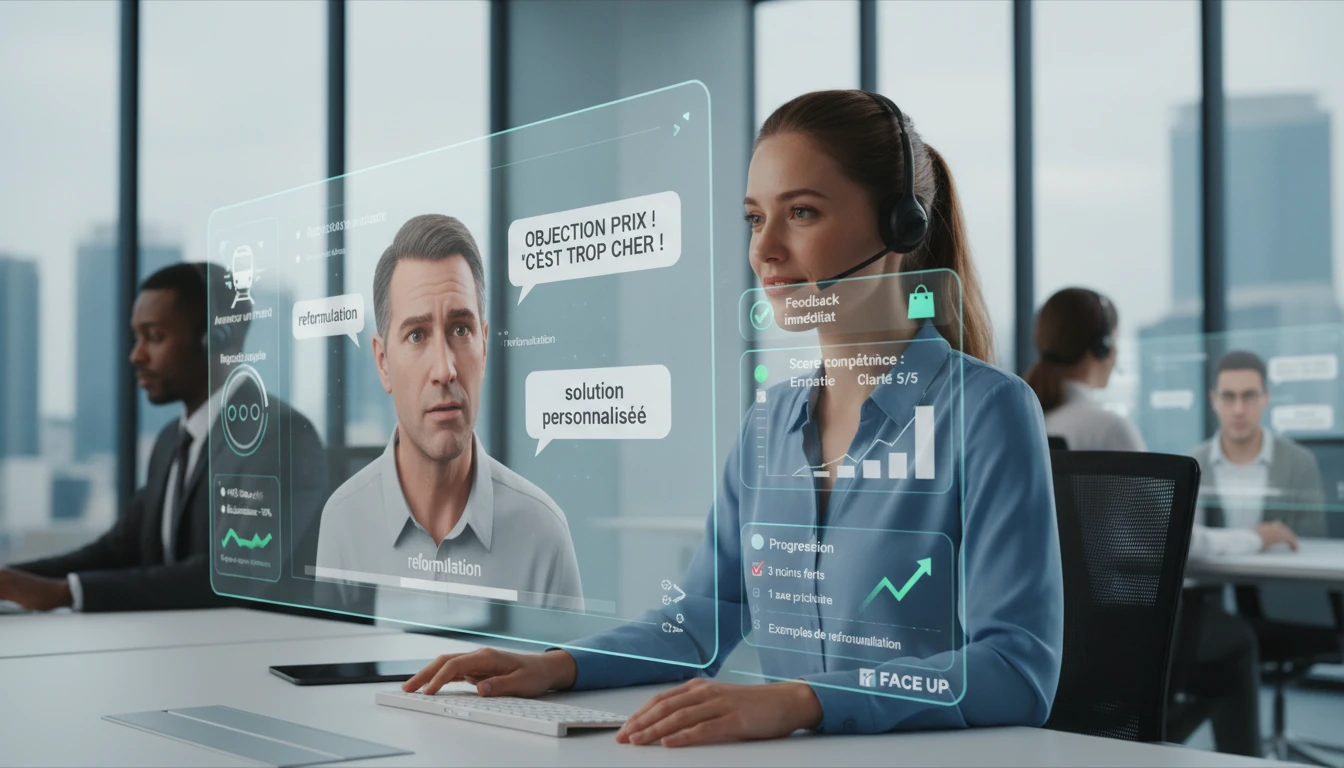
- Realistic practice with no risk. The learner talks to a credible AI avatar (tone, emotion, pace). The scene reacts like a real customer, with objections and variations.
- Immediate, actionable feedback. At the end, a structured debrief shows what worked, what got stuck, and what to say differently. The learner leaves with concrete examples of how to rephrase.
- Fast repetition. The scene can be replayed as often as needed, with difficulty ramping up, until the right reflexes become automatic.
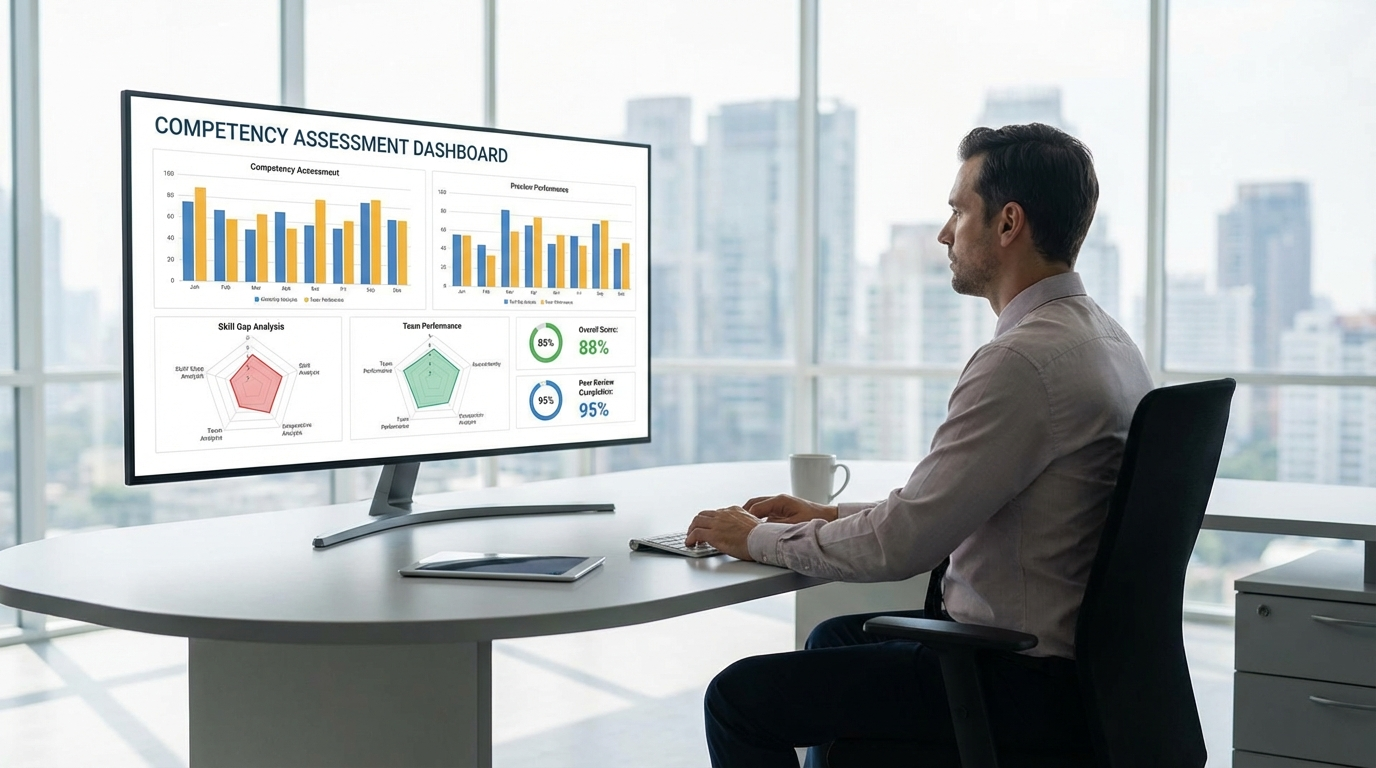
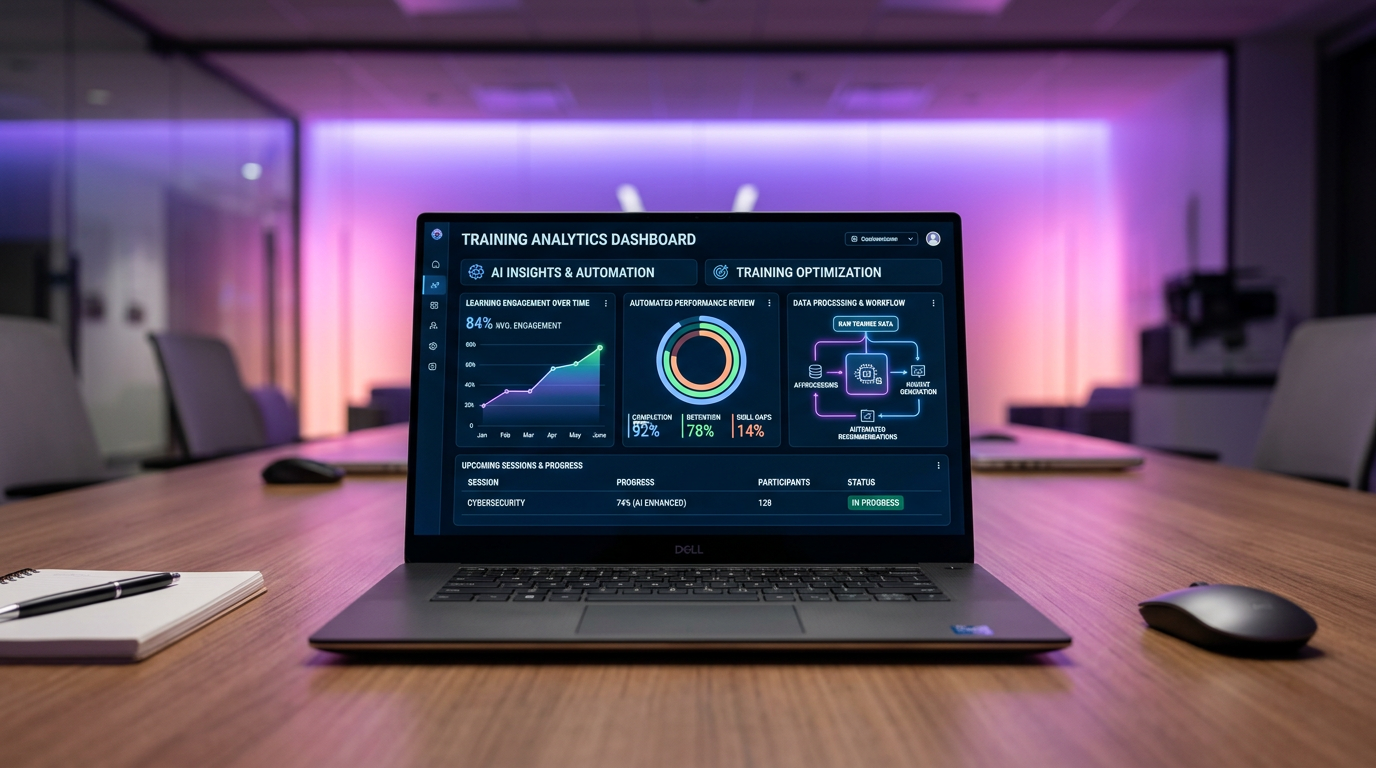
- Measurable impact. You track scores by competency and the number of attempts, and you can connect that data to frontline indicators such as NPS, complaints or QA scores.
- Straightforward for IT. No VR, no special hardware: a browser and a headset, and you are away.
Use cases where the impact is immediate
- Transport and mobility: announcing a delay, avoiding escalation, giving directions in several languages, restating a rule without straining the relationship.
- Banking and insurance: needs discovery, IDD-compliant clarity, handling a sensitive claim, price objections.
- Retail: welcoming customers at peak times, defusing tension, explaining a loyalty programme in 30 seconds.
- Support and contact centres: full qualification, reformulation, clean call closure, better first contact resolution (FCR).
Every scene is aligned with your procedures and your standards. Learners are not "playing a game": they are practising situations that mirror their day-to-day work.
How it works with Face Up (in six steps)
- Framing the competencies and criteria. We start from your own framework (empathy, clarity, compliance, structure, closing) and turn those expectations into observable criteria, scored simply on a 1 to 5 scale.
- Scenario writing from your own material. Scripts, procedures, e-learning modules and real cases become scenes: context, objective, persona, constraints, and the common mistakes to avoid.
- Immersion with AI avatars. Voice interaction, face to face or over the phone. The avatar respects your operating rules, adapts its tone and pushes back with realistic objections.
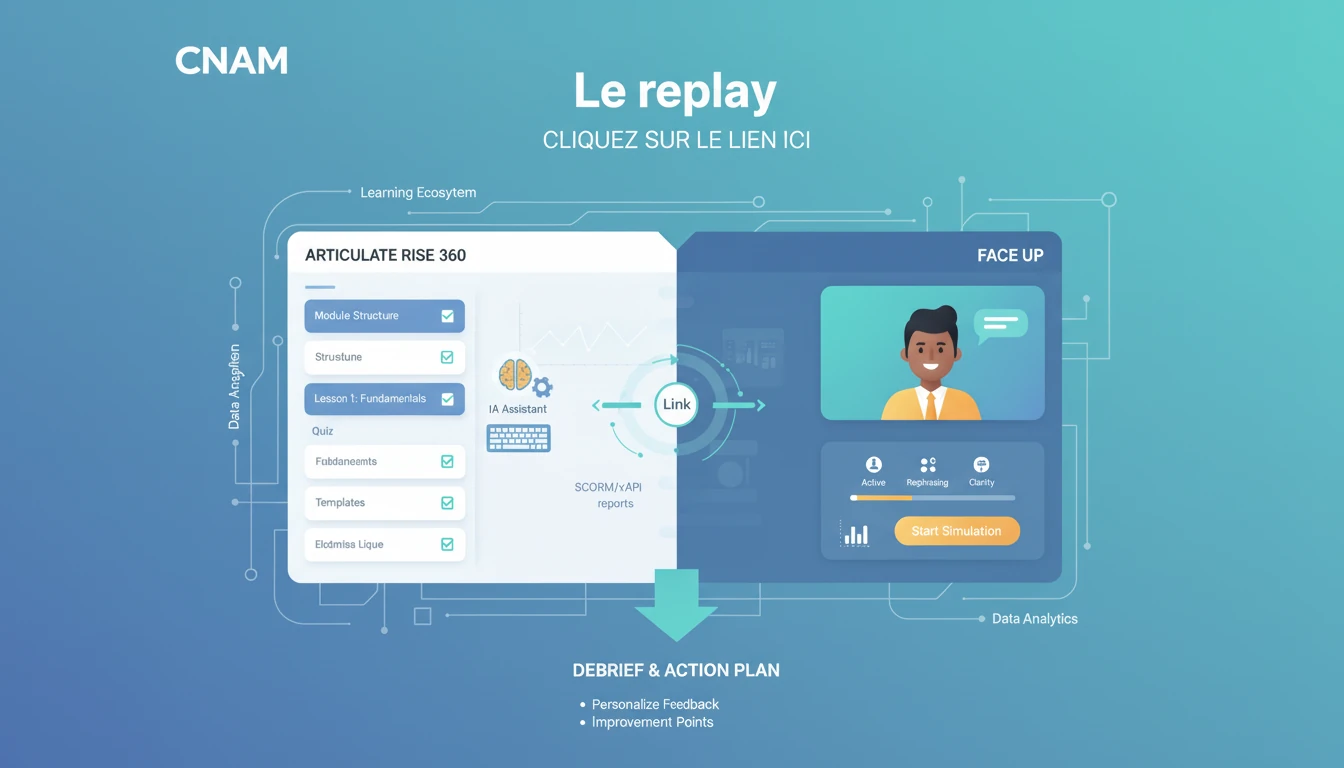
- An immediate, supportive debrief. A clear summary with three strengths, one priority area, examples of how to rephrase, and a short action checklist before replaying.
- Guided iteration. The learner replays with a variation (less time, a more agitated customer, incomplete information) to embed the reflex.
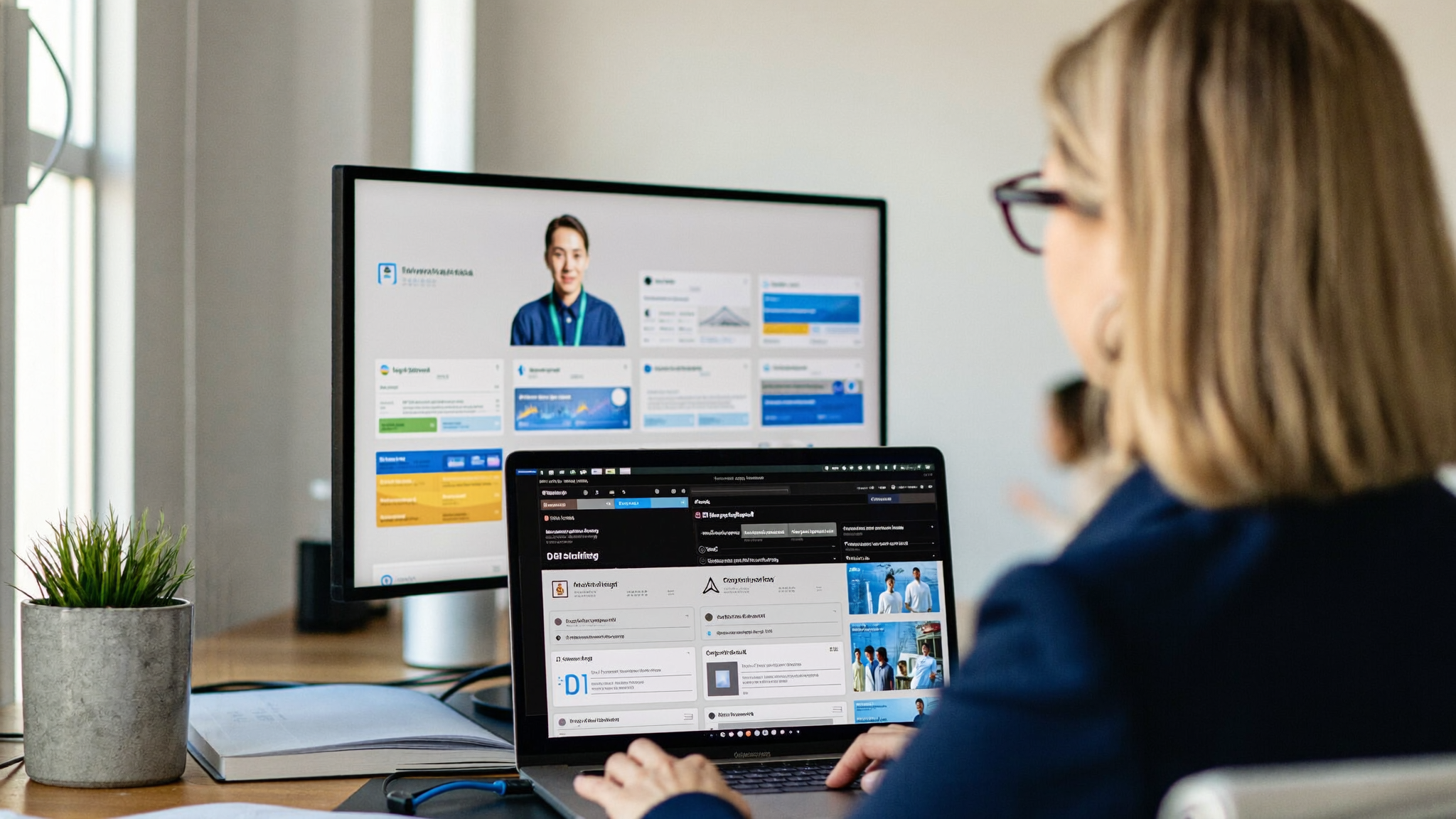
- Tracking and integration. SCORM/xAPI, SSO, CSV exports and dashboards allow monitoring by team or by site, before/after comparisons, and correlation with your business indicators (NPS, complaints and so on).
Deploying at scale, without VR, in 90 days:
Weeks 1-2: map the critical moments. We pick three to five moments in your customer journey where everything is decided, then define the competencies and assessment criteria.
Weeks 3-4: prototype 6 to 12 scenes. We write the main scenes, calibrate the debrief with your trainers and managers, and test the LMS/SSO integration.
Weeks 5-8: controlled pilot. Rollout to a target population (at least 100 learners). Before/after measures: competency scores, handling time, NPS, complaints — whichever matter most to you.
Weeks 9-12: industrialisation. Persona variations, management routines, dashboards, and scale-up site by site or team by team.
How impact is measured
Through leading indicators of learning:
- number of attempts,
- adherence to the criteria (empathy, clarity, structure, compliance), and
- the "resolved on the first attempt" rate in simulation.
And by measuring impact on the ground:
- movement in NPS/CES,
- a drop in complaints,
- better compliance audit results,
- improved FCR and,
- depending on the context, an effect on AHT.
We establish a baseline over 10 to 14 days before the programme starts, run a pilot of four to eight weeks, then combine the hard numbers with qualitative feedback from managers.
What Face Up adds
We modernise your existing material (videos, quizzes, AI simulations), integrate it with your LMS, then support the rollout in practical terms so that it works on the ground, not just on paper. Our difference also lies in how realistic the situations are and how supportive the coaching is. The personas are credible, tone varies with the customer profile, and the scenarios are drawn directly from your own real cases and operating constraints. The debrief is not generic: it is calibrated with your trainers to reflect your culture, your standards and your assessment criteria, so learners get feedback that is clear and actionable. Finally, Face Up fits cleanly into your environment and meets your security requirements. EU hosting, encryption, granular access control and logging: everything is built for enterprise use. Connection to your tools is via SCORM/xAPI and SSO, and the experience stays simple for teams: no VR, no logistics, just the web, so people can practise anywhere.
FAQ
- Does this replace trainers? No. Simulations multiply practice between sessions and provide a consistent debrief, which frees up coaching time.
- How much effort is required from your teams? We start from the material you already have. Your teams sign off the scenes and the debrief, and we handle the rest.
- Is it compatible with our LMS? Yes: SCORM/xAPI, SSO (SAML/OAuth) and centralised reporting.
- What if we want to start small? We run a pilot on a limited scope, measure the results, then extend where the impact is proven.
Getting started is simple: identify three key moments in your customer relationship. Choose five competencies to strengthen. Run a pilot of six to eight scenes and measure the before and after.
Then roll out to the teams and sites where the gains are clearest.
Want to know more? Write to us at contact@face-up.fr