
Training providers are facing rising demand for behavioural skills. LinkedIn research finds that 92% of recruiters rate soft skills as being as important as technical ones. For a provider, the question is no longer whether to offer soft skills training, but how to structure an offer that is coherent, distinctive and profitable.
L&D functions are investing heavily in interpersonal skills. The World Economic Forum ranks analytical thinking, creativity and leadership among the most sought-after skills through to 2027. For providers, that means an expanding market with better margins than standardised technical courses.
Teaching soft skills demands a specific pedagogy. Unlike software or compliance training, behavioural skills cannot be taught from slides. They develop through practice, debriefing and repetition. It is precisely that level of demand that justifies premium positioning.
Not every soft skill sells equally well. Focus your catalogue on high-demand areas: interpersonal communication, conflict management, public speaking, leadership and emotional intelligence. These are the themes that generate the highest volume of enquiries from employers.
A profitable catalogue is organised into progressive journeys. For example: a two-hour discovery module, a two-day foundation programme, then an advanced track with individual coaching. This architecture builds client loyalty and raises the value per learner. Employers would rather work with a partner who can support them over time than with a one-off supplier.
A manager does not need what a salesperson or a front-line agent needs. Offer adapted versions of each programme by audience: managers, sales teams, field teams, new joiners. That segmentation demonstrates sector expertise and justifies differentiated pricing.
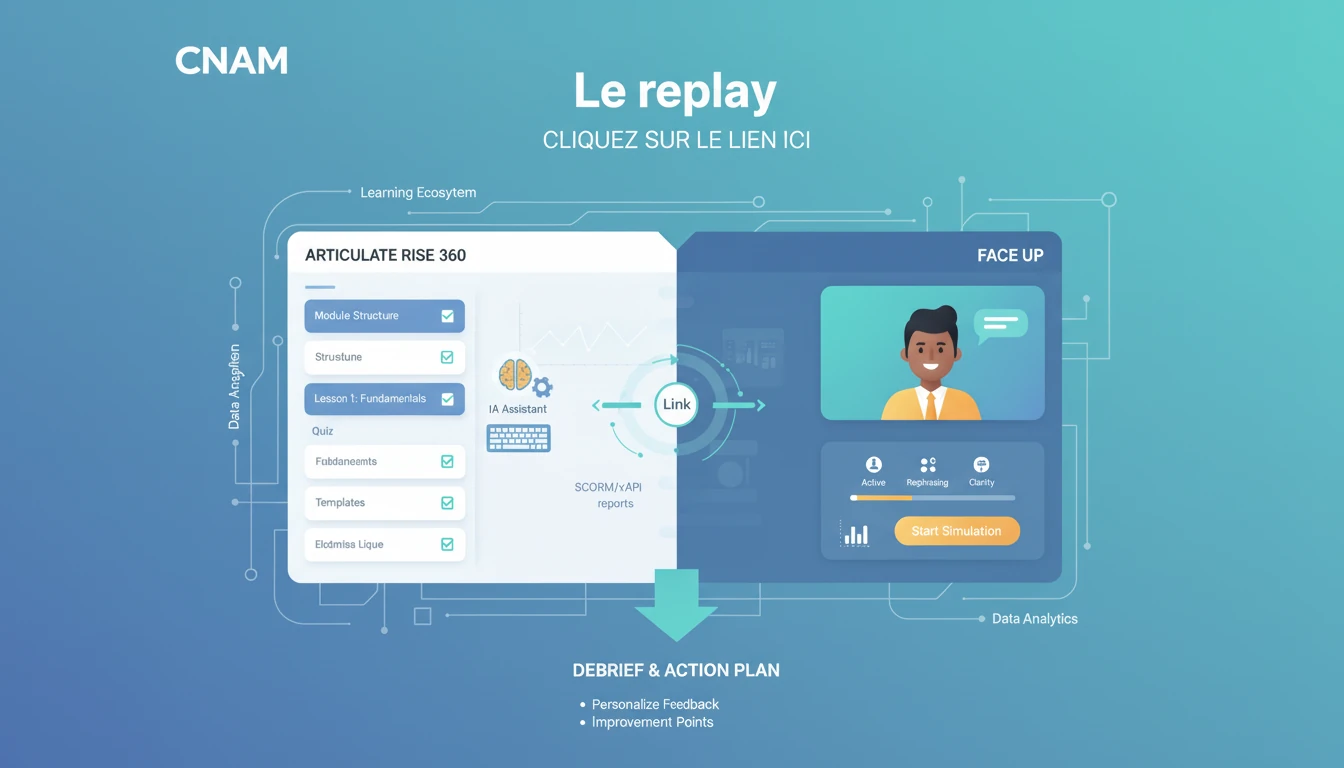
The providers standing out in 2026 are the ones building innovative tools into their teaching. Conversational learning platforms make it possible to run realistic simulations with AI avatars, without tying up a trainer for every practice session. Face Up, for instance, lets trainers design tailored scenarios that learners practise on their own, with a multimodal debrief analysing both substance and delivery.
The main barrier for buyers of soft skills training remains the difficulty of measuring results. Build concrete progression indicators into the catalogue from the design stage: completion rates, simulation scores, observed changes in behaviour. Providers that can evidence a real return on investment convert far better than those selling promises.
Build your catalogue as a set of building blocks. Each two- to four-hour module can be combined with others to create tailored journeys. This lets you respond to bespoke tenders while reusing content you have already built. A module on active listening works just as well inside a management track as in a customer relations programme.
Offer three formats as standard: fully in-person, blended learning and fully digital. Blended — group sessions in the room combined with individual practice on a simulator — produces the best learning outcomes and the best margins for the provider. It reduces trainer time while increasing learner practice time.
The classic trainer-day rate undervalues soft skills work. Shift to a value logic: sell an outcome — lower attrition, a better NPS, faster onboarding — rather than a number of days. Organisations investing in soft skills accept larger budgets when the return is documented.
A journey of 15 simulation sessions per learner, spread over three months, with progression analysis and debriefing, typically sells for €500 to €1,500 per learner depending on the sector. That is significantly more than a standard training day, but the client sees the added value of intensive practice and measured results.
Quality certification such as Qualiopi demands rigorous traceability. For soft skills programmes, that means documenting learning objectives, assessment criteria and progression indicators. Conversational learning tools make compliance easier by generating transcripts, performance scores and individual progress reports automatically.
Building a profitable soft skills catalogue takes a structured approach: identify the skills in demand, segment by audience, build in technology and prove the results. The providers that make this transition position themselves as strategic partners rather than suppliers. To sharpen your commercial strategy, see how to sell soft skills training to HR leaders.