
The corporate soft skills training market is worth billions, and hundreds of providers offer programmes with appealing titles. Quality, however, varies enormously from one to the next. How do you tell them apart? What objective criteria should you use to select a programme that will genuinely meet your needs? This guide sets out a complete method for making the right choice.
Investing in soft skills training is a significant financial and organisational commitment. A poor choice does not simply waste budget: it leaves participants disappointed, managers sceptical, and, in time, creates a lasting drag on any behavioural development initiative.
Learning and development leaders report three recurring mistakes. The first: choosing a programme on the strength of its marketing title rather than its actual pedagogical content. The second: overlooking the fit between the delivery format and the profile of the learners. The third: ignoring the question of assessment and of transfer into the job.
A well-chosen programme, by contrast, produces measurable results. Soft skills training that is properly selected and deployed generates a meaningful return on investment, with performance improvements visible within the first few weeks.
This is the most discriminating criterion. A good soft skills programme rests on practice, not theory. Be wary of courses that devote more than 30% of their time to lecture-style input. Behavioural skills are acquired through experimentation, repetition and feedback — not by reading slides.
Check the specifics. What proportion of the time goes to simulations and role-play? Do participants practise individually, or only observe? Is there a structured feedback process after each exercise? Are the scenarios tailored to the participants' own working context?
Training people in soft skills demands a double competence: subject expertise and mastery of facilitation. An excellent negotiator does not automatically make a good negotiation trainer. Ask for facilitator profiles, their hands-on experience in the field being taught, their qualifications in learning design and, ideally, references you can verify.
The best programmes use facilitators who combine substantial operational experience — five years or more in the field — with a recognised train-the-trainer qualification. Some providers also field specialists in coaching, which strengthens the individual support on offer.
A generic communication course produces generic results. The most effective programmes adapt their content, their cases and their simulations to the reality participants face. A B2B salesperson does not encounter the same interpersonal challenges as a customer service adviser or a line manager.
Assess how far the provider will tailor the work. Do they run a diagnostic first? Are the cases built jointly with your teams? Do the scenarios reflect the situations your people actually meet? This contextualisation is often what separates an interesting course from a transformative one.
How does the programme measure participants' progress? Beyond the standard happy-sheet at the end of the day, the best programmes include before-and-after assessment, assessed simulations, indicators of transfer into the job, and follow-up over time. Without a robust assessment framework, you cannot justify the investment or identify where to improve.
The format has to fit your operational constraints, not the other way round. Look at what is on offer: in person, remote or blended? Intensive sessions or spread over time? Is on-the-job training possible? Is it accessible on mobile for frontline teams?
The current direction of travel is towards hybrid formats that combine asynchronous digital modules for knowledge input with synchronous sessions, in person or remote, for practice. This approach reduces time spent in training while maximising time spent practising.
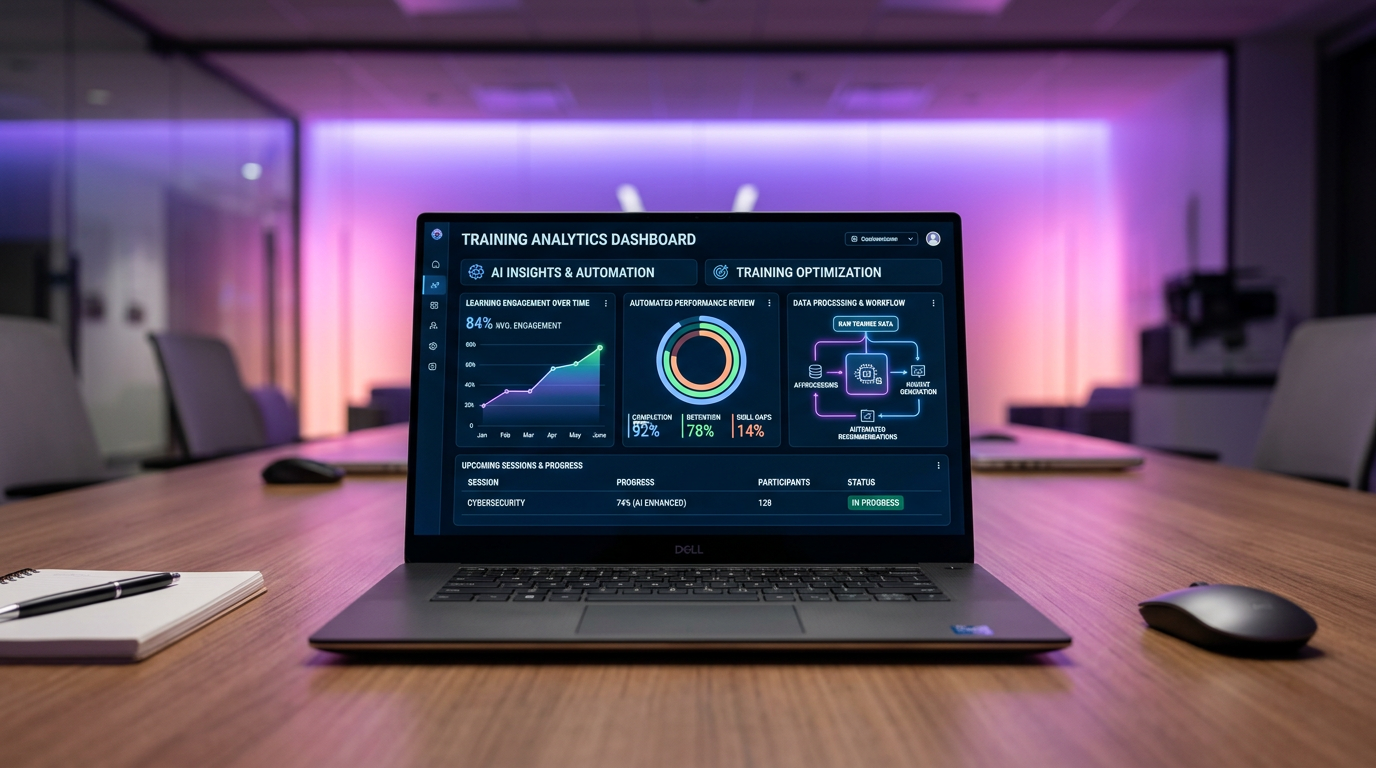
The most innovative programmes integrate technology that enriches the learning experience: an LMS for tracking, AI conversational simulation, video feedback tools, progress analytics. Check compatibility with your existing infrastructure and how easily the tooling can be integrated.
Most markets have a quality accreditation that providers must hold to access public or pooled training budgets, and some sectors add their own labels or international certifications. Treat these as a useful filter rather than a verdict: accreditation guarantees that a quality process is followed, not that the teaching is excellent.
Price on its own means nothing. A cheap programme that produces no measurable result costs infinitely more than one at three times the price that durably changes how people work. Assess the total cost: the fee, the logistics, the time your people spend away from the job — and set it against the performance return you expect.
The traditional format remains relevant for soft skills that depend on strong physical interaction: public speaking, non-verbal communication, face-to-face conflict management. The advantages: full immersion, group dynamics, real-time feedback. The limits: high logistical costs, participant availability, and the difficulty of deploying at scale.
Live sessions over video with a facilitator offer a decent compromise between interaction and flexibility. They suit geographically dispersed teams and cut travel costs. One caution: digital fatigue and environmental distractions limit engagement in long sessions. Keep slots to two hours at most.
Online modules taken at the learner's own pace work well for knowledge input — theory, models, good practice — but hit their limits quickly when it comes to practising interpersonal skills. They are an excellent complement, rarely a standalone answer for soft skills.
The arrival of AI conversational simulation marks a break with how soft skills have been taught. These tools let learners practise difficult conversations with realistic AI characters, as many times as they need, with detailed personalised feedback. The major advantage: each learner trains at their own pace, without the pressure of being watched by peers, and receives an objective analysis of their performance.
Combining several modalities — e-learning for theory, AI simulation for individual practice, in-person sessions for group work, coaching for personalised support — is currently the most complete approach. The best training methods for soft skills follow this multimodal logic.
The temptation to move entirely to digital solutions, cheaper and easier to deploy, is strong. But soft skills carry a relational dimension that cannot be fully reproduced online. The goal is the right balance between digital and human, using technology to amplify practice rather than to replace interaction.
A two-day course, however excellent, will not embed new behavioural skills for good. Learning science is consistent that spaced repetition and regular practice are essential to consolidation. Favour programmes that build in follow-up and reinforcement over time.
Catalogue courses have their place for general awareness. But for deep soft skills development, tailoring is indispensable. A programme that does not adapt to your sector, your roles and your specific challenges will stay superficial.
Be sceptical of providers who promise spectacular transformation in record time. Developing behavioural skills is a gradual process that takes time, practice and support. A serious provider will present realistic outcomes, backed by data and client cases you can verify.
Before you open a single catalogue, clarify your objectives. Which specific skills do you want to develop? For which populations? In what operational context? Against which success indicators? This framing step is fundamental — it determines whether your selection is relevant at all. Involve line managers in this phase: they know what the field actually needs.
Using your criteria, build a shortlist. Possible sources: peer recommendations, sector references, directories of accredited providers, industry events. Do not limit yourself to the big names: specialist and innovative providers often bring sharper, more tailored approaches.
Do not settle for a brochure. Ask to sit in on a pilot session, to test the digital tools, to meet the facilitators. A provider confident in the quality of its programme will happily show you what it actually does. This is the best way to judge the teaching beyond the marketing.
Speak to at least two recent clients, ideally in a sector close to yours. Ask precise questions: were the promised results achieved? Was the provider responsive and flexible? Did participants genuinely change how they work afterwards? Verified references are worth more than any accreditation.
For a programme intended for large-scale deployment, always start with a pilot. Train a first test group, measure the results, gather feedback and adjust before generalising. This iterative approach limits risk and lets you optimise the programme before full rollout.
Technology is reshaping what the soft skills training market offers. Solutions built on artificial intelligence now allow personalisation at individual level, real-time feedback and fine-grained measurement of progress. Those innovations change the selection criteria: a provider's technological capability has become a major differentiator.
For organisations training large numbers of people — sales forces, front-of-house teams, branch networks — technological scalability is central. An excellent programme that does not scale will not answer the needs of a national rollout. Conversely, a highly scalable solution that is pedagogically thin will not produce results.
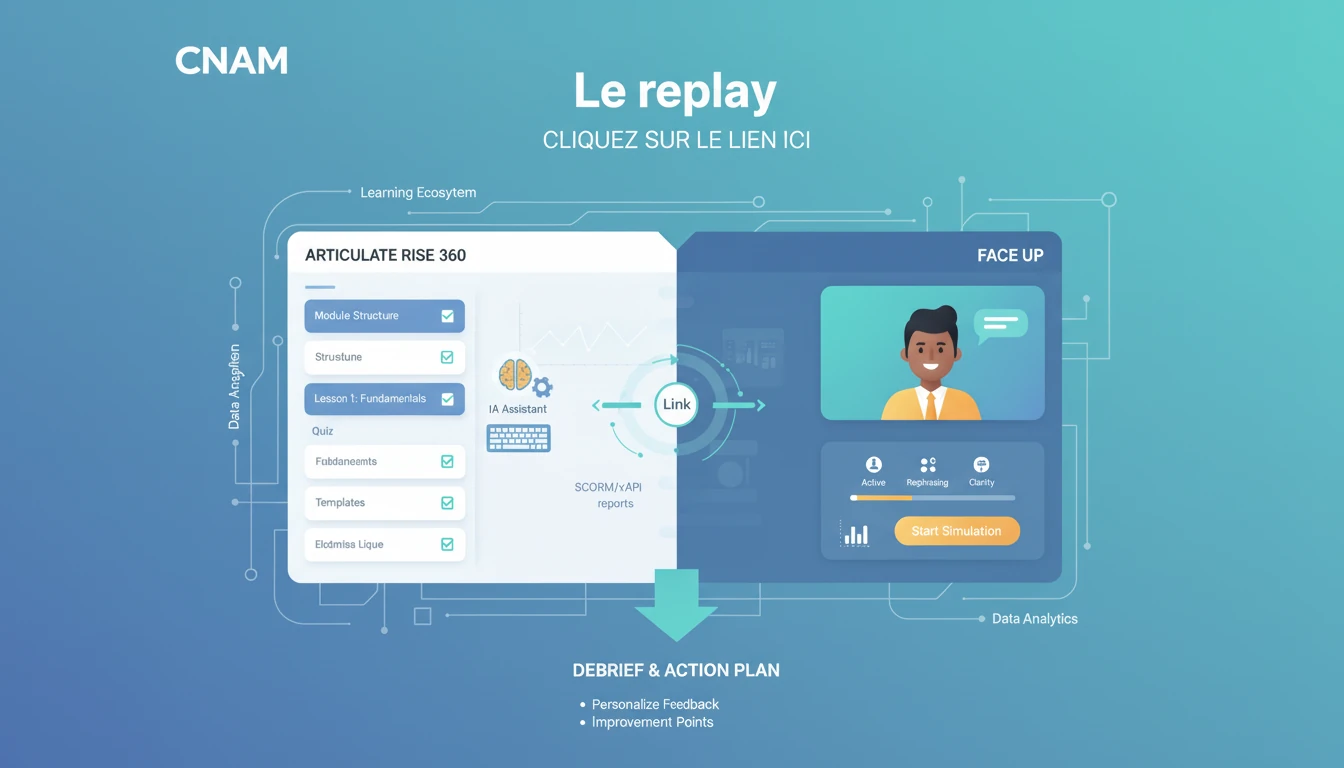
The task is to find the provider that combines pedagogical excellence with technological maturity. Providers working seriously on AI conversational learning, Face Up among them, illustrate that convergence: technology in the service of teaching, not the other way round.
Choosing a soft skills training programme is a strategic act that deserves a rigorous method. The eight criteria set out in this guide give you an objective framework for evaluating and comparing what the market offers. The essentials: put practice ahead of theory, insist on tailoring, verify the evidence of results, and do not overlook the technological dimension.
The training market is moving fast. The trends for 2026 confirm the rise of hybrid approaches combining human expertise with artificial intelligence. By choosing a programme that reflects those developments, you prepare your teams for the interpersonal challenges of today and of the years ahead.