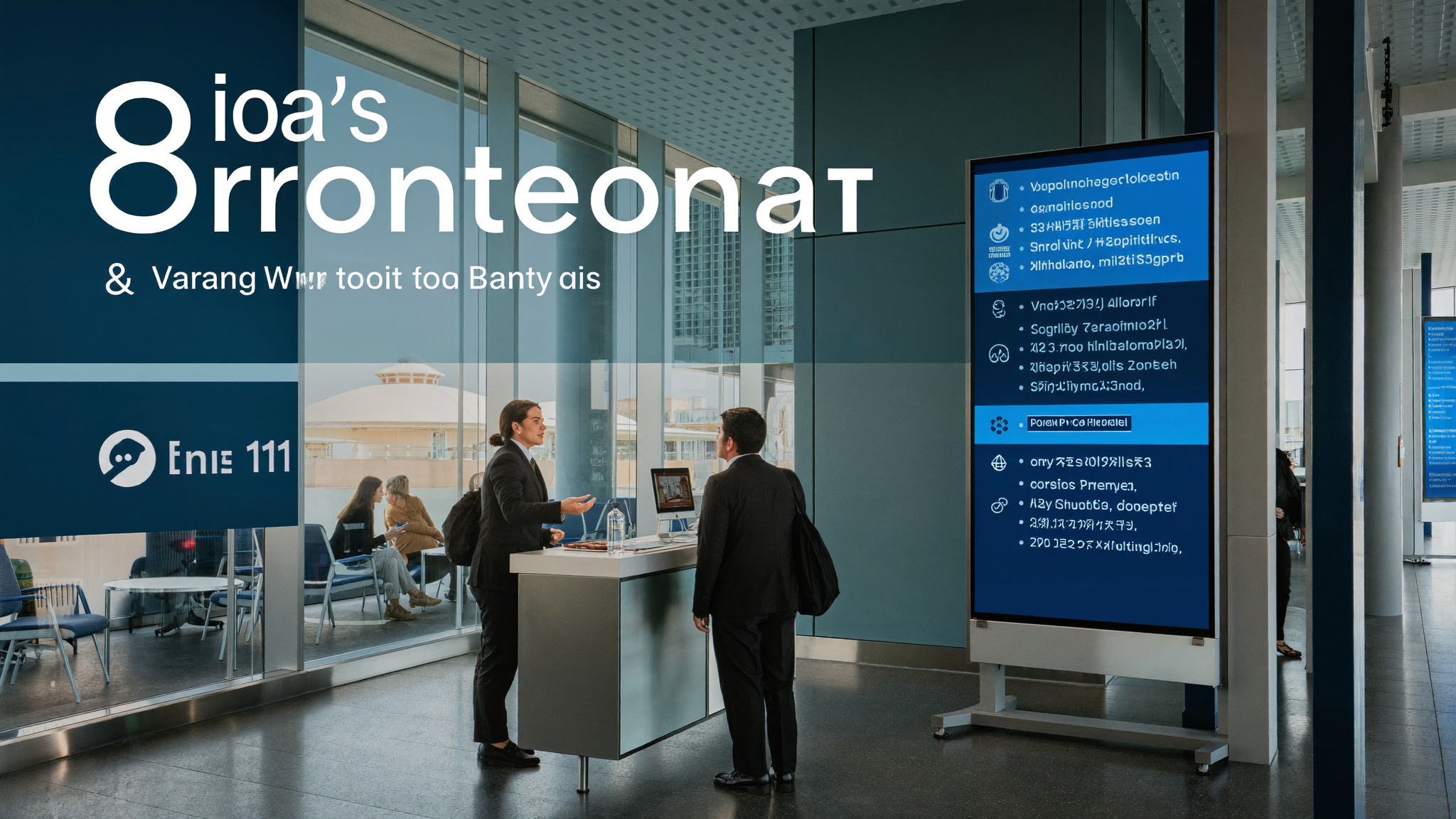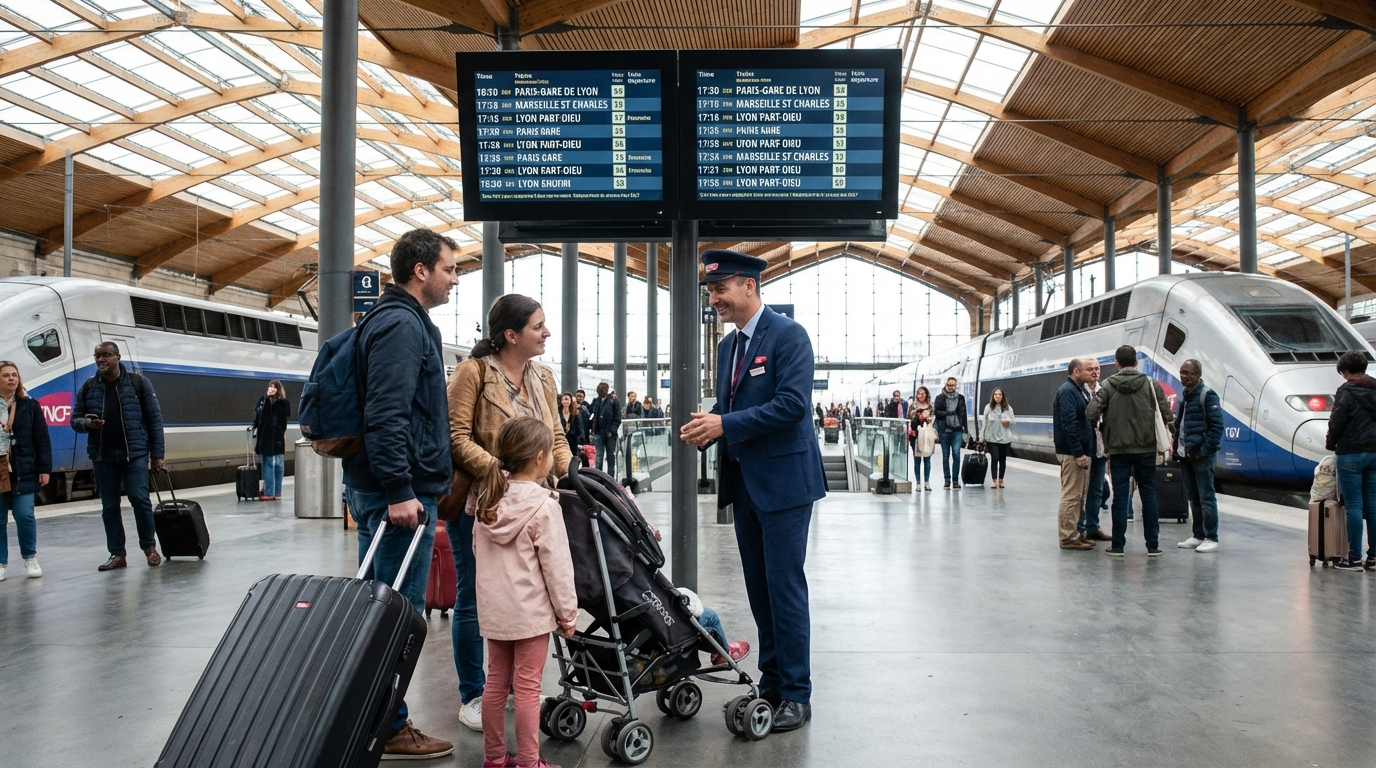

In rail, the passenger relationship is a paradox. Customer information and station staff are on the front line at the most critical moments: delays, cancellations, strikes, exceptional crowding. Precisely when passengers are at their most tense, frustrated and sometimes aggressive.
It was in that context that a European rail operator decided to rethink its customer relationship training strategy from the ground up. The aim: move from a top-down model (lectures plus quizzes) to a programme built around practice in realistic conditions.
The stakes were high. With more than 500 staff spread across 120 stations, classroom training had hit its ceiling: heavy logistics costs, no way to train everyone at the same pace, and above all a persistent gap between what agents knew and what they actually did in front of passengers.
The initial audit revealed a paradox familiar to anyone in corporate training. Staff knew the procedures perfectly. They could recite the steps for handling a complaint. But faced with a passenger furious about a 45-minute delay, the reflexes were not there.
Three recurring problems emerged:
Emotional avoidance. Confronted with an aggressive passenger, most agents fell back on a defensive posture: technical answers, redirection to another desk, or silence. Active listening and empathy — taught in training — vanished under pressure.
Standardised language. Agents used corporate vocabulary disconnected from the passenger's emotional reality. "We apologise for the inconvenience" calms nobody who has just missed an important connection. Verbal and non-verbal communication needed serious work.
Uncontrolled escalation. Without proven de-escalation techniques, tense interactions boiled over far too often. Reported incidents of abuse towards staff had risen 18% in two years — a warning sign about the ability of agents to handle difficult customers.
The operator chose to deploy a training programme based on conversational learning. The principle: have agents practise realistic scenarios with AI avatars that reproduce how passengers actually behave.
The learning team worked with front-line managers to identify the 12 most frequent and most consequential situations. Among them:
The passenger who has missed a connection and demands immediate compensation. The group of lost tourists who do not speak the local language. The family with young children caught by a cancelled train. The regular commuter who knows "his rights" and threatens to call the press.
Each scenario was built with proper role-play mechanics: a precise context, a passenger persona with a personality and a backstory, objectives for the agent, and assessment criteria aligned with the competency framework.
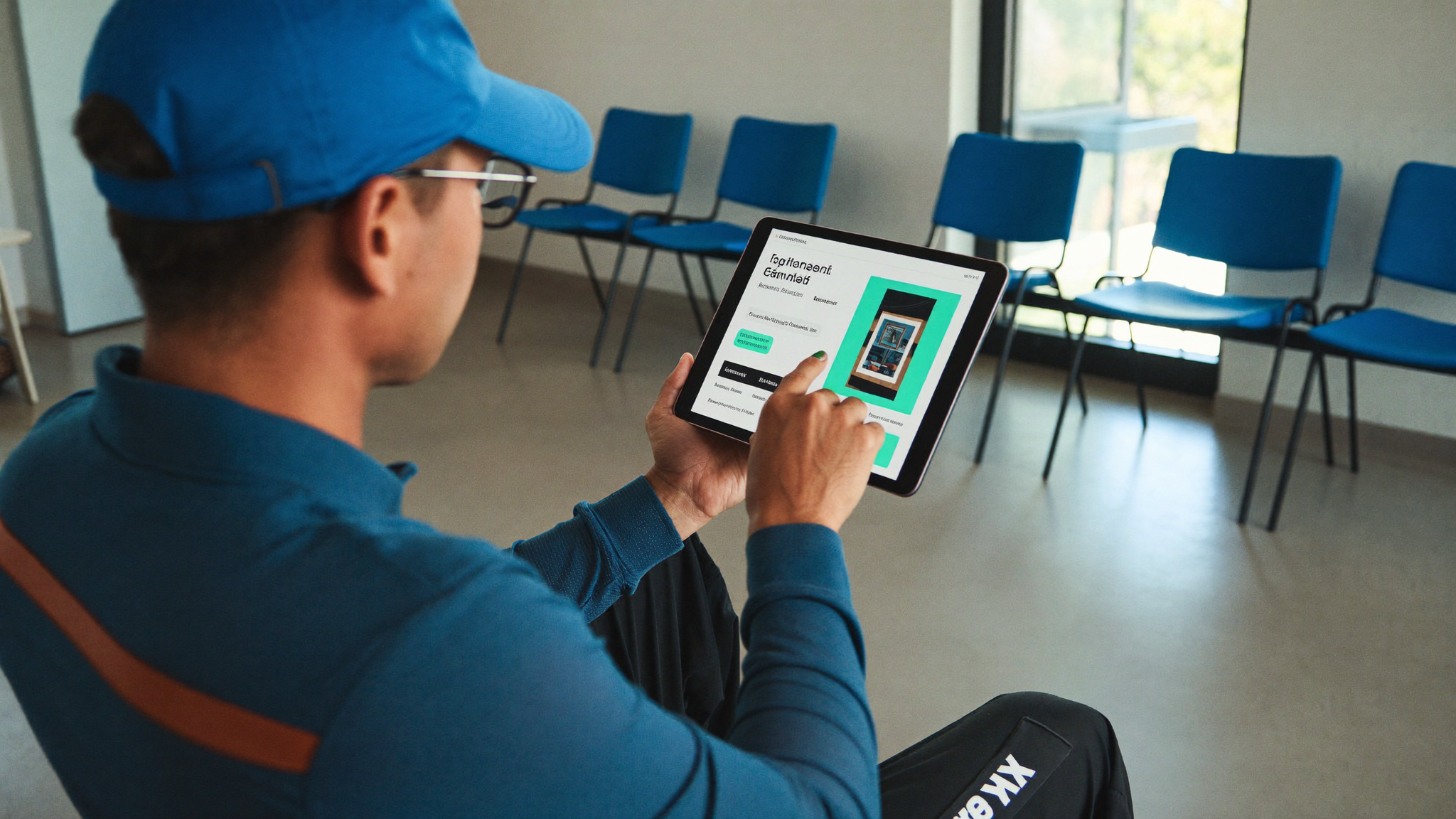
The pilot targeted two high-traffic stations. Each agent had 15 sessions of five minutes, spread over six weeks, accessible from a tablet in the break room or from a personal smartphone.
The short format was deliberate. Rather than full training days, a microlearning approach allowed regular practice without disrupting operational rosters.
Pilot results were measured on three axes: passenger satisfaction (post-interaction surveys), agent confidence (self-assessment) and interaction quality (mystery shopping).
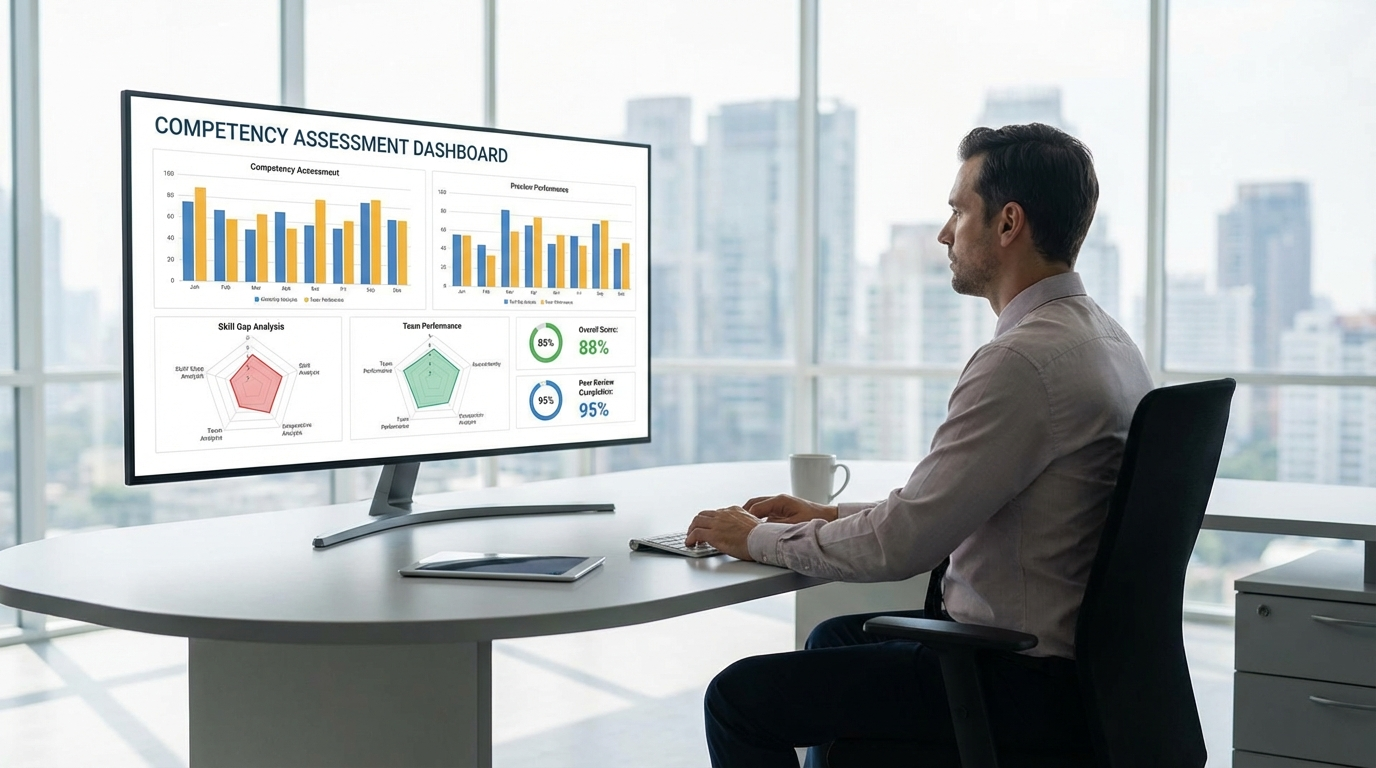
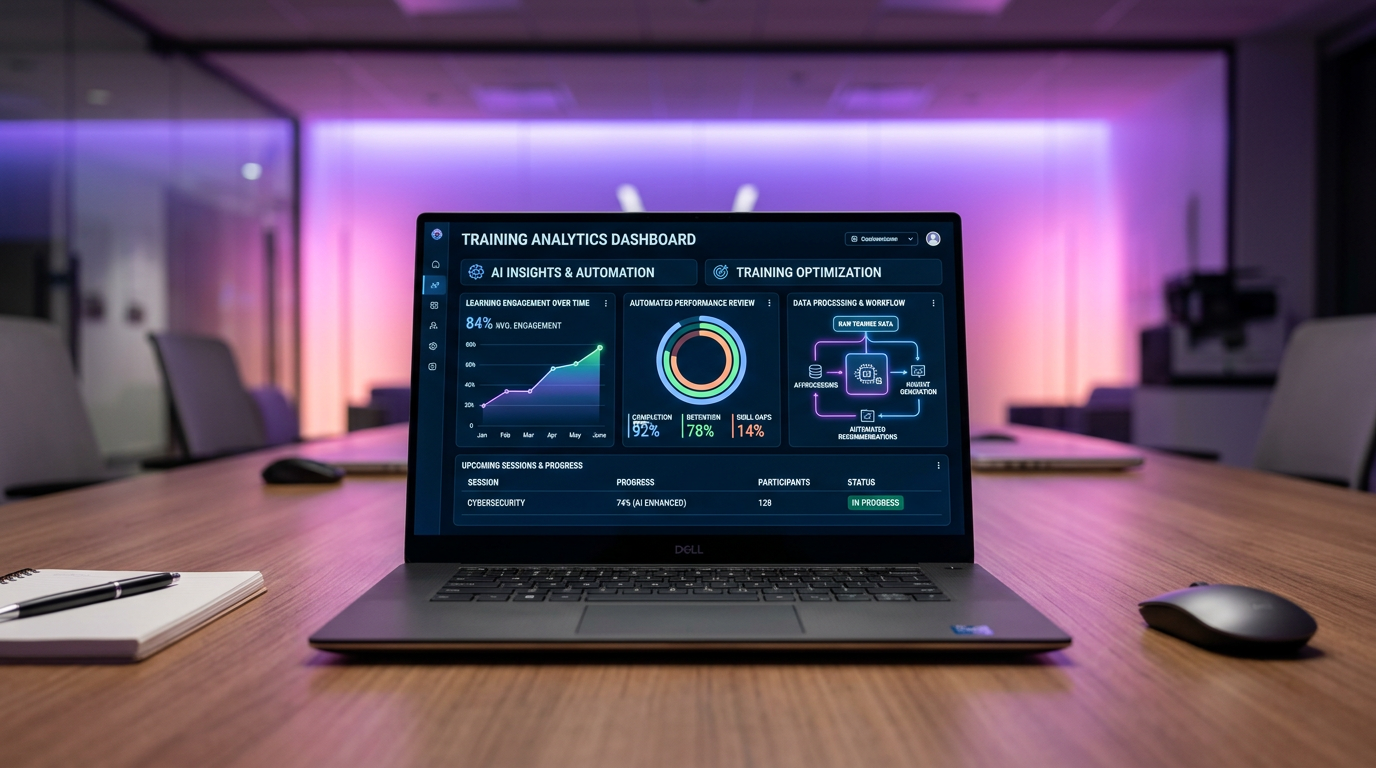
On the strength of the pilot results, the rollout was extended to all 500 agents across 120 stations. Integration with the existing LMS enabled centralised tracking of progression, with dashboards by station, by team and by individual.
+35% passenger satisfaction on interactions during disruption, measured by field surveys six months after rollout. The NPS score at trained stations rose from 32 to 48.
-42% reported incidents of abuse towards staff at the pilot stations, confirmed at -38% across the whole network after full deployment. Agents report feeling "better equipped" for tense situations.
60% reduction in training time compared with the previous classroom programme. The digital plus microlearning format trained 500 agents in 12 weeks where classroom delivery would have taken eight months.
92% satisfaction among the agents trained. The most frequent feedback: "This is the first time training has actually prepared me for what I deal with every day."
The brain does not learn interpersonal skills in a single training day. It is repetition, across varied contexts, that builds reflexes. The programme was designed so that each agent practised two or three times a week for six weeks — a rhythm aligned with what learning science tells us.
After every session, the agent received a structured debrief: analysis of the content of their answers, their tone, and their posture for video sessions. That feedback supported continuous skills assessment and measurable progression.
AI avatars do not behave like scripted bots. They react in real time to what the agent says, escalate if the agent ignores their frustration, settle down when the empathy is genuine. That conversational dynamic is what turns an exercise into real practice.
Station managers had access to session replays (with the agent's consent) and could use the metrics for one-to-one debriefs. Training stopped being an isolated event and became a continuous management tool.
This case study illustrates principles that transfer to any sector where the customer relationship is critical. Whether in banking, retail or contact centres, the same mechanisms apply.
The point is not to train more, but to train differently. Moving from knowing to doing requires deliberate practice, actionable feedback and a teaching approach matched to the realities of the job.
For L&D directors and training providers who want to reproduce these results, the question is no longer "should we modernise our training?" but "where do we start?". And the answer is usually the same: start with the situations your teams dread most. Those are the ones where practice makes the biggest difference.
Want to explore how conversational learning could transform your customer relations training? Discover Face Up and request a tailored demonstration.